How to Put on a Gun Holster in 5 Easy Steps
First, get your belt and clothes ready by choosing a sturdy belt and ensuring your clothing won’t interfere with access. Next, secure the holster tightly on your belt or waistband in your preferred position. Then, insert your firearm safely with the barrel first and finger off the trigger. Adjust the holster for comfort, accessibility, and stability. Finally, test the fit during daily activities, making small tweaks as needed. Keep going to discover tips for mastering your holster setup.
Get Your Belt and Clothes Ready
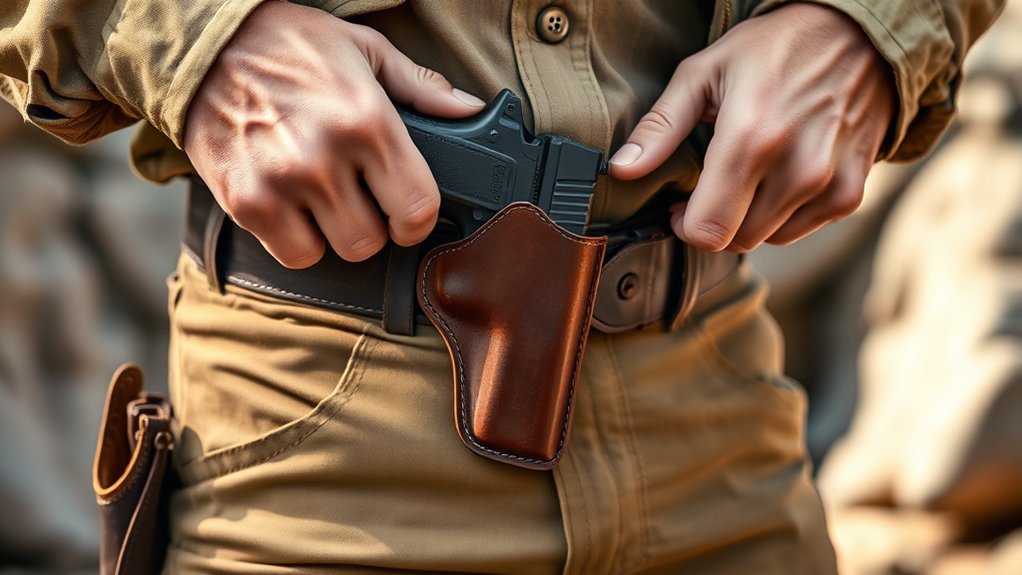
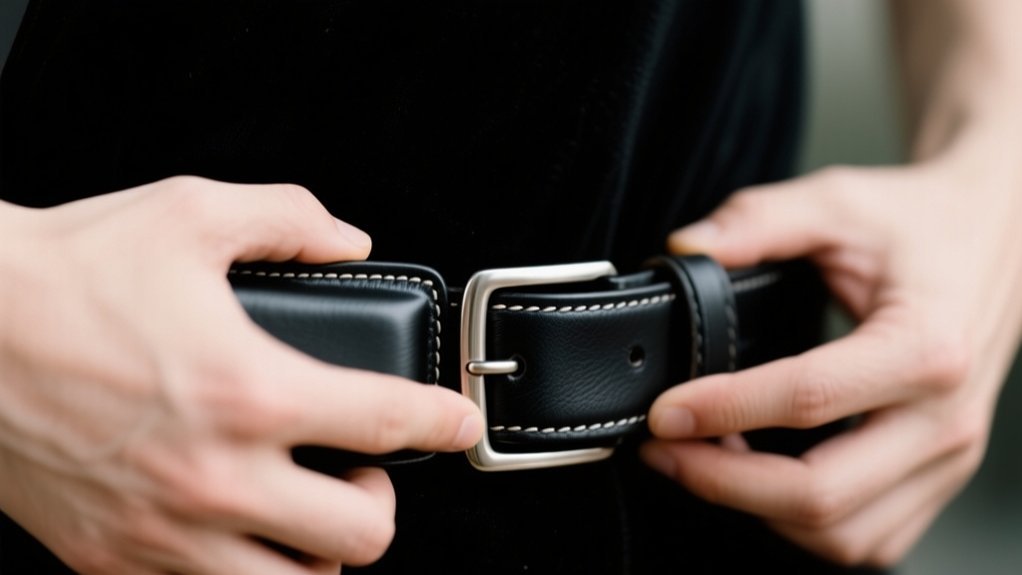
Before you attach your holster, how do you make sure your belt and clothes are ready? First, choose a sturdy belt designed to support the weight of your holster and firearm. It shouldn’t be too loose or too tight—aim for a snug fit that won’t sag or shift during movement.
Check your clothes, ensuring your shirt or jacket won’t bunch up or interfere with quick access. Opt for clothing that provides enough room around your waist without excess fabric that could get caught.
If you wear layers, adjust them so your holster sits comfortably and can be reached easily. Taking these steps guarantees your setup stays secure and accessible, making your carry both practical and comfortable throughout the day.
Secure the Holster Properly on Your Belt or Waistband
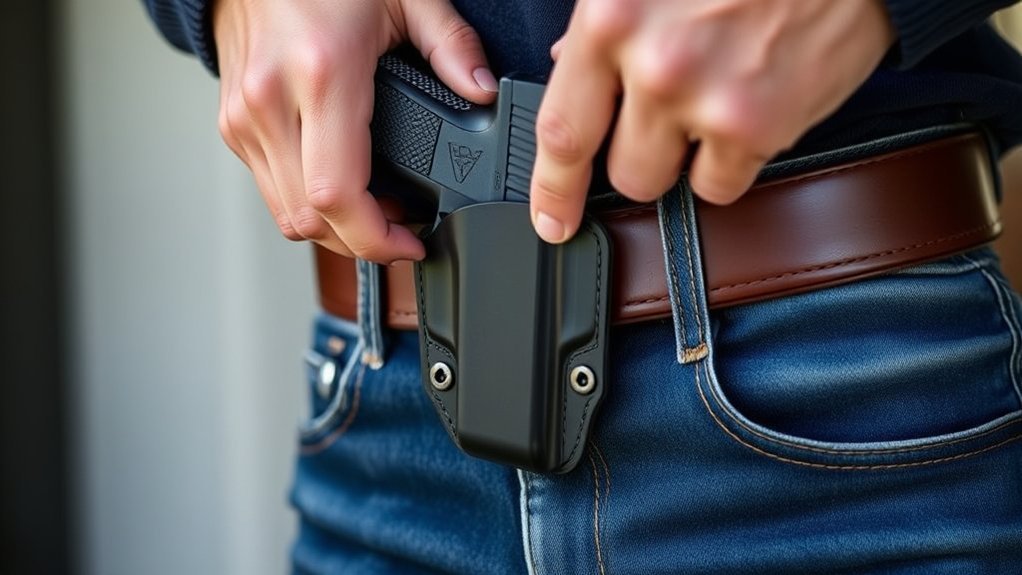
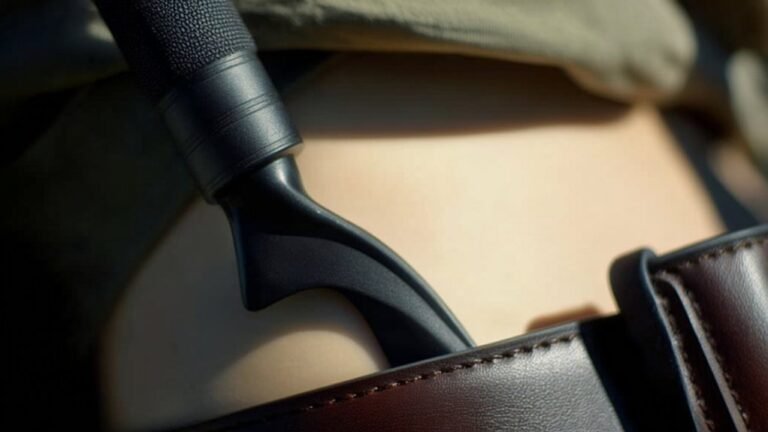
Once you’ve prepared your belt and clothes, secure the holster by sliding it firmly onto your belt or waistband, making certain it sits at your preferred carry position. Check that the holster’s attachment point grips the belt tightly to prevent any unwanted movement.
If your holster uses clips, make sure they snap securely over the belt’s edge. For loop-style holsters, thread the belt through completely to avoid slippage.
Adjust the holster so it aligns comfortably with your body, neither too far forward nor too far back. Give it a gentle tug to confirm it stays put during daily activities.
Properly securing your holster not only ensures comfort but also keeps your firearm accessible and stable throughout the day.
Insert Your Gun Into the Holster Safely
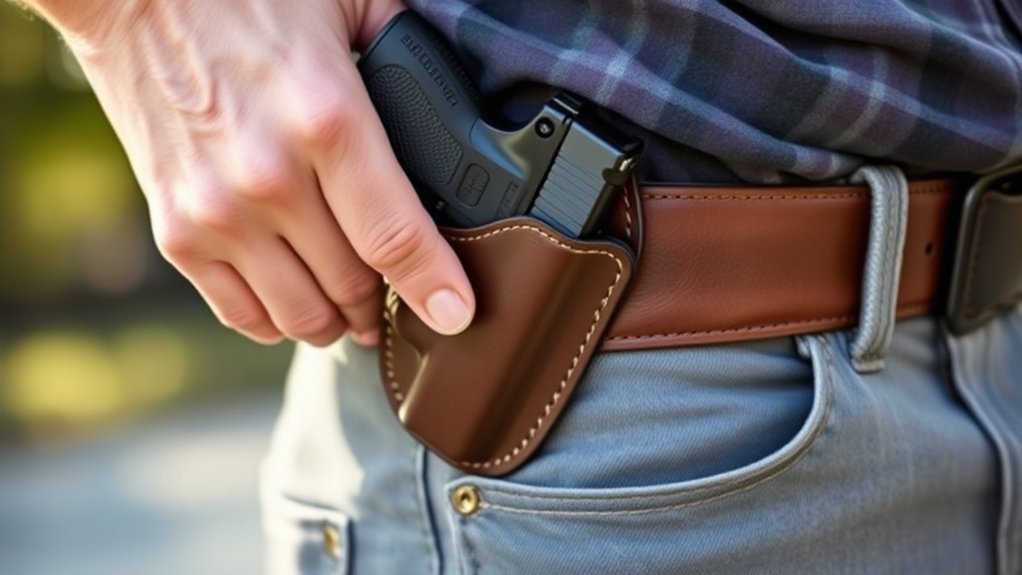
While keeping control of your firearm, align it carefully with the holster opening to guarantee a smooth insertion. Hold the gun firmly but avoid gripping it too tightly, allowing you to guide it steadily.
Insert the barrel first, ensuring it slides in without resistance. If you feel any obstruction, stop immediately and realign; forcing the gun can damage both the holster and your firearm.
Keep your finger off the trigger during this process for safety. Push the gun in until you hear or feel a secure click, indicating it’s locked in place.
Double-check that the firearm is fully seated and stable before you release your grip. This careful approach helps maintain safety and prevents accidental drops or damage.
Adjust Holster Position for Comfort and Accessibility
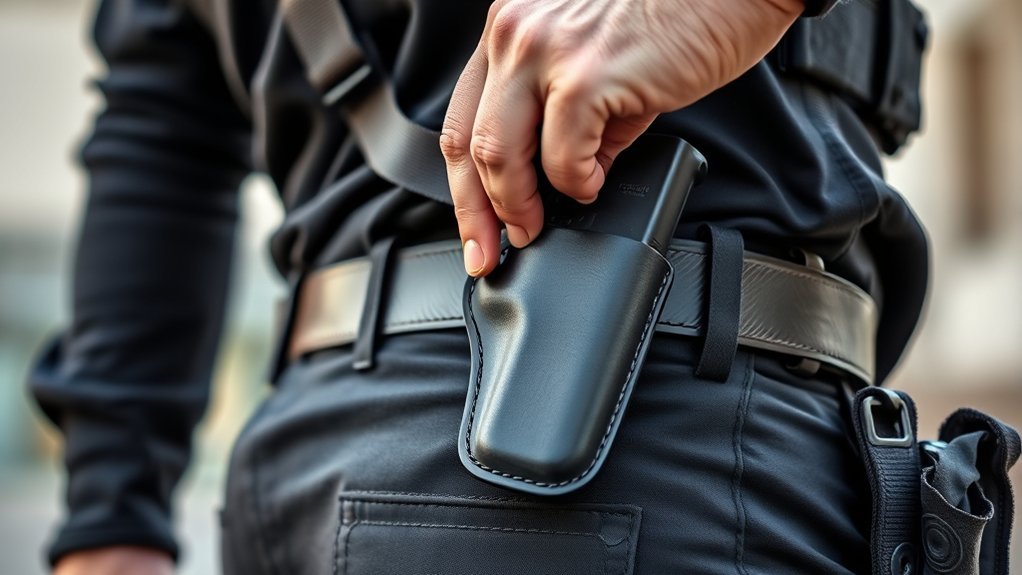
After securely placing your gun in the holster, you’ll want to make certain the holster sits comfortably and allows quick access when needed.
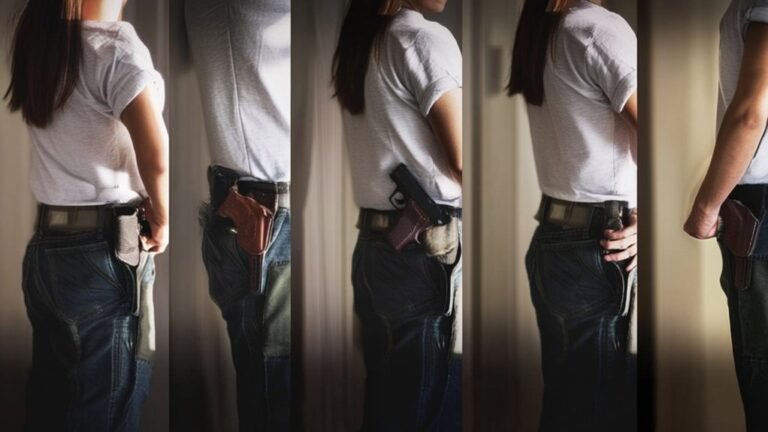
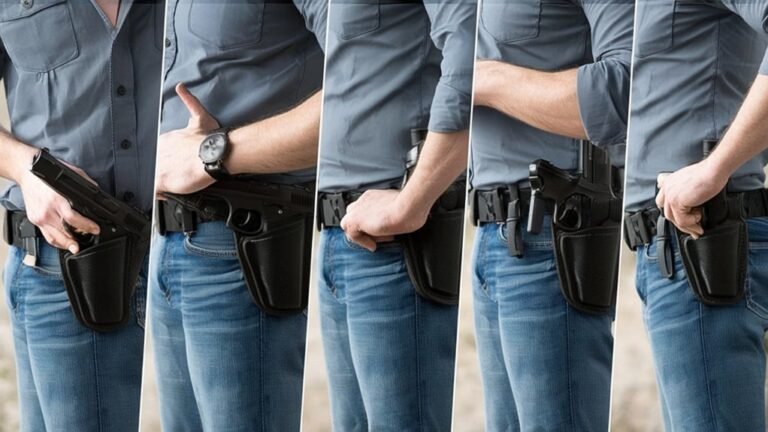
Begin by adjusting the holster’s height on your belt—too high can restrict movement, too low may slow your draw. Then, tweak the cant or angle of the holster; a slight forward tilt often improves accessibility.
Make sure the holster hugs your body without digging in or causing discomfort. Check that it doesn’t shift when you move, especially bending or sitting.
If your holster has adjustable retention screws, set them so the gun stays secure but can be drawn smoothly.
Taking the time to fine-tune the position ensures you’re both comfortable and ready to respond swiftly.
Test Your Holster Fit and Accessibility Throughout the Day
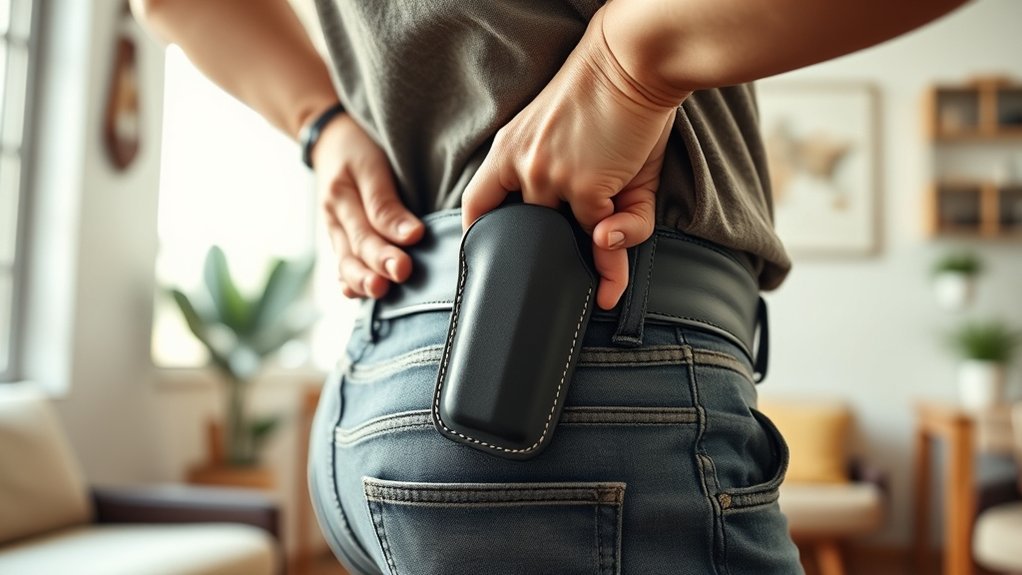
Although you’ve adjusted your holster for comfort, it’s essential to test its fit and accessibility throughout your daily activities. Wear your holster during different movements—sitting, standing, walking, and bending—to verify it stays secure and doesn’t restrict your range of motion.
Practice drawing your firearm from the holster several times to confirm you can access it smoothly and quickly without obstruction. Pay attention to any points of discomfort or shifting that could distract or hinder you.
If you encounter issues, make small adjustments to the position or retention settings and test again. Regularly reassess your holster fit, especially if your clothing or daily routine changes.
This ongoing testing guarantees your holster remains reliable, comfortable, and ready when you need it most.
Frequently Asked Questions
What Types of Holsters Are Best for Concealed Carry?
You’ll want IWB (inside-the-waistband) or appendix carry holsters for concealed carry since they’re discreet and secure. Hybrid holsters offer comfort, and minimalist designs reduce printing, helping you stay comfortable and hidden all day long.
How Do I Clean and Maintain My Gun Holster?
You clean your gun holster by wiping it with a damp cloth and mild soap, then drying it completely. Condition leather holsters with leather oil. Regularly inspect for damage, ensuring your holster stays safe and functional.
Can I Wear a Holster While Running or Exercising?
Wondering if you can wear a holster while running or exercising? You can, but it depends on the holster’s design and fit. Choose a secure, comfortable model to avoid bouncing or chafing during intense movement.
Are There Legal Restrictions on Carrying a Holster?
Yes, you’ll find legal restrictions on carrying a holster vary by state and locality. Always check your area’s laws about concealed or open carry, permits, and where firearms are prohibited to avoid any legal trouble.
What Materials Are Holsters Typically Made From?
Holsters are typically made from leather, nylon, or Kydex. You’ll find leather offers durability and comfort, nylon provides lightweight flexibility, and Kydex delivers rigid, secure retention. Choose the material that fits your needs best.
Conclusion
Now that you’ve mastered putting on your gun holster, you’re ready to move with confidence and ease—like a cowboy holstering his six-shooter at high noon. Remember, a proper fit and secure placement make all the difference in comfort and quick access. Keep testing your setup throughout the day to guarantee it stays just right. With these steps, you’ll carry smartly and stay prepared, no matter where the day takes you.