How Does a Paddle Holster Work?
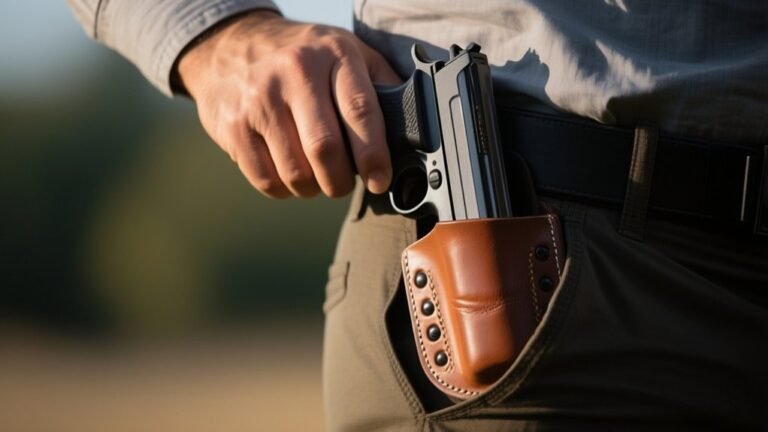
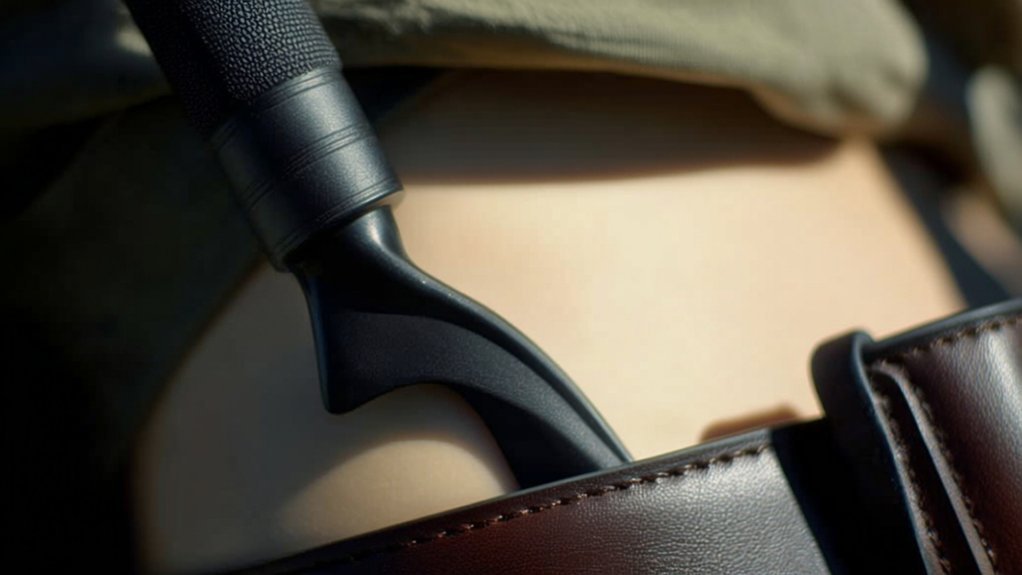
You use a paddle holster by sliding its broad, curved paddle inside your waistband, securing your firearm firmly without needing a belt. The paddle rests flat against your body, distributing pressure evenly for comfort and stability while preventing movement during daily activities. Its open-back design lets you quickly attach or remove it and enables a fast, natural draw. With proper positioning and material choice, you’ll enhance comfort, security, and accessibility. Discover tips to get the best fit and performance.
What Is a Paddle Holster and How Does It Work?
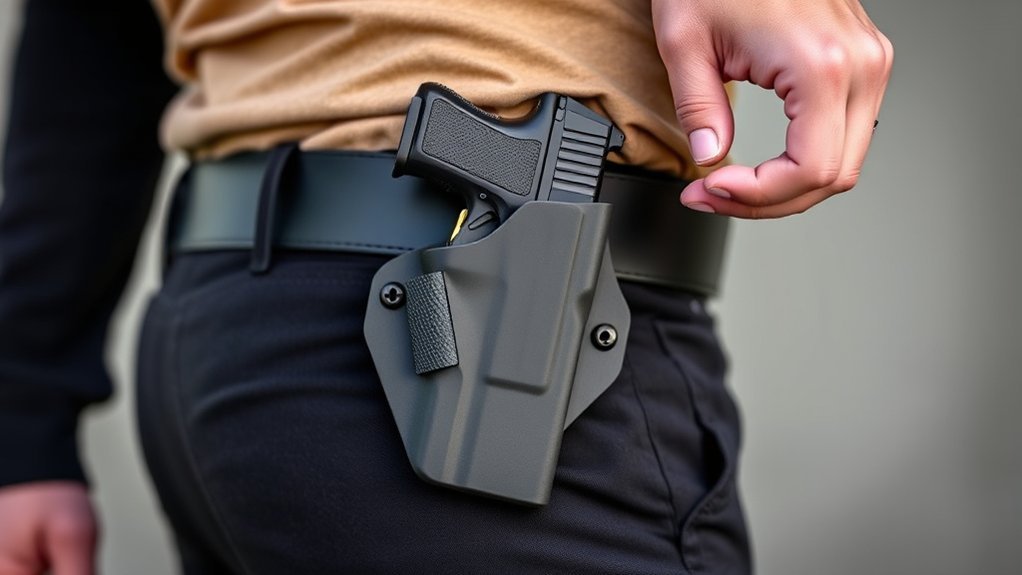
What makes a paddle holster different from other types of holsters? It’s the unique paddle-shaped back piece that sets it apart. You simply slide this paddle inside your waistband, allowing the holster to rest securely against your body without needing belt loops or clips.
This design makes it super easy to put on and take off quickly. The holster itself holds your firearm firmly, ensuring it’s always within reach while providing comfortable carry. You’ll appreciate how it balances accessibility with convenience, perfect for everyday use.
Plus, the paddle holster usually fits a range of belt sizes and clothing styles, so you don’t have to worry about compatibility. Understanding this helps you see why many prefer paddle holsters for hassle-free, reliable firearm carry.
How the Paddle Design Keeps Your Paddle Holster Secure
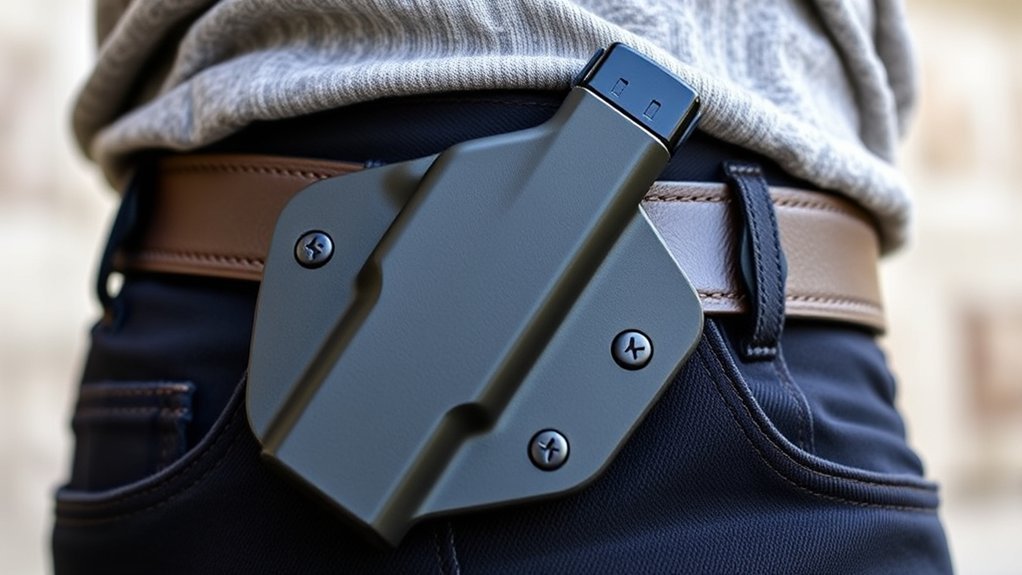
Because the paddle design fits snugly against your body, it keeps the holster firmly in place throughout your daily activities. The broad, curved paddle rests flat against your waistband or belt, creating friction that prevents unwanted movement.
This design distributes pressure evenly, so you won’t feel uncomfortable or have the holster shift when you move. Additionally, many paddles feature textured surfaces or rubberized grips that enhance stability by gripping your clothing.
The paddle’s shape also allows it to tuck securely inside your pants or beltline, locking the holster in place without requiring permanent attachment.
Altogether, these elements work together to guarantee your paddle holster stays anchored, offering reliable security while you walk, sit, or perform routine tasks.
How Paddle Holsters Make On-And-Off Easy
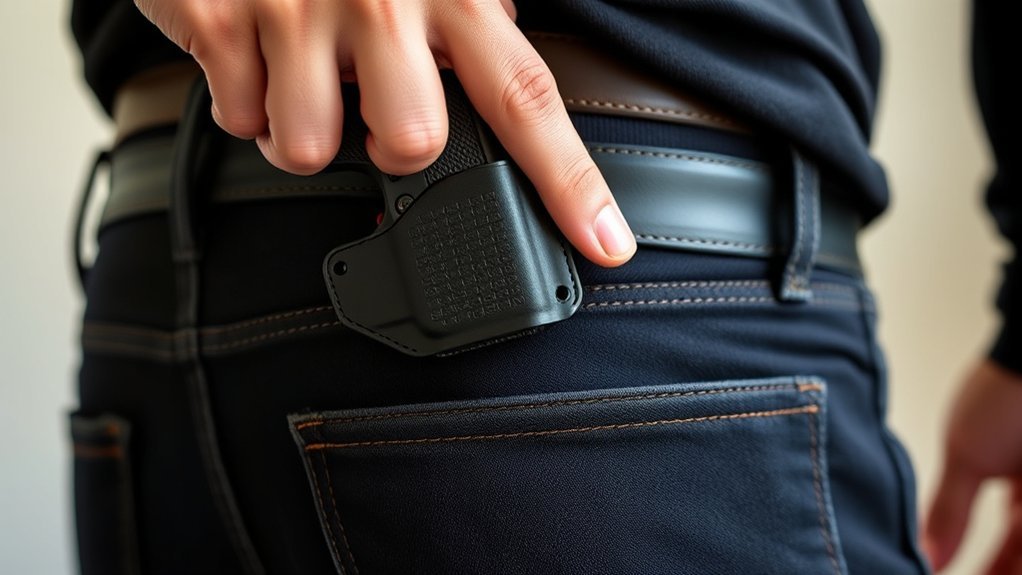
The secure fit of a paddle holster doesn’t just keep it stable—it also makes it easy to put on and take off. You simply slide the paddle inside your waistband or belt, and the design grips your clothing securely without needing belts or clips.
This means you can quickly don or remove your holster without fumbling or adjustments. The broad, flat paddle evenly distributes pressure, which helps it stay in place even during movement, so you don’t have to constantly readjust.
Plus, the holster’s open back design allows you to insert or remove it smoothly without removing your belt. Whether you’re gearing up quickly or switching holsters, the paddle holster’s intuitive design makes on-and-off hassle-free, saving you time and effort.
Why Paddle Holsters Feel Comfortable All Day
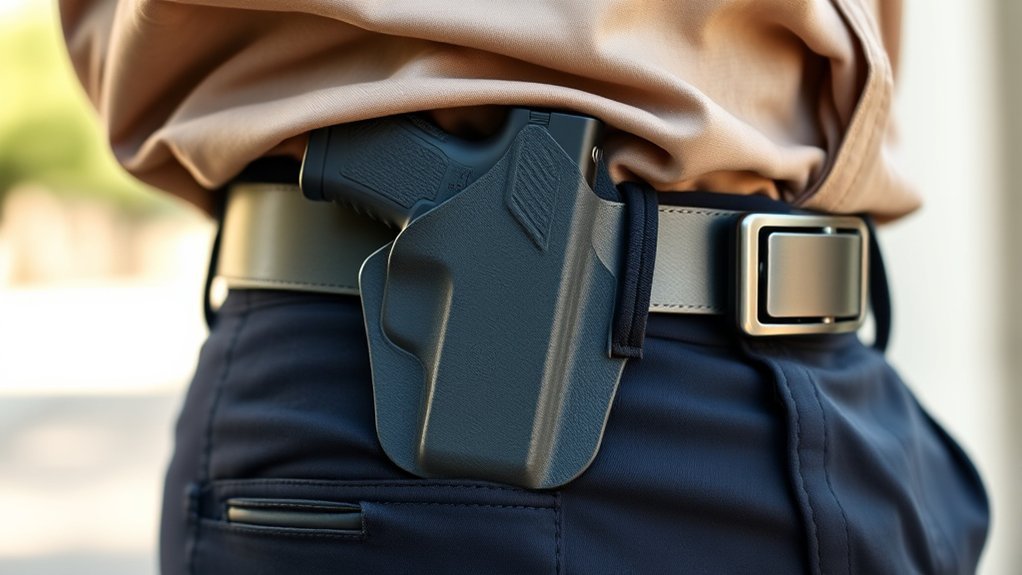
You’ll notice paddle holsters feel comfortable all day because they distribute weight evenly across your hip. This balanced design prevents pressure points that cause discomfort.
Plus, since they’re easy to put on and take off, you can adjust them quickly whenever needed.
Even Weight Distribution
Although carrying a firearm all day can become uncomfortable with some holsters, paddle holsters evenly distribute the weight across your hip, reducing pressure points and fatigue. This balanced design helps you stay comfortable during long wear times by:
- Spreading the firearm’s weight over a larger surface area, preventing it from digging into your skin.
- Aligning the holster naturally with your body’s contours, which minimizes shifting and pinching.
- Allowing your muscles to carry the load more efficiently, reducing strain and soreness.
Easy On-And-Off
How quickly can you remove your holster when needed? With a paddle holster, you can easily slip it on or off without fussing with belts or clips.
The paddle’s flat, wide surface slides smoothly inside your waistband, holding the holster securely in place through friction and pressure. When it’s time to remove it, just give the paddle a firm pull outward. You don’t have to unbuckle your belt or undo any straps, saving you valuable time.
This easy on-and-off design not only makes carrying comfortable all day but also lets you adapt quickly to different situations. Whether you’re heading out or taking a break, your paddle holster moves with you seamlessly, giving you both convenience and confidence.
How Paddle Holsters Provide Quick Access to Your Firearm
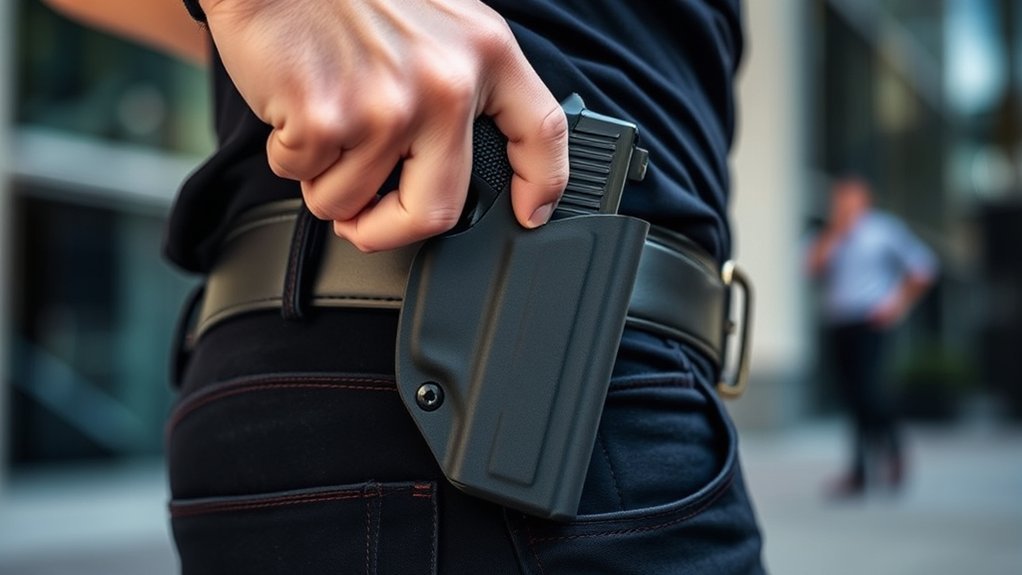
Because paddle holsters sit securely on your hip without the need for belt loops, they let you draw your firearm quickly and smoothly. You won’t have to fumble with belts or straps, so your response time improves considerably. Here’s how they provide quick access:
- Secure fit: The paddle’s broad surface grips your waistband firmly, keeping the holster stable during movement.
- Open-top design: Most paddle holsters expose the firearm’s grip, allowing a fast, unhindered draw.
- Adjustable cant: You can set the holster angle to match your natural draw motion, minimizing delays.
Which Firearms Are Best for Paddle Holsters?
When choosing a firearm for a paddle holster, you’ll find compact handguns fit securely and offer excellent accessibility.
Revolvers also work well, giving you versatile options depending on your preference.
Subcompact models provide added comfort and ease, making them a smart choice for everyday carry.
Compact Handguns Compatibility
Which compact handguns fit best in paddle holsters depends largely on the firearm’s size and design. You want a handgun that balances concealability with comfort and retention.
Here are three key factors to take into account:
- Dimensions: Slim and moderately sized handguns like the Glock 19 or Smith & Wesson M&P Compact fit well without creating bulk.
- Weight: Lighter firearms reduce pressure on your waist, making extended wear more comfortable.
- Trigger Guard Design: Paddle holsters rely on secure locking mechanisms around the trigger guard, so a clearly defined guard ensures a snug, safe fit.
Revolver Versatility Options
How do revolvers stack up in paddle holsters? They offer excellent versatility, especially models with medium-sized frames like the Smith & Wesson 686 or Ruger GP100. These revolvers fit securely without excessive bulk, making them comfortable for everyday carry.
You’ll appreciate how paddle holsters accommodate the revolver’s unique shape, offering quick access while maintaining retention. Larger revolvers can work too, but they may feel heavier and less balanced on your hip.
On the other hand, very small revolvers mightn’t engage the holster’s retention system as effectively. Overall, paddle holsters suit a wide range of revolvers, letting you choose based on your comfort and carry preference.
Just confirm your chosen holster matches your revolver’s size for peak performance.
Subcompact Models Advantages
Although paddle holsters can accommodate various firearm sizes, subcompact models offer distinct advantages that make them ideal for everyday carry. If you’re choosing a firearm for your paddle holster, subcompact pistols provide:
- Comfort and Concealment: Their smaller size means less bulk against your body, making it easier to conceal under clothing without printing.
- Lightweight Design: Subcompacts reduce overall carry weight, so you won’t feel weighed down during daily activities.
- Quick Accessibility: Paddle holsters secure subcompact firearms firmly while allowing fast draw and reholstering, perfect for self-defense.
How to Choose the Right Paddle Holster for You
When selecting a paddle holster, you’ll want to take into account factors like comfort, retention, and compatibility with your firearm.
First, verify the holster fits your specific gun model securely to avoid any movement while you’re active.
Comfort is key since you’ll be wearing it for extended periods; look for adjustable cant and ride height options to customize the fit to your body shape and preferred carry position.
Retention mechanisms should be strong enough to keep your firearm secure but still allow for a smooth, quick draw.
Also, consider how easy it’s to attach and remove the holster from your belt or waistband.
Choosing a paddle holster that balances these elements will enhance your daily carry experience without sacrificing safety or convenience.
What Materials Affect Paddle Holster Quality and Performance
Since your paddle holster’s material directly impacts its durability, comfort, and retention, choosing the right one is essential. You want a holster that holds up to daily wear while staying comfortable against your body.
- Kydex – This rigid plastic is highly durable and offers excellent retention. It keeps your firearm secure but can feel stiff against your skin.
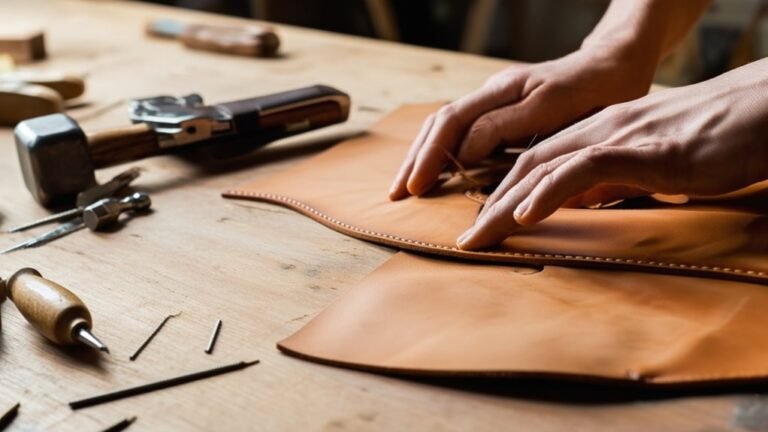
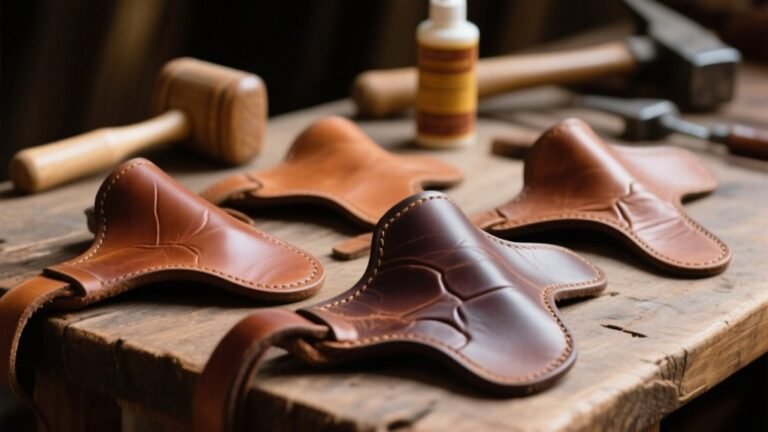
- Leather – Known for comfort and classic style, leather molds to your body over time. However, it requires maintenance to prevent wear and may offer less retention than synthetic materials.
- Nylon – Lightweight and flexible, nylon is budget-friendly and breathable. It’s less durable than Kydex or leather but works well for casual or occasional use.
Picking the right material helps you balance comfort, security, and longevity in your paddle holster.
How to Position and Adjust Your Paddle Holster for Comfort and Speed
Choosing the right material for your paddle holster sets the foundation, but proper positioning and adjustment make all the difference in comfort and speed.
Start by placing the paddle inside your waistband, guaranteeing it sits snugly against your body without pinching. Adjust the cant—the angle of the holster—so your draw hand moves naturally to the grip. Most users prefer a slight forward cant for quicker access.
Next, position the holster at your strong side hip or just behind your hip bone for balance and concealment. Make sure the paddle locks securely to prevent shifting during movement.
Finally, test your draw several times to confirm smooth, swift access without discomfort. Fine-tuning these elements ensures your paddle holster feels like a natural extension of your body.
Common Mistakes to Avoid With Paddle Holsters
Although paddle holsters offer convenience and comfort, many users make avoidable mistakes that compromise safety and efficiency. To get the most out of your holster, avoid these common errors:
- Incorrect Placement: Don’t position the paddle too far forward or backward. This can slow your draw and cause discomfort. Aim for a spot that allows a natural, swift reach.
- Loose Fit: Avoid using a paddle holster that doesn’t fit tightly against your body. A loose holster can shift, increasing the risk of accidental discharges or losing your weapon.
- Neglecting Retention Checks: Don’t skip regularly checking the retention mechanism. If it’s too loose or too tight, it impacts your ability to draw quickly and securely.
Frequently Asked Questions
Can Paddle Holsters Be Used for Concealed Carry?
Yes, you can use paddle holsters for concealed carry, but they’re bulkier than inside-the-waistband options. You’ll want loose clothing to effectively hide the holster and firearm while staying comfortable throughout the day.
How Do Paddle Holsters Compare to Belt Holsters in Durability?
Don’t worry about durability—belt holsters usually outlast paddle holsters since they’re more securely attached. However, paddle holsters still hold up well for daily use, offering easy attachment without sacrificing too much toughness.
Are Paddle Holsters Legal in All States?
No, paddle holsters aren’t legal in all states. You’ll need to check your local laws since some places restrict or regulate concealed carry methods, including holster types. Always confirm legality before using one.
Can You Customize the Color or Design of a Paddle Holster?
Yes, you can customize the color or design of a paddle holster. Many manufacturers offer options to choose different colors, patterns, or finishes, so you can personalize it to match your style or preferences easily.
Do Paddle Holsters Work Well for Left-Handed Users?
Yes, paddle holsters work well for left-handed users because many models come specifically designed for left or right-handed draw. You’ll find adjustable options that fit comfortably and provide quick, easy access no matter your dominant hand.
Conclusion
Now that you know how a paddle holster works, you’re ready to enjoy its blend of comfort, security, and quick access—no more fumbling like it’s the Wild West. Just remember to pick the right material, position it well, and avoid common mistakes. With the right paddle holster, you’ll carry confidently all day long. It’s modern convenience with a touch of old-school reliability, keeping your firearm secure and within easy reach whenever you need it.