How to Stretch a Leather Holster in 3 Easy Steps
First, clean your leather holster using a soft cloth with mild soap and water, then let it air dry completely. Next, soften the leather by lightly dampening it and applying low heat with a hairdryer to relax the fibers. Finally, gently stretch and mold your holster by inserting your firearm and leaving it inside for several hours or overnight to achieve a snug, custom fit. Keep going if you want to master the best techniques for a perfect leather holster.
Clean and Prepare Your Holster Before Stretching
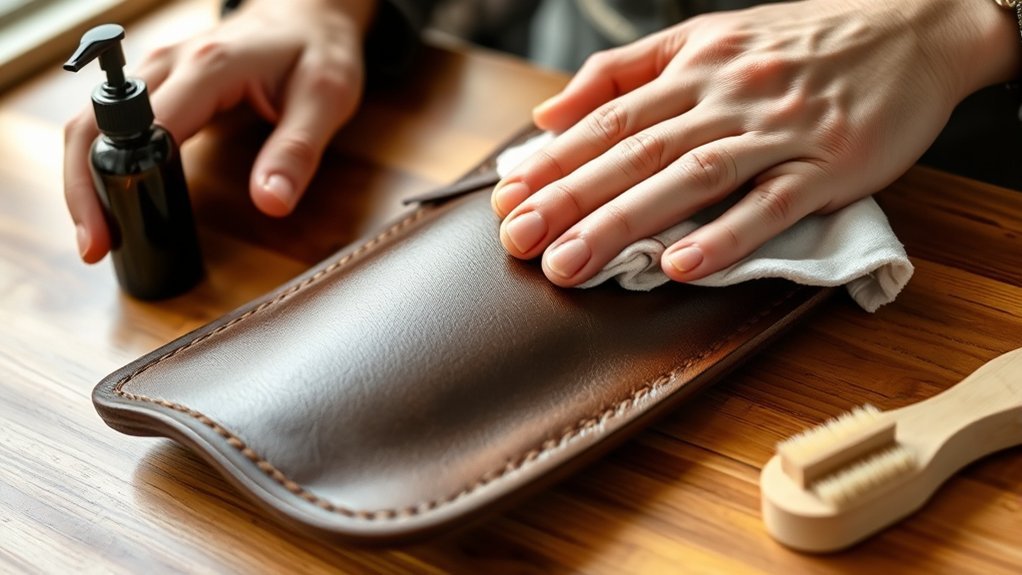
Before you begin stretching your leather holster, make sure you clean it thoroughly to remove any dirt or oils that could interfere with the process. Use a soft cloth dampened with mild soap and water to gently wipe the surface. Avoid soaking the leather, as excess moisture can damage it.
After cleaning, let it air dry completely in a well-ventilated area away from direct sunlight or heat sources.
Once dry, inspect your holster for any cracks or weak spots that might worsen when stretched.
You can also apply a leather conditioner sparingly to keep the material supple, but don’t overdo it—too much conditioner can make the leather too soft to hold its shape.
Proper cleaning and preparation set the foundation for effective and safe stretching.
Soften Your Leather Holster With Heat and Moisture
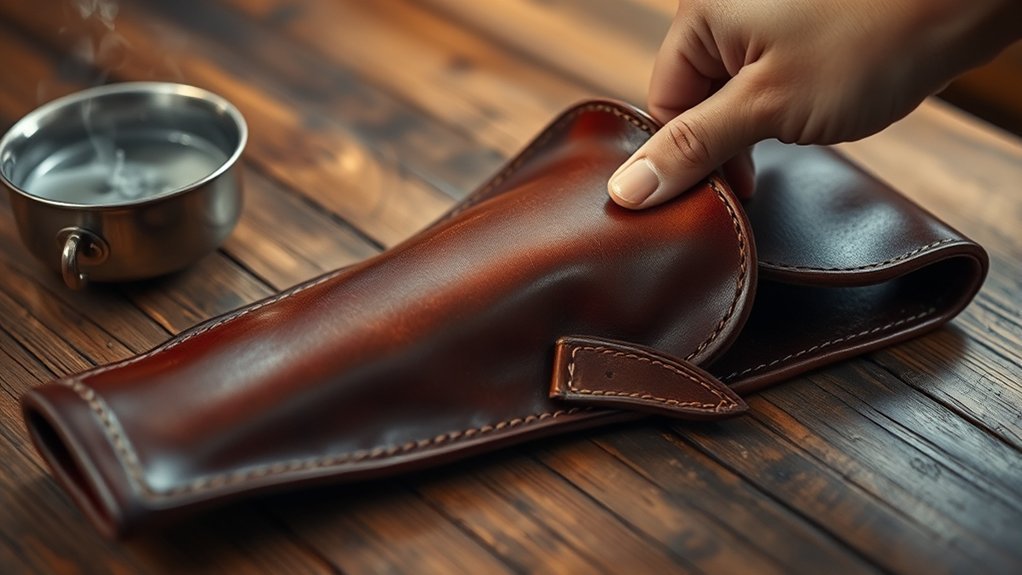
Although leather is naturally durable, it can be stiff and difficult to stretch without softening it first. To make your holster more pliable, apply gentle heat and moisture.
Start by dampening the leather lightly with a clean cloth—don’t soak it, as too much water can damage the material. Then, use a hairdryer on a low heat setting, moving it evenly over the damp areas.
The warmth combined with moisture will relax the leather fibers, making it more flexible. Be careful not to overheat or dry the leather too quickly, as this can cause cracking.
Let the holster cool naturally after heating. This process preps your holster for stretching while preserving its strength and appearance.
Stretch and Mold Your Holster to Fit Your Firearm
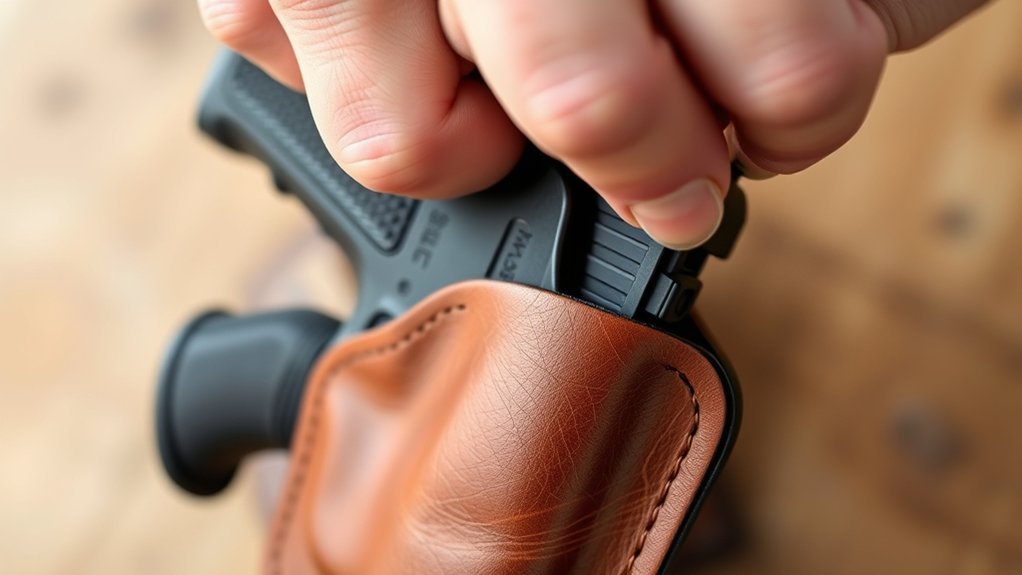
Once your leather holster feels soft and pliable, you can begin shaping it to fit your firearm snugly. Insert your firearm gently into the holster, applying steady pressure to encourage the leather to stretch around its contours. Avoid forcing it in too hard, as this might damage the leather or your gun’s finish.
Leave the firearm in the holster for several hours or overnight to let the material mold naturally. If needed, repeat this process, removing and reinserting the gun until the fit feels secure but not overly tight.
For added shaping, you can wear the holster around your waist with the firearm inside, allowing your body heat and movement to assist the molding. This guarantees a custom fit for comfort and retention.
Frequently Asked Questions
How Long Does Leather Holster Stretching Typically Last?
Leather holster stretching typically lasts several months to a year, depending on wear and care. You’ll want to maintain it regularly because continued use and moisture can cause it to shrink back or lose shape over time.
Can You Stretch Synthetic Holsters the Same Way?
You can’t stretch synthetic holsters like leather because synthetic materials are less flexible and don’t soften with heat or moisture. Instead, you’ll need to look for holsters designed to fit your firearm or use adjustable models.
Is It Safe to Stretch Antique or Vintage Leather Holsters?
You shouldn’t stretch antique or vintage leather holsters because their leather is fragile and can crack or weaken. Instead, handle them gently and consider professional advice to preserve their condition and value over time.
Will Stretching Affect the Holster’s Color or Finish?
You won’t always notice, but stretching can subtly lighten your holster’s deep, rich color or dull its finish like rain on polished wood. If you want to keep that shine, you’ll need to treat it carefully afterward.
How Often Should I Stretch My Holster for Best Fit?
You should stretch your holster only when it feels too tight or uncomfortable. Overstretching can damage the leather, so wait until you notice a snug fit before gently stretching it again for the best fit and comfort.
Conclusion
Now that you’ve cleaned, softened, and stretched your leather holster, imagine it molding perfectly to your firearm like a second skin. This snug fit isn’t just about comfort—it’s about confidence every time you draw. You might think leather resists change, but with the right care, it adapts like a living thing, embracing your gear securely. Trust the process; your holster will feel custom-made, ready to serve you flawlessly on every outing.