How to Wear an IWB Holster in 7 Easy Steps
Choose an IWB holster molded for your firearm model with the right material for your lifestyle. Wear loose, dark clothing to conceal it well. Find a comfortable waist position—appendix, strong side, or behind the hip—and attach the holster securely to your belt. Insert your firearm with a firm, safe grip and check retention. Practice smooth drawing and reholstering while adjusting fit for comfort all day long. Keep going to uncover tips for mastering each step.
Choose the Right IWB Holster for Your Firearm and Carry Needs
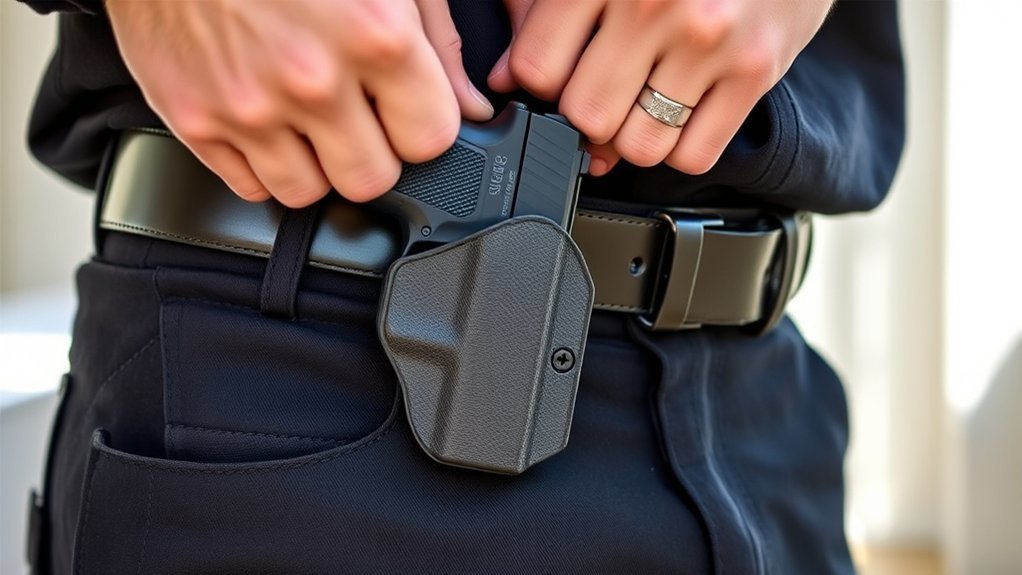
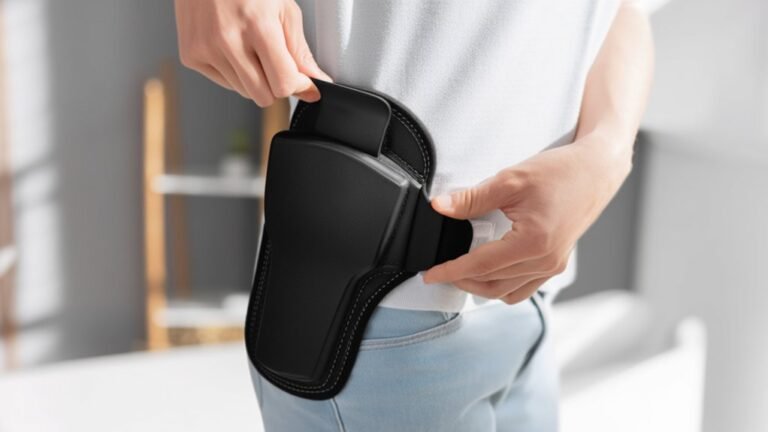
When choosing the right IWB holster, you need to take into account your firearm’s size, your daily activities, and comfort preferences.
Start by selecting a holster specifically molded for your gun model to guarantee a secure fit and proper trigger coverage.
Consider the material—leather offers comfort and durability, while Kydex provides rigidity and quick draw.
Think about how you move throughout the day; if you’re active, a holster with adjustable retention and a sweat guard can improve comfort and safety.
Also, check the holster’s clip design for secure attachment to your belt.
Remember, the right holster balances concealment, accessibility, and comfort, so it won’t hinder your daily routine or quick response.
Take time to try different options before settling on one.
Prepare Clothing for Comfortable and Effective Concealment

Selecting the right IWB holster sets the foundation, but pairing it with suitable clothing guarantees comfort and effective concealment throughout your day.
Choose shirts or jackets with enough room to drape naturally over your holster without printing. Loose or slightly oversized tops work best, letting you move freely while hiding the firearm’s outline. Avoid tight, clingy fabrics that reveal your carry position.
Opt for darker colors or patterned materials to help mask any slight bulges. Also, pick pants or belts sturdy enough to support the holster without sagging.
If you plan to tuck in your shirt, make sure it doesn’t pull tightly around the holstered area, as this can draw unwanted attention.
Preparing your clothing thoughtfully assures your IWB carry remains discreet and comfortable.
Find the Best Waist Position to Carry Your IWB Holster
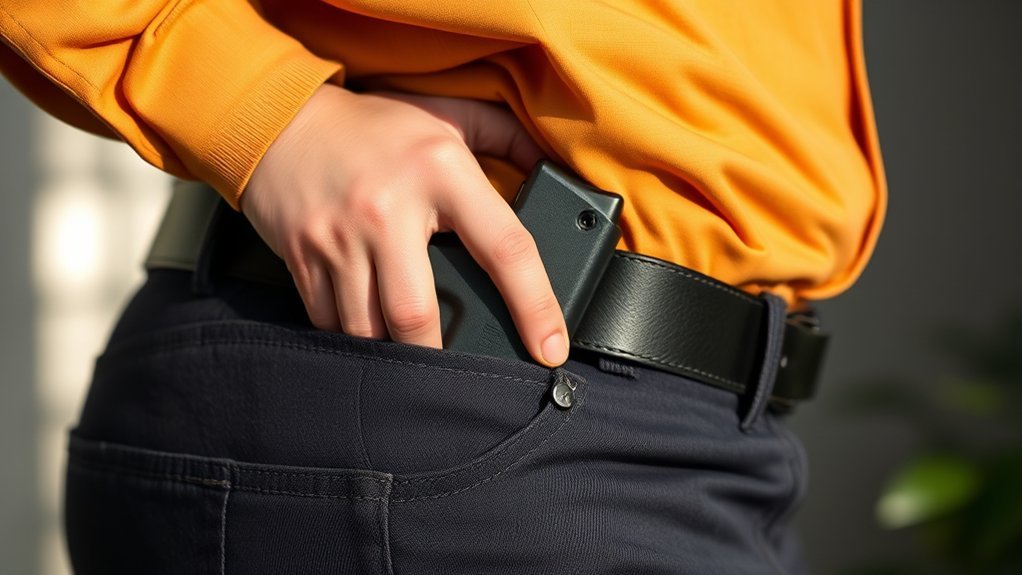
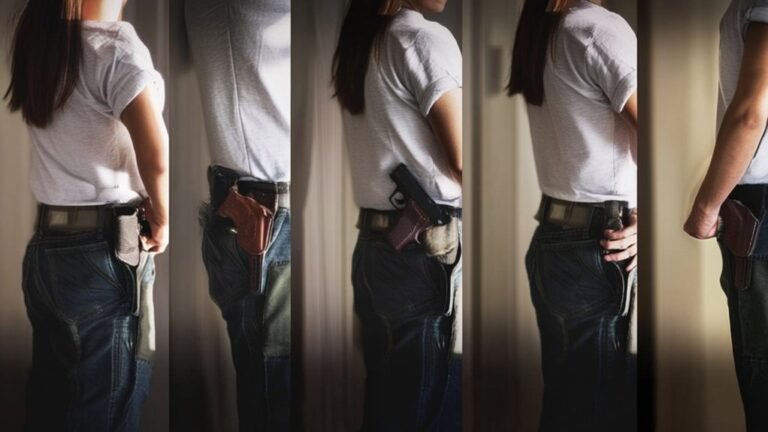
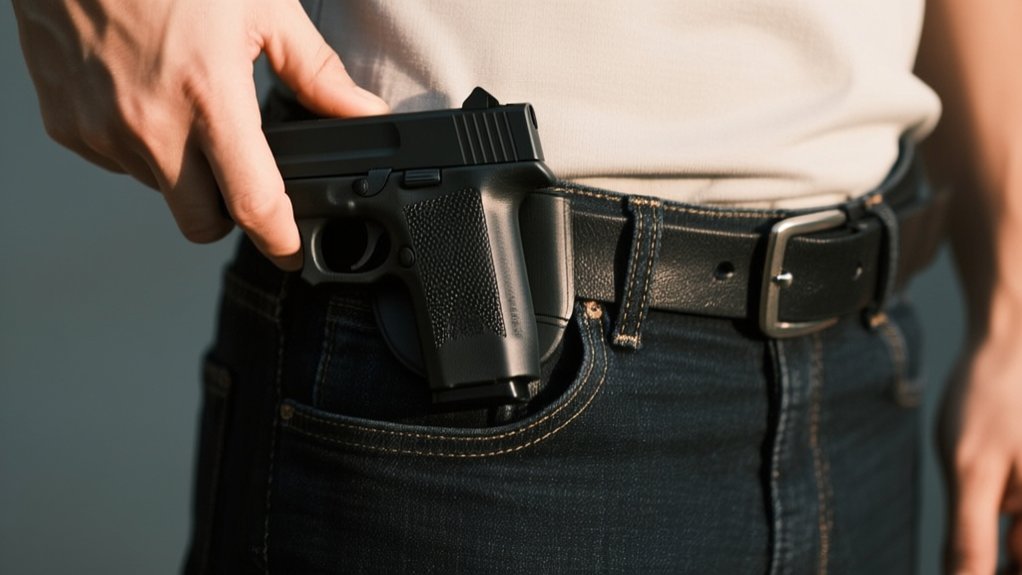
Although choosing the right holster is essential, positioning it correctly on your waist makes all the difference in comfort and concealment. Start by experimenting with different positions around your waistband—commonly appendix, strong side, or behind the hip.
Each spot offers unique benefits: appendix carry is quick to access but may be uncomfortable sitting; strong side is traditional and comfortable; behind the hip provides excellent concealment but slower draw.
Pay attention to your body shape, clothing style, and daily activities. Move around, sit, and bend to see how the holster feels and hides your firearm.
Finding your ideal position takes trial and error, but once you do, you’ll enjoy better comfort, easier access, and reliable concealment throughout your day.
Securely Attach Your IWB Holster to Your Belt
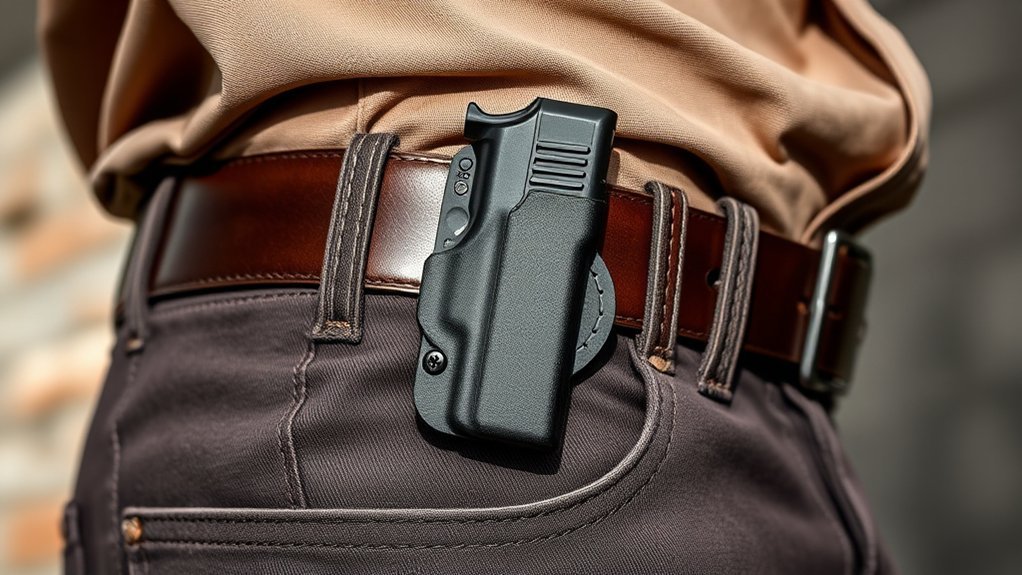
Once you’ve pinpointed the best spot on your waist for your IWB holster, the next step is to secure it firmly to your belt. Slide the holster’s clip or loops over your belt, making sure it grips tightly without damaging the belt material.
If your holster uses clips, push them fully over the belt edge until they snap or lock in place. For loop-style holsters, thread your belt through the loops completely for maximum stability.
Double-check that the holster doesn’t shift or wiggle when you move—stability is key for comfort and safety. Adjust the angle if needed before wearing it regularly.
A properly secured holster keeps your firearm discreet and accessible without compromising your daily comfort.
Insert Your Firearm Safely and Ensure Secure Retention
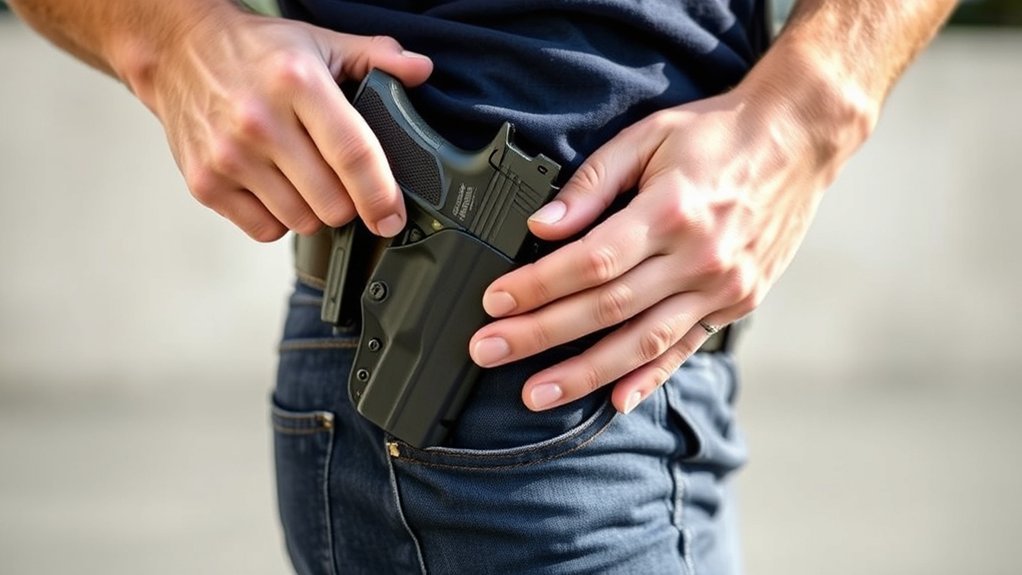
Before you insert your firearm into your IWB holster, make sure your hands are clean and dry to prevent slipping. This helps you maintain control and avoid accidents. Follow these steps to insert your firearm safely and assure it stays secure:
- Grip your firearm firmly, keeping your finger off the trigger.
- Align the firearm’s slide with the holster opening to avoid catching or snagging.
- Insert the firearm fully until you hear or feel a click, confirming it’s locked in place.
- Gently tug the firearm upward to test retention—if it moves excessively, adjust the holster tension if possible.
Practice Drawing and Reholstering Your IWB Holster Smoothly
To draw smoothly from your IWB holster, focus on maintaining a consistent grip every time.
Work on improving your speed without sacrificing control, and always practice safe reholstering techniques to avoid accidents.
Regular drills will help you build muscle memory for quick, confident draws and returns.
Grip Consistency Techniques
Although mastering your draw stroke takes time, practicing grip consistency is essential for a smooth, reliable draw from your IWB holster. You want to develop muscle memory that guarantees your hand finds the same spot every time, minimizing fumbling.
Follow these techniques to improve your grip consistency:
- Index Finger Placement: Always position your index finger outside the trigger guard before drawing.
- Firm, Yet Relaxed Grip: Use enough pressure to control the firearm without tension.
- Practice Dry Drawing: Repeatedly draw and reholster without live ammo to build consistent habits.
- Use Visual and Physical Cues: Anchor your grip by feeling the firearm’s contours and using a consistent hand position relative to your body.
Drawing Speed Improvement
How quickly can you draw and reholster your IWB holster without fumbling? Improving your drawing speed takes focused practice. Start slow, emphasizing smooth, deliberate movements. Gradually increase your pace as your muscle memory builds. Practicing consistent grip and stance also helps.
Use dry-fire drills to simulate real draws without live ammo. Time yourself to track progress. Reholstering is equally important—practice smoothly sliding the firearm back without looking or fumbling.
| Practice Tip | Benefit |
|---|---|
| Dry-fire drills | Builds muscle memory |
| Timed draws | Measures speed improvement |
| Consistent grip drills | Ensures quick, reliable grip |
| Smooth reholstering | Prevents fumbling and delays |
Keep practicing regularly, and your drawing speed will become instinctive and efficient.
Safe Reholstering Practices
Mastering smooth drawing movements sets the foundation for safe reholstering. When you practice, focus on controlled, deliberate actions to avoid accidents.
Here’s how to safely reholster your IWB holster:
- Maintain your finger off the trigger at all times until the firearm is securely holstered.
- Keep your eyes on the holster to ensure the firearm aligns correctly.
- Slowly and steadily guide the firearm back into the holster, feeling it lock into place.
- Confirm the firearm is fully seated before relaxing your grip or moving.
Adjust Your IWB Holster Fit for All-Day Comfort
When you adjust your IWB holster properly, you’ll notice a significant boost in comfort that lasts all day.
Start by positioning the holster at your preferred angle—usually between 3 to 5 o’clock for right-handed users. Make certain it sits snugly against your body without digging into your skin.
Adjust the cant and ride height to balance concealment and accessibility.
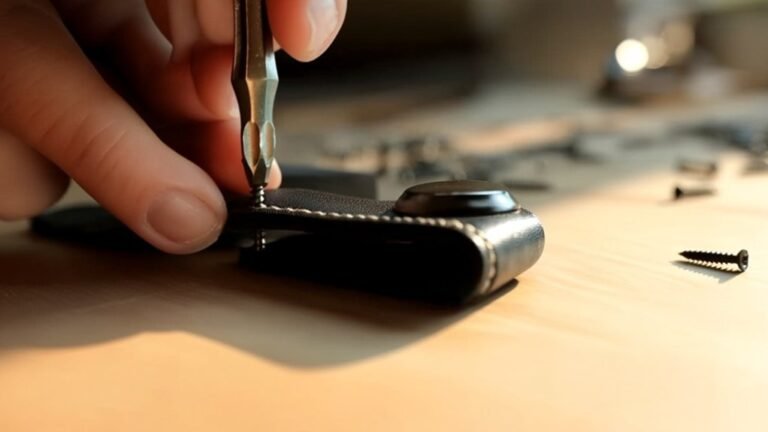
Tighten or loosen the retention screws to secure your firearm firmly without making it hard to draw.
Don’t forget to wear your usual clothing during adjustments to guarantee a realistic fit.
Take short breaks to test comfort and make minor tweaks.
Frequently Asked Questions
Can I Wear an IWB Holster While Sitting for Long Periods?
Yes, you can wear an IWB holster while sitting for long periods, but you’ll want to choose a comfortable holster and adjust its position to avoid pressure. Taking breaks and shifting positions helps prevent discomfort or irritation.
How Do I Clean and Maintain My IWB Holster?
Don’t wait until it’s grimy—clean your IWB holster regularly. Wipe it down with a damp cloth, use mild soap if needed, then air dry completely. Check for wear to keep it safe and reliable.
Are IWB Holsters Legal in All States?
No, IWB holsters aren’t legal in all states since laws vary widely. You’ll need to check your state’s concealed carry regulations to confirm you’re compliant before carrying. Don’t assume legality without verifying local rules.
Can I Wear an IWB Holster During Physical Activities?
You can wear an IWB holster during physical activities, but it depends on comfort and movement. Since it’s concealed inside your waistband, it might shift or cause discomfort, so test it carefully before intense workouts or sports.
What Accessories Are Compatible With IWB Holsters?
You can use belt clips, mag carriers, sweat guards, and holster pads with IWB holsters. These accessories improve comfort, retention, and concealment, letting you carry securely and discreetly throughout your day without hassle or discomfort.
Conclusion
Wearing an IWB holster is like finding the perfect rhythm in a dance—it takes practice, adjustment, and knowing your moves. By choosing the right holster, preparing your clothing, securing it properly, and practicing your draw, you’ll carry confidently and comfortably. Remember, the fit and feel are just as important as safety. Keep refining your technique, and soon carrying your firearm will feel as natural as a well-choreographed step.