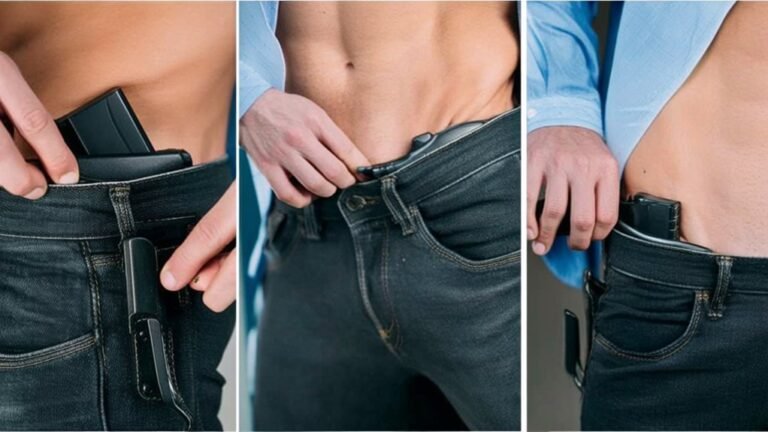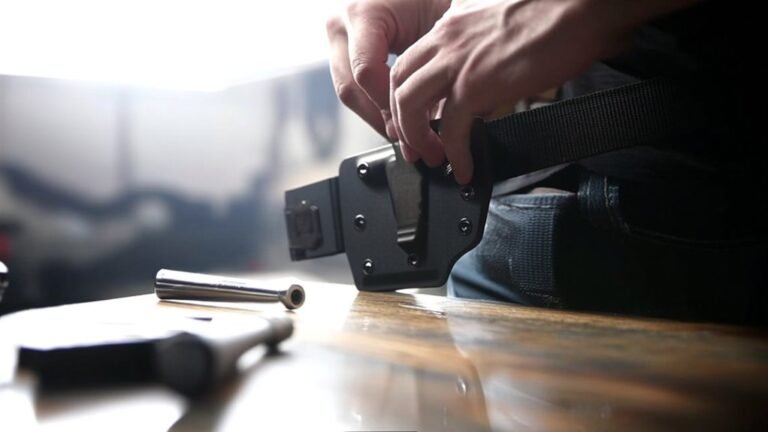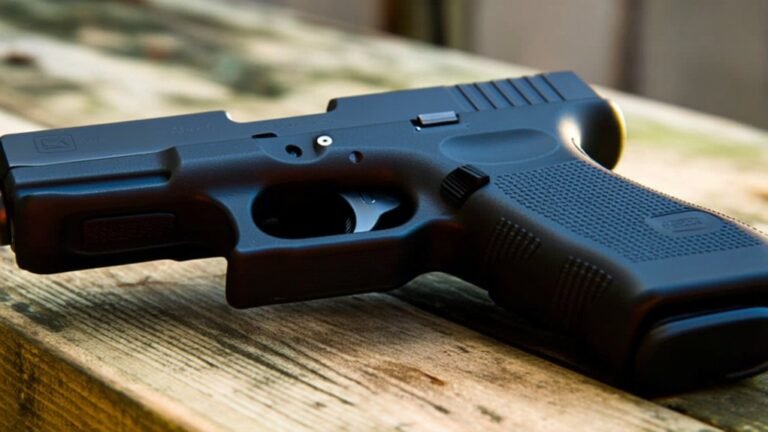
How to Wear a Shoulder Holster in 7 Easy Steps
To wear a shoulder holster in 7 easy steps, first pick one that fits your firearm and offers adjustable straps for comfort. Place it on your dominant side so the gun sits snugly under your arm with full motion. Adjust the straps for a secure, balanced fit, and keep your firearm locked in place safely. Add an opposite-side pouch for weight balance, wear an undershirt to prevent chafing, and practice safe drawing. Keep going to uncover handy tips for mastering this setup.
Choose Your Shoulder Holster
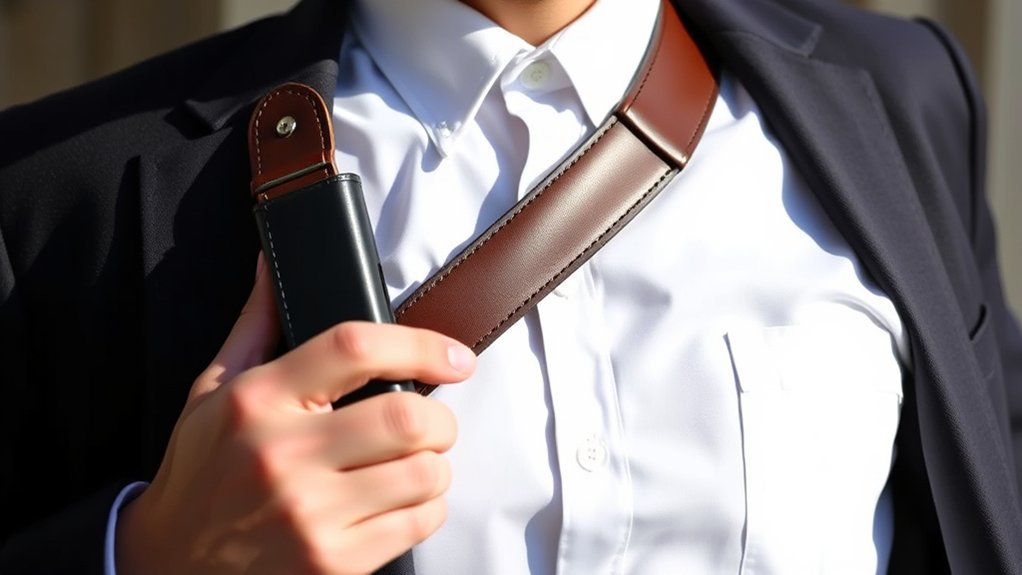
How do you pick the right shoulder holster for your needs? Start by considering the size and type of your firearm; your holster must fit it securely without restricting access.
Look for adjustable straps to guarantee comfort and a custom fit, especially if you plan to wear it for long periods.
Material matters—leather offers durability and classic style, while nylon is lightweight and weather-resistant.
Think about your daily activities; if you move a lot, a design with extra support might be best.
Also, check for quick-release features if you need fast access.
Finally, consider how discreet you want to be; some holsters are bulkier, while others are slim and blend easily under clothing.
Choosing wisely ensures safety and convenience.
Position Your Shoulder Holster on Your Strong Side
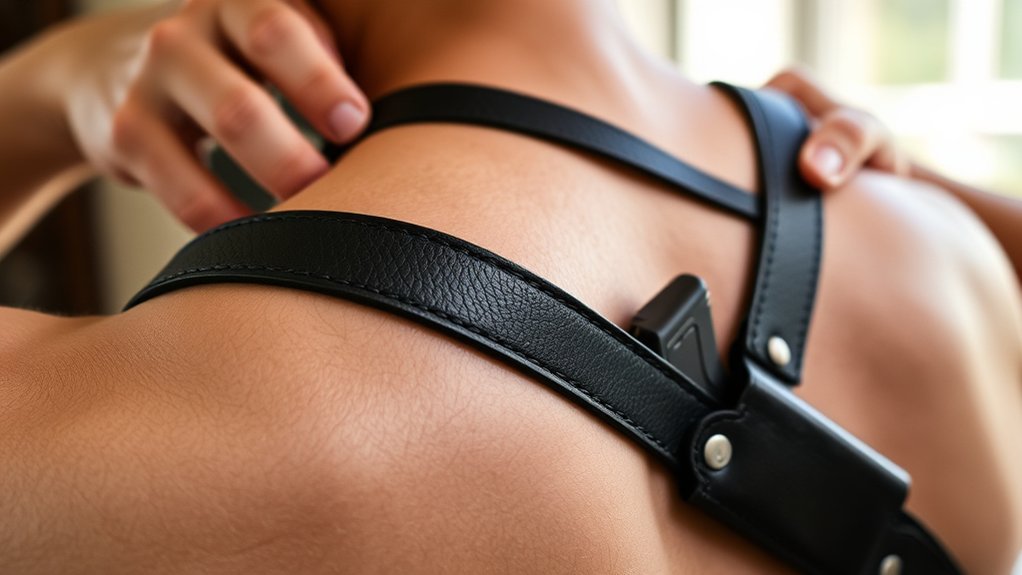
Since your strong side offers the most natural and quickest access, position your shoulder holster accordingly. This placement guarantees you can draw your firearm smoothly and efficiently when needed. Here’s how to get it right:
- Identify your dominant hand—right or left—and place the holster on that side’s shoulder.
- Ensure the firearm sits comfortably under your arm, allowing for a full range of motion without obstruction.
- Check that the holster doesn’t interfere with your arm movement or cause unnecessary bulk on your strong side.
Adjust Shoulder Straps for Secure, Comfortable Fit
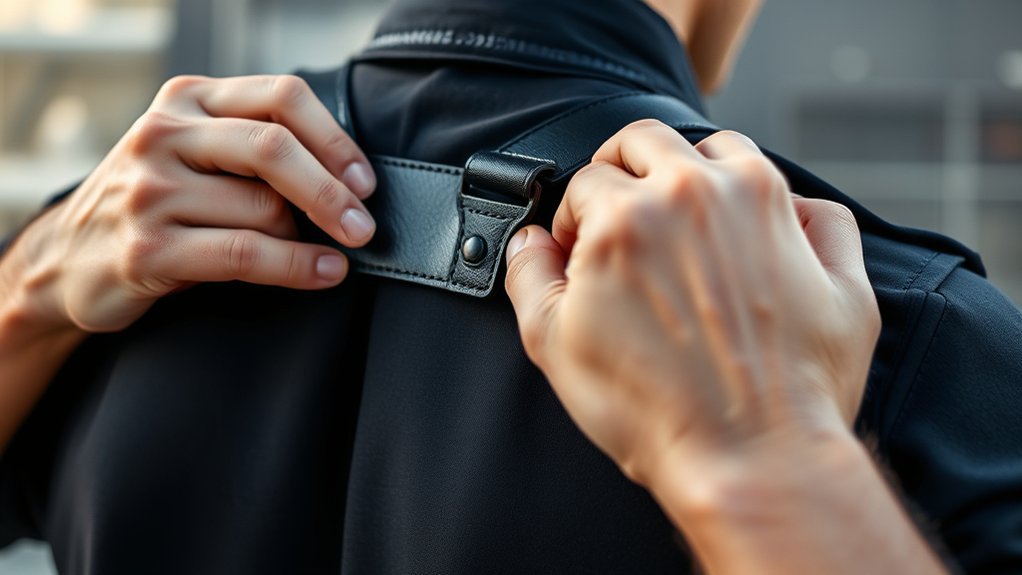
You’ll want to start by measuring the strap length to guarantee the holster sits snugly without restricting movement.
Next, balance the weight distribution so it feels even and doesn’t pull on one side.
Finally, make sure all buckles are secured properly to keep everything in place throughout the day.
Measuring Strap Length
Where should the shoulder straps sit for the best fit? They should rest comfortably on your shoulders without digging in or slipping off. Measuring the strap length correctly is crucial for both comfort and security. Here’s how to get it right:
- Wear the holster and let the straps hang naturally over your shoulders.
- Adjust the straps until the holster’s body lies snugly against your torso without restricting movement.
- Check for balance by moving your arms; straps shouldn’t slide or pinch.
Make small incremental adjustments and test the fit each time.
A properly measured strap length keeps your holster secure, ensures quick access, and prevents discomfort during extended wear. Take your time—getting this right makes all the difference.
Balancing Weight Distribution
Once you’ve measured and adjusted the straps for a comfortable fit, the next step is balancing the weight distribution of your shoulder holster. You want the holster to sit evenly on your shoulders to prevent strain or discomfort during extended wear.
Start by placing your firearm in the holster and check if one side feels heavier. If it does, adjust the straps on the opposite shoulder to lift that side slightly, redistributing the weight.
Make minor tweaks until both shoulders feel balanced and the holster stays firmly in place without shifting. Proper weight distribution not only enhances comfort but also improves accessibility and stability, so take your time to get it right before moving on to the next step.
Securing Buckles Properly
Although balancing the weight is essential, securing the buckles properly guarantees your shoulder holster stays firmly in place throughout the day. You’ll want to adjust the shoulder straps so they fit snugly without restricting movement or causing discomfort.
Here’s how to secure the buckles correctly:
- Start Loose: Begin with the buckles slightly loose to find the most comfortable position.
- Tighten Gradually: Pull the straps evenly on both sides, ensuring the holster sits close to your body without pinching.
- Test Mobility: Move your arms and torso to confirm the fit stays secure and doesn’t shift.
Regularly check the buckles during wear. Properly secured buckles keep your holster stable, making your carry comfortable and reliable.
Keep Your Gun Safe and Secure in the Holster
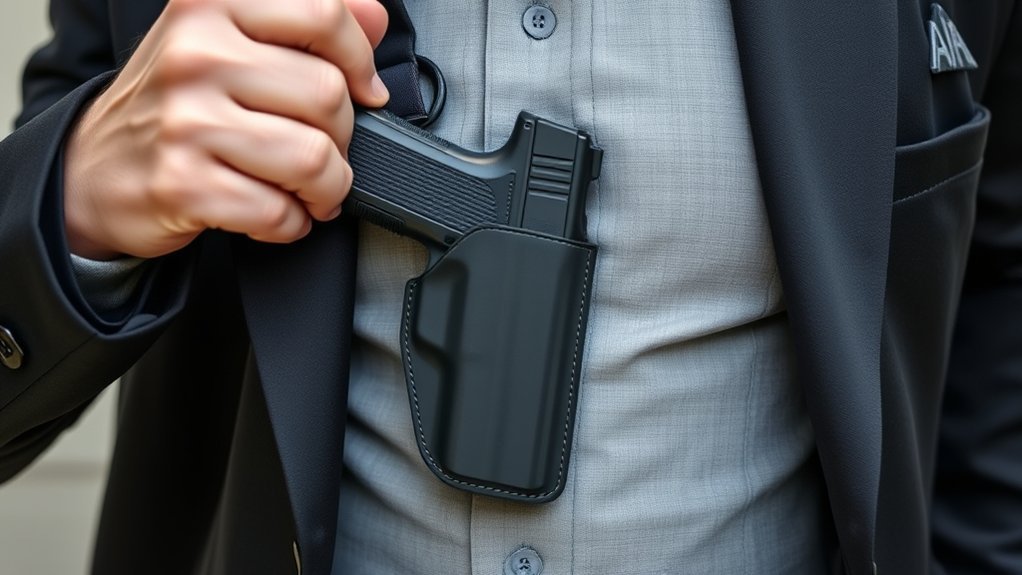
To keep your gun safe and secure in the holster, you’ll need to make sure it fits snugly without being difficult to draw. Check that the retention strap or thumb break holds the firearm firmly. Adjust the holster’s tension screws if available, so your gun won’t rattle or slip out. Regularly inspect the holster for wear or damage that could compromise security. Proper positioning ensures the gun stays stable and accessible.
| Step | Action | Tip |
|---|---|---|
| 1 | Fit the gun snugly | Shouldn’t be too tight |
| 2 | Secure retention strap | Engage fully |
| 3 | Adjust tension screws | Test draw smoothness |
| 4 | Inspect holster condition | Replace if worn |
| 5 | Position holster properly | Keep gun stable and accessible |
Balance Your Shoulder Holster With Extra Gear
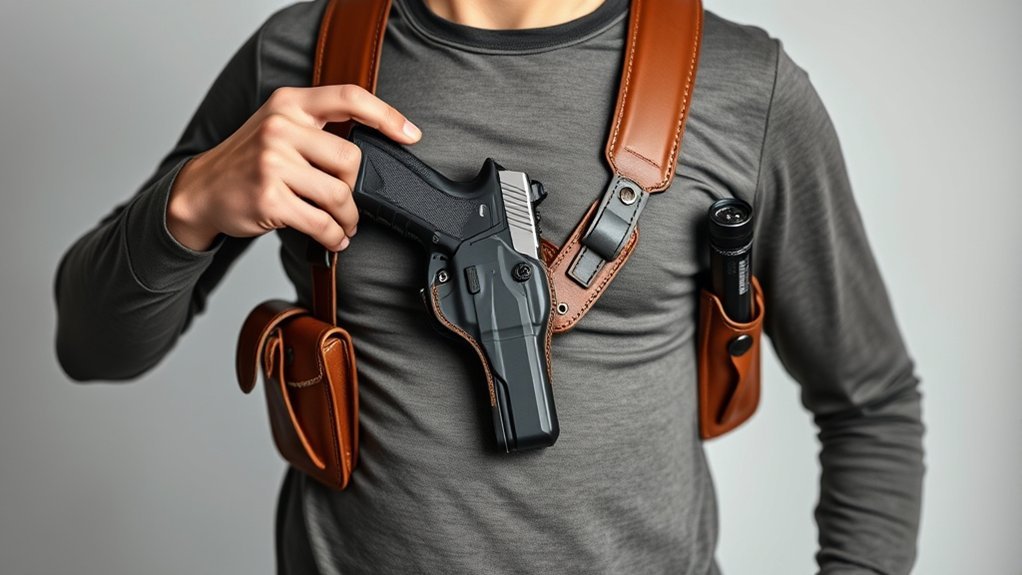
Keeping your gun secure in the holster is only part of carrying comfortably and effectively. To maintain balance and reduce strain, you need to distribute the weight evenly across your upper body. Here’s how to balance your shoulder holster with extra gear:
- Add a Magazine Pouch: Place an extra magazine on the opposite side of your holster to counterbalance the weight of your gun.
- Use a Utility Pouch: Carry small essentials like a flashlight or multitool opposite your firearm to even out the load.
- Adjust Straps Properly: Tighten or loosen your shoulder straps so the holster sits snugly without pulling to one side.
Balancing your gear not only improves comfort but also helps you move smoothly and respond quickly.
Wear an Undershirt to Prevent Chafing Under Your Holster
When you wear a shoulder holster, it can rub against your skin and cause irritation during extended use. To prevent chafing, wear a snug, moisture-wicking undershirt beneath your holster. This creates a smooth barrier between your skin and the holster’s straps, reducing friction.
Choose a fabric that breathes well to keep you comfortable, especially in warmer conditions or during physical activity. Avoid thick or loose clothing under the holster, as it can bunch up and cause more discomfort.
Wearing an undershirt not only protects your skin but also helps keep the holster cleaner by absorbing sweat. By making this simple adjustment, you’ll improve your overall comfort and make wearing your shoulder holster easier for longer periods.
Practice Drawing and Reholstering Your Shoulder Holster Safely
Although carrying a shoulder holster offers convenience, you need to practice drawing and reholstering safely to build muscle memory and avoid accidents. Regular practice guarantees you can access your firearm quickly and confidently without fumbling. Focus on smooth, deliberate motions while keeping your finger off the trigger.
Follow these steps to train safely:
- Use an unloaded firearm or a training replica to eliminate risk.
- Practice in front of a mirror to monitor your form and verify proper technique.
- Reholster slowly and carefully, maintaining control to prevent accidental discharge.
Frequently Asked Questions
Can Shoulder Holsters Be Worn With Formal Clothing?
Yes, you can wear shoulder holsters with formal clothing, but you’ll want a well-fitted jacket to conceal it properly. Choose a slim holster design to avoid bulges, ensuring comfort and a discreet, polished look.
Are Shoulder Holsters Legal in All States?
No, shoulder holsters aren’t legal in all states. You’ll need to check your local laws since regulations vary widely. Some states require permits or have restrictions, so always confirm before carrying one to stay compliant and safe.
How Do Shoulder Holsters Compare to Waistband Holsters?
You’ll find shoulder holsters distribute weight better and offer easier access when seated, while waistband holsters provide quicker draw and concealment. Your choice depends on comfort, clothing, and how you plan to carry daily.
Can Left-Handed People Use Standard Shoulder Holsters?
Yes, you can use standard shoulder holsters, but you’ll often need a left-handed model for comfort and accessibility. You’ll want the holster on your right side, ensuring quick draw and balanced weight distribution.
What Maintenance Is Required for Leather Shoulder Holsters?
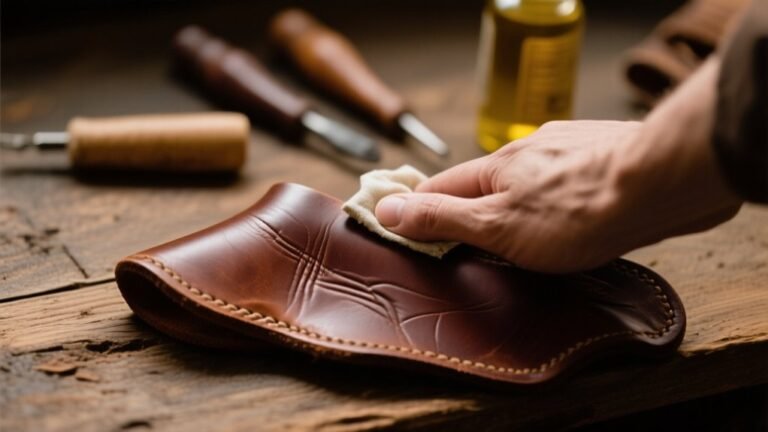
You should clean your leather shoulder holster regularly with a damp cloth, apply leather conditioner to keep it supple, avoid excessive moisture, and store it in a cool, dry place to prevent cracking and maintain durability over time.
Conclusion
Wearing a shoulder holster correctly boosts both comfort and safety. Imagine Alex, a new carrier, who struggled with discomfort until adjusting his straps and balancing extra gear. Once he did, he moved confidently, drawing smoothly when needed. By following these steps, you’ll not only protect yourself but also build muscle memory for quick, safe access. Remember, practice makes perfect—wear your holster right, and you’ll be ready for anything life throws your way.