
7 Steps to Soften Your Leather Gun Holster
To soften your leather gun holster, start by cleaning and drying it thoroughly. Apply a quality leather conditioner evenly, focusing on stiff areas, and let it absorb. Gently flex and bend the leather to loosen it without forcing unnatural shapes. Wear the holster with your firearm for short periods to help it mold perfectly. Add leather oil for added softness and always protect it from moisture. Regular cleaning and conditioning will keep it supple and durable. There’s more to explore for lasting care and performance.
Prepare Your Leather Holster for Softening
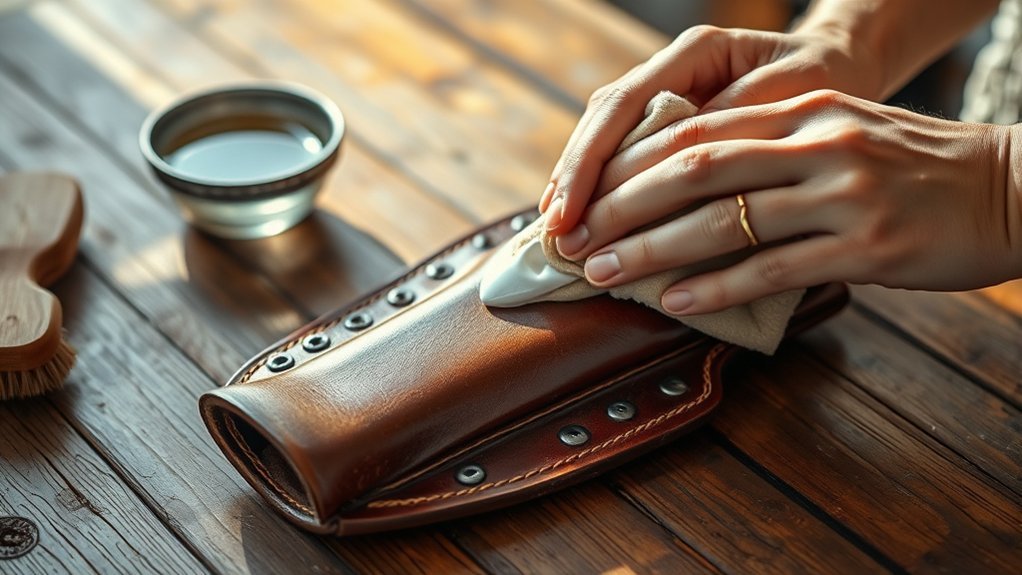
Before you begin softening your leather gun holster, make sure it’s clean and dry. Start by wiping it down with a soft, dry cloth to remove dust and debris.
If it’s particularly dirty, use a slightly damp cloth with mild soap, then dry it thoroughly. Avoid soaking the leather, as excess moisture can damage it.
Check for any cracks or damage; addressing these early prevents further wear during softening.
Remove any metal parts or accessories if possible to avoid rust or discoloration.
Lay the holster flat in a cool, ventilated area away from direct sunlight or heat sources.
Taking these steps prepares your holster for the softening process, ensuring the leather responds well and lasts longer without compromising its shape or integrity.
Use Leather Conditioner to Start Breaking It In
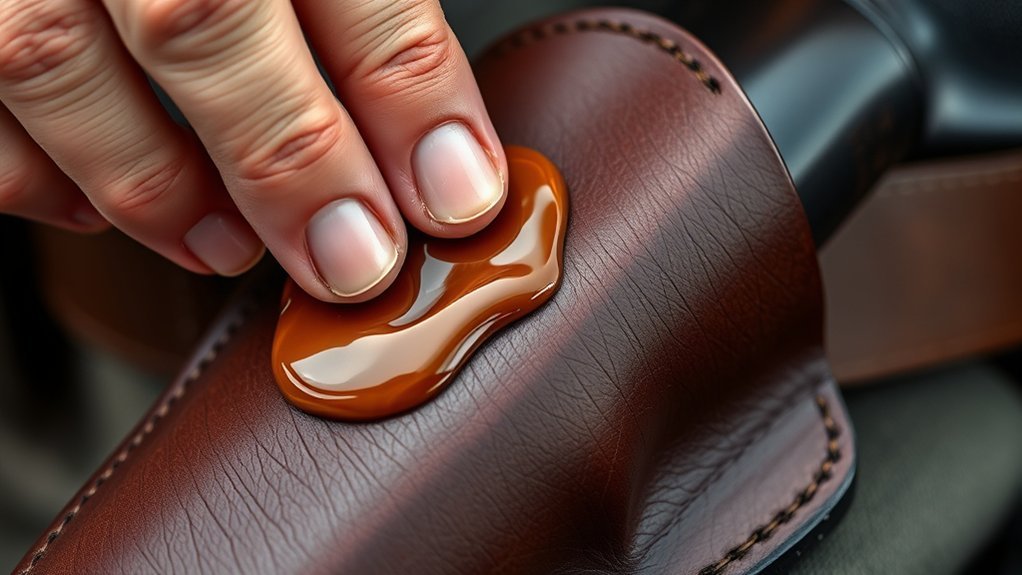
Once your holster is clean and dry, applying a quality leather conditioner helps start the softening process by restoring essential oils and flexibility. You want to choose a conditioner specifically made for leather to avoid damage. Apply it evenly with a soft cloth, focusing on areas that feel stiff. Let it absorb naturally for several hours or overnight. Regular conditioning prevents cracking and keeps the leather supple. Below is a quick guide to help you select and apply the right conditioner:
| Conditioner Type | Application Frequency | Key Benefit |
|---|---|---|
| Cream-based | Monthly | Deep hydration |
| Oil-based | Every 3 months | Restores flexibility |
| Wax-based | As needed | Adds water resistance |
| Spray-based | Weekly | Quick and easy use |
Conditioning properly sets the foundation for effective softening.
Gradually Flex and Bend Your Leather Holster
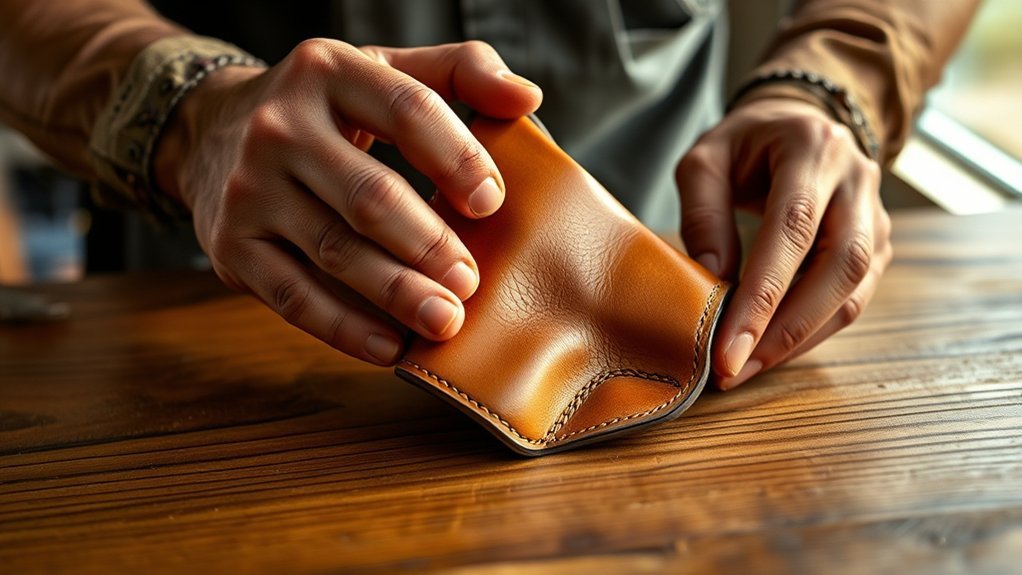
Applying leather conditioner restores moisture and makes the holster more pliable, setting you up to gently flex and bend the leather.
Start by holding the holster firmly and bending it slowly along the natural curves, avoiding sharp folds that could damage the material.
Work the leather in small sections, repeatedly flexing and bending to encourage softness without overstressing it.
Focus on the areas that feel stiffest, but be patient—it takes time for the fibers to loosen.
Avoid forcing the holster into unnatural shapes; instead, guide it gradually to improve flexibility.
This process helps the leather adapt to your hand’s grip and natural movements, making the holster more comfortable and functional over time.
Repeat this flexing regularly as part of your break-in routine.
Wear the Holster With Your Firearm to Shape It
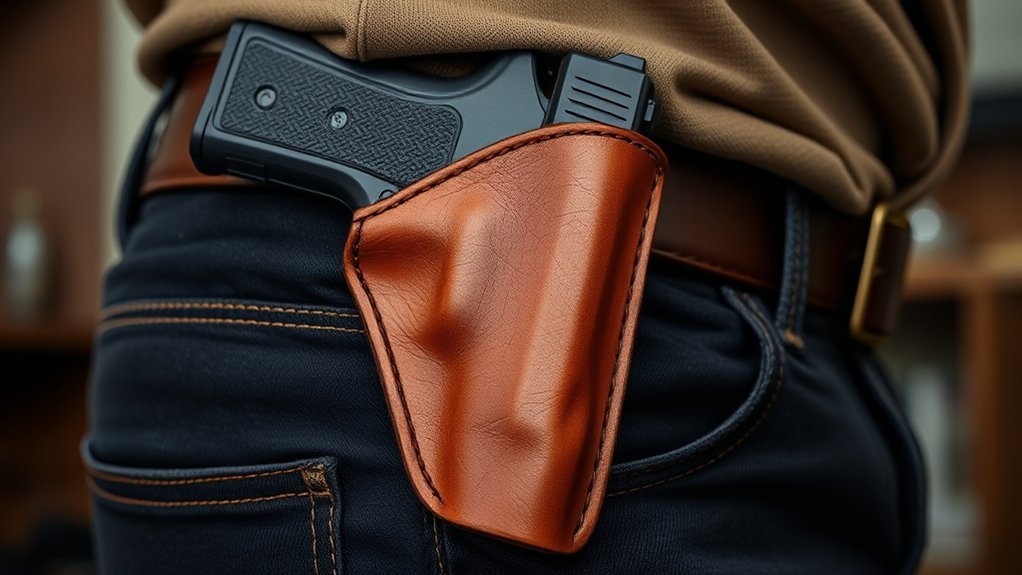
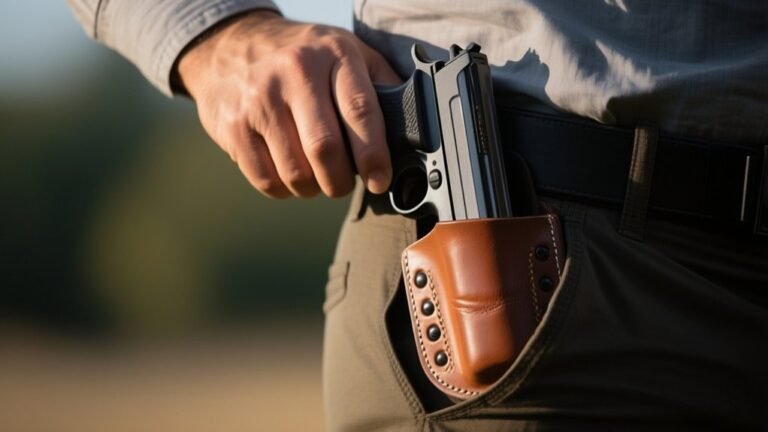
As you continue breaking in your leather holster, wearing it with your firearm helps the leather mold perfectly to your gun’s shape. This real-world use softens the leather by applying consistent pressure exactly where it’s needed. Carry your holster daily for short periods, gradually increasing the time as it becomes more flexible. This method guarantees a snug, custom fit that improves comfort and retention.
| Tip | Reason | Frequency |
|---|---|---|
| Start with short wear | Prevents discomfort | 15-30 minutes daily |
| Wear during routine tasks | Encourages natural shaping | Throughout the day |
| Remove to rest leather | Prevents over-stretching | Every few hours |
Apply Leather Oil to Soften and Protect Your Holster
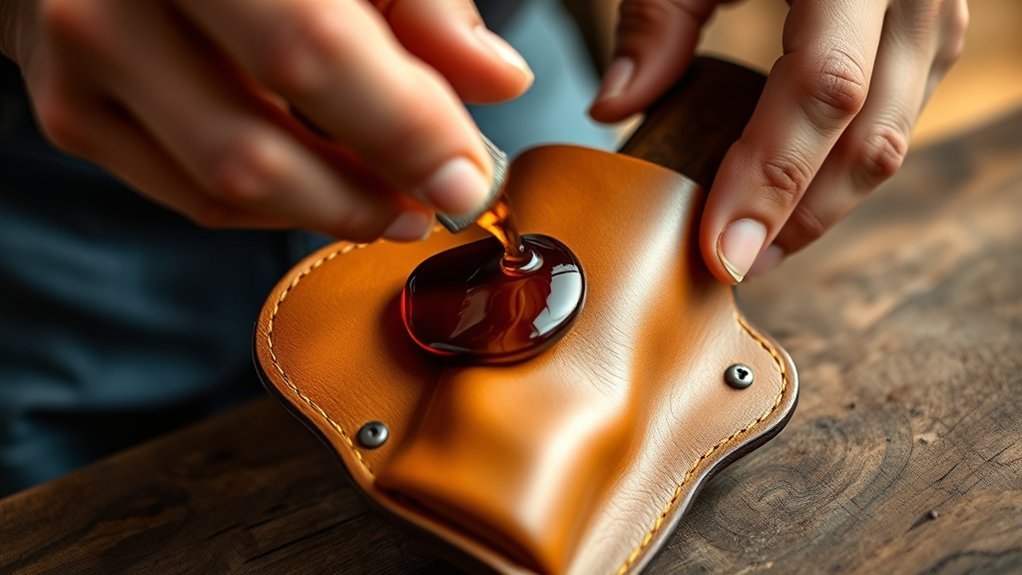
Wearing your holster with your firearm helps shape it perfectly, but to truly soften and protect the leather, you’ll want to treat it with leather oil. Choose a high-quality leather oil designed specifically for gun holsters or saddle leather.
Apply a small amount evenly using a clean, soft cloth, gently rubbing it in with circular motions. Don’t over-saturate; a thin, even layer works best.
Let the oil absorb naturally—this nourishes the leather fibers, preventing cracks and dryness while enhancing flexibility.
Regular oiling maintains your holster’s durability and comfort. After applying, allow the holster to dry completely before use.
With consistent care, your holster will stay supple, last longer, and provide reliable performance every time you carry.
Avoid Moisture to Protect Your Leather Holster
Though leather is durable, moisture can quickly damage your holster if you’re not careful. Water causes leather to stiffen, warp, or even develop mold. To protect your holster, avoid exposing it to rain or sweat for long periods. If it gets wet, dry it slowly at room temperature—never use heat sources. Store your holster in a cool, dry place to prevent moisture buildup.
| Moisture Risk | Prevention Tip |
|---|---|
| Rain exposure | Use a waterproof cover |
| Sweat contact | Wear moisture-wicking clothing |
| Storage humidity | Use silica gel packs |
| Wet cleaning | Air dry naturally |
| Mold formation | Inspect and dry regularly |
Maintain Softness With Regular Cleaning and Conditioning
To keep your leather holster soft, use gentle leather cleaners that won’t strip its natural oils.
Follow up with a quality leather conditioner to restore moisture and flexibility.
Make a habit of cleaning and conditioning regularly to maintain its softness over time.
Choose Gentle Leather Cleaners
Since harsh chemicals can damage your leather gun holster, you should choose gentle leather cleaners designed specifically for delicate materials. These cleaners effectively remove dirt and grime without stripping away natural oils that keep the leather supple.
When selecting a cleaner, look for pH-balanced products or those labeled safe for use on fine leather. Avoid household detergents or anything containing alcohol, as they can dry out and stiffen the leather.
Always test the cleaner on a small, hidden area first to ensure it won’t discolor or harm the material. Use a soft cloth or sponge to apply the cleaner in gentle, circular motions.
Regular use of these mild cleaners will help maintain your holster’s softness and extend its lifespan without causing damage.
Apply Quality Leather Conditioner
While cleaning removes dirt, applying a quality leather conditioner restores essential oils that keep your holster soft and flexible. You’ll want to use a conditioner designed specifically for leather to avoid damage. Apply it sparingly with a clean cloth, rubbing it evenly into the surface. Let it absorb fully before using the holster again. This process prevents cracking and maintains durability.
| Conditioner Type | Benefits | Application Tips |
|---|---|---|
| Cream | Deep moisturizing | Use small amounts |
| Oil-based | Restores oils quickly | Avoid over-application |
| Wax | Adds water resistance | Buff after drying |
| Spray | Easy to apply evenly | Use in well-ventilated area |
| Balm | Softens and protects | Warm before applying |
Establish Regular Care Routine
Maintaining your leather gun holster’s softness requires establishing a regular care routine that includes both cleaning and conditioning. You should clean your holster gently with a damp cloth to remove dirt and sweat after each use. Avoid soaking or harsh chemicals that can damage the leather.
After cleaning, apply a quality leather conditioner to replenish oils and keep the material supple. Aim to condition your holster every few months or more frequently if exposed to harsh conditions.
Consistency is key—regular care prevents stiffness, cracking, and premature wear. By sticking to this routine, you’ll extend your holster’s lifespan and maintain its comfort and functionality.
Don’t wait for your leather to feel dry or stiff; proactive maintenance guarantees it stays soft and reliable.
Frequently Asked Questions
Can Synthetic Leather Holsters Be Softened Like Genuine Leather?
You can’t soften synthetic leather the same way you do genuine leather because it’s made from plastic materials. Instead, you might try warming it slightly or using specific conditioners made for synthetics to improve flexibility.
How Long Does It Take for a Leather Holster to Soften Fully?
Rome wasn’t built in a day, and neither is a leather holster fully softened—it usually takes a few weeks of regular use and conditioning. You’ll feel it gradually molding to your gun and hand with time and care.
Is It Safe to Use Household Oils to Soften Leather Holsters?
You shouldn’t use household oils on leather holsters, as they can damage the leather or cause it to deteriorate. Instead, use products specifically designed for leather conditioning to keep your holster safe and supple.
Can Softening Leather Holsters Affect Firearm Retention?
Yes, softening leather holsters can affect firearm retention. As you soften the leather, it may loosen its grip, so you’ll need to test and adjust to guarantee your firearm stays secure and won’t accidentally slip out.
How Do Temperature Changes Affect the Leather Holster’s Softness?
Temperature changes can make your leather holster stiffen in the cold and soften in the heat. You’ll notice it becomes more flexible when warm but may lose shape or firmness if exposed to excessive heat or moisture.
Conclusion
Think of your leather holster like a trusty old tree—it starts stiff and unyielding, but with care, it bends gracefully in the wind. By conditioning, flexing, and wearing it, you’re helping it grow stronger and more comfortable, just as time shapes a tree’s branches. Keep nurturing it with oil and cleaning, and your holster will remain as reliable and soft as a well-loved companion on every adventure.