How Do You Wear a Belly Band Holster in 10 Simple Steps?
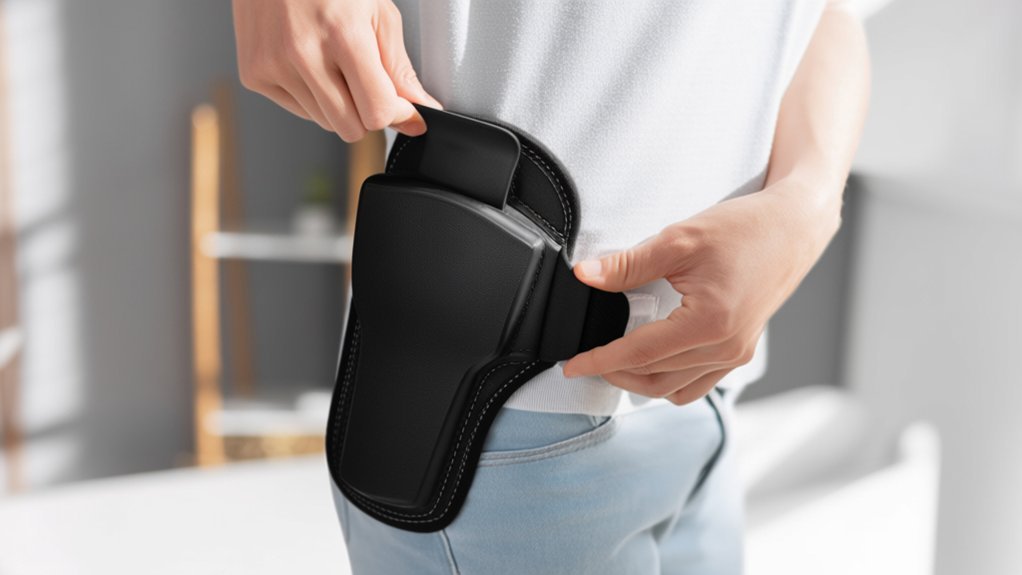
To wear a belly band holster, wrap the elastic band snugly around your torso below your natural waistline for comfort and concealment. Position it where your hand naturally rests for quick access, adjusting straps or Velcro to prevent shifting. Decide to wear it under or over clothing based on your activity. Insert your firearm securely, ensuring trigger safety. Check for comfort and concealment throughout the day. Keep these basics in mind, and you’ll discover helpful tips for mastery.
What Is a Belly Band Holster and Why Use One?
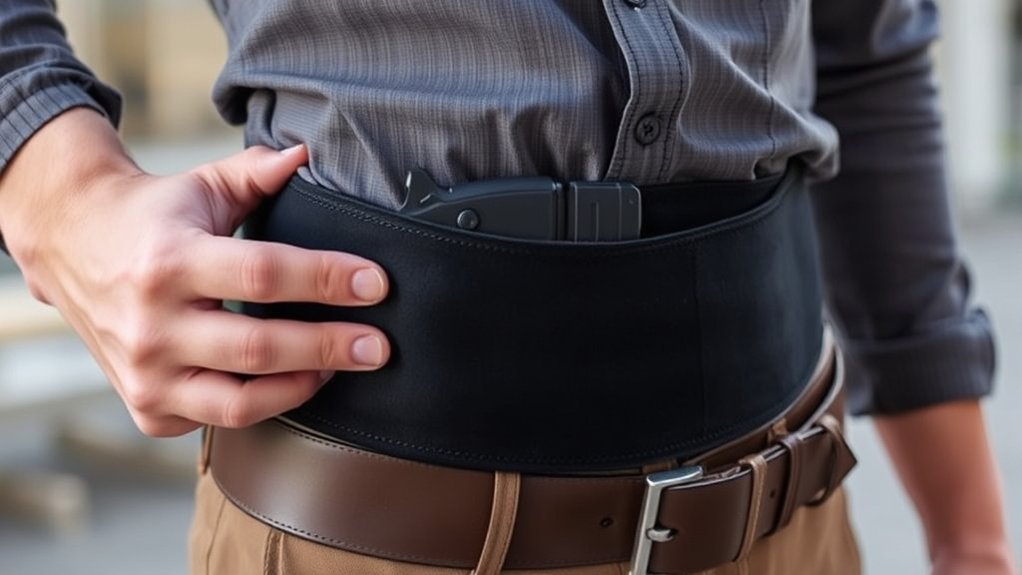
Although it may seem unconventional at first, a belly band holster offers a flexible and discreet way to carry your firearm. Unlike traditional holsters, this elastic band wraps around your midsection, allowing you to position your gun anywhere from your waist to just below your ribs.
You can easily adjust it for comfort and concealment. It works well with various clothing styles, especially if you want to avoid printing or bulky carry methods.
Plus, it’s great if you prefer not to wear a belt or if you’re active and need your firearm to stay secure during movement.
With a belly band, you get versatility and comfort while keeping your weapon close and accessible without drawing attention.
Pick the Best Belly Band Holster for You and Your Gun
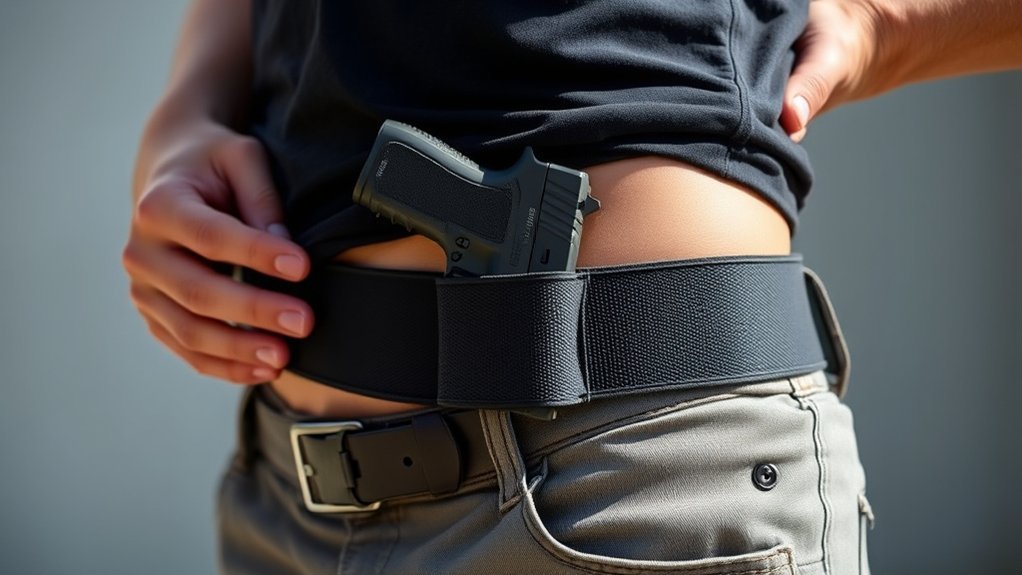
Choosing the right belly band holster for you and your firearm makes all the difference in comfort, security, and ease of access. First, consider your gun’s size and shape—some holsters fit compact pistols better, while others accommodate larger models.
Look for adjustable retention to keep your gun secure without making it hard to draw. Material matters too; neoprene offers flexibility and breathability, while leather provides durability and a snug fit.
Think about your daily activities and where you’ll wear it—some bands sit lower or higher on your torso. Also, check for added features like magazine pouches or sweat guards if you want extra convenience.
Trying on different options ensures you find a holster that feels right and maintains a firearm that’s accessible when you need it most.
Prepare Clothing and Belly Band Holster for All-Day Comfort
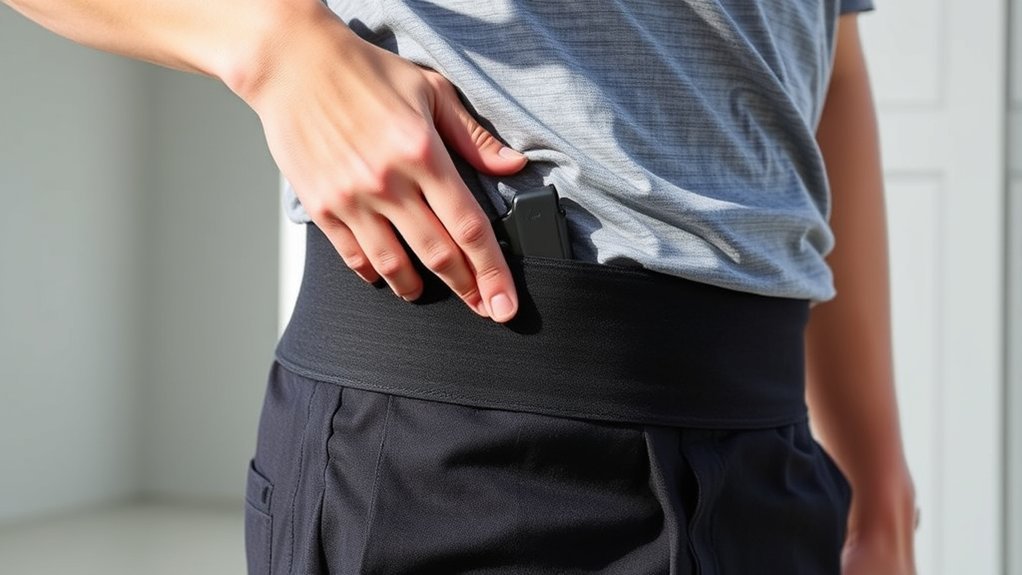
To stay comfortable all day, pick clothing that’s breathable and fits well with your belly band holster.
Make sure your holster’s snug but not too tight, so it stays secure without causing irritation.
Adjusting both properly helps you move freely without distractions.
Choosing Comfortable Clothing
What makes clothing comfortable enough for wearing a belly band holster all day? You want clothes that move with you and don’t create pressure points. Choosing the right fabric and fit is key to maintaining comfort while carrying.
Focus on these factors when selecting your outfit:
- Breathable fabrics like cotton or moisture-wicking blends prevent sweating.
- Stretchy materials allow flexibility and reduce restriction.
- Proper fit avoids tightness that can dig into your skin.
- Layering wisely ensures the holster stays discreet without bulk.
Adjusting Holster Fit
How exactly do you make certain your belly band holster fits comfortably throughout the day? Start by adjusting the tightness so it’s snug but not restrictive. You want it secure enough to hold your firearm firmly, yet loose enough to breathe and move freely.
Before fastening, position the holster where it feels most natural—usually around your waist or just below the ribcage. Wear thin, moisture-wicking clothing underneath to reduce friction and irritation.
Once in place, walk around and bend to test the fit; if it shifts or pinches, loosen or reposition it. Remember, small adjustments make a big difference.
Regularly check throughout the day and tweak as needed to maintain comfort and ensure your holster stays discreet and secure.
Position and Secure Your Belly Band Holster Around Your Waist
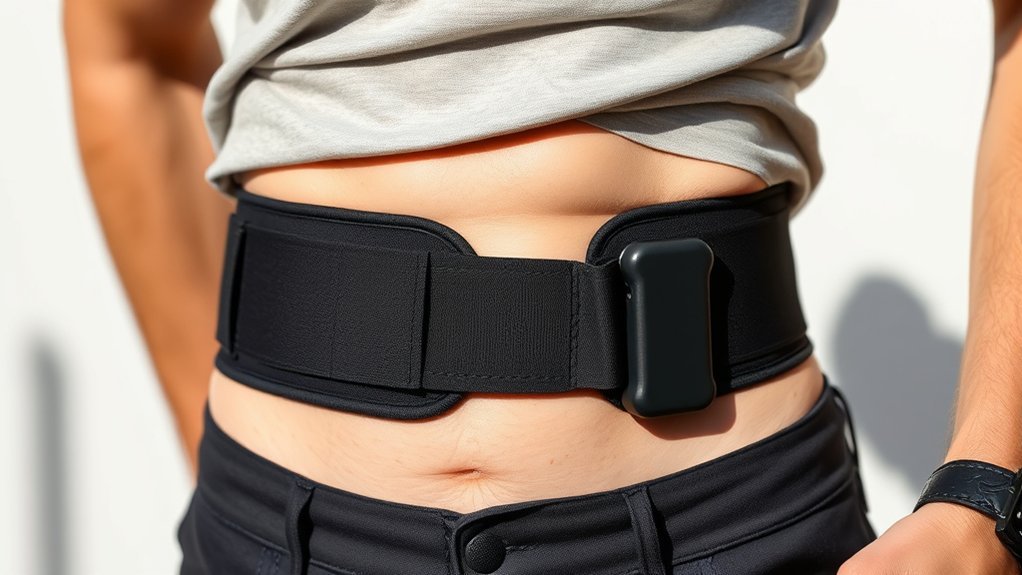
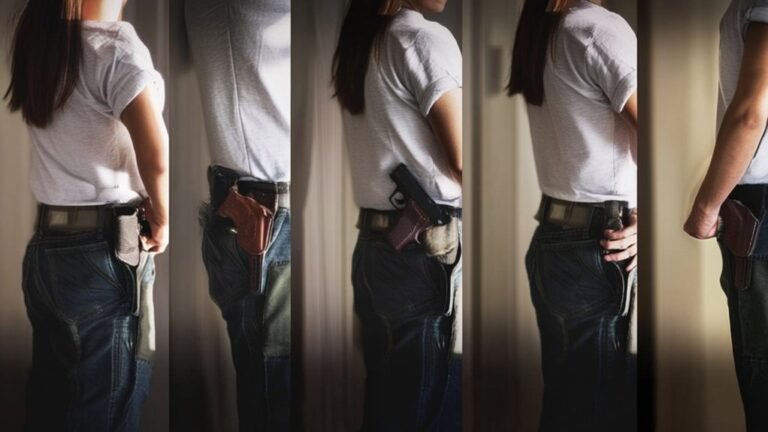
Since proper placement affects both comfort and accessibility, you’ll want to position your belly band holster just below your natural waistline.
Start by wrapping the band around your torso, ensuring it sits snugly without restricting movement.
Next, align the holster area where you can easily draw your firearm.
To secure it effectively, follow these tips:
- Fasten the adjustable straps or Velcro tightly to prevent shifting
- Check that the holster’s opening is oriented for a smooth, quick draw
- Confirm the band doesn’t pinch or cause discomfort when you move
- Test your range of motion to ensure the holster stays put during activities
Decide Whether to Wear the Holster Under or Over Clothing
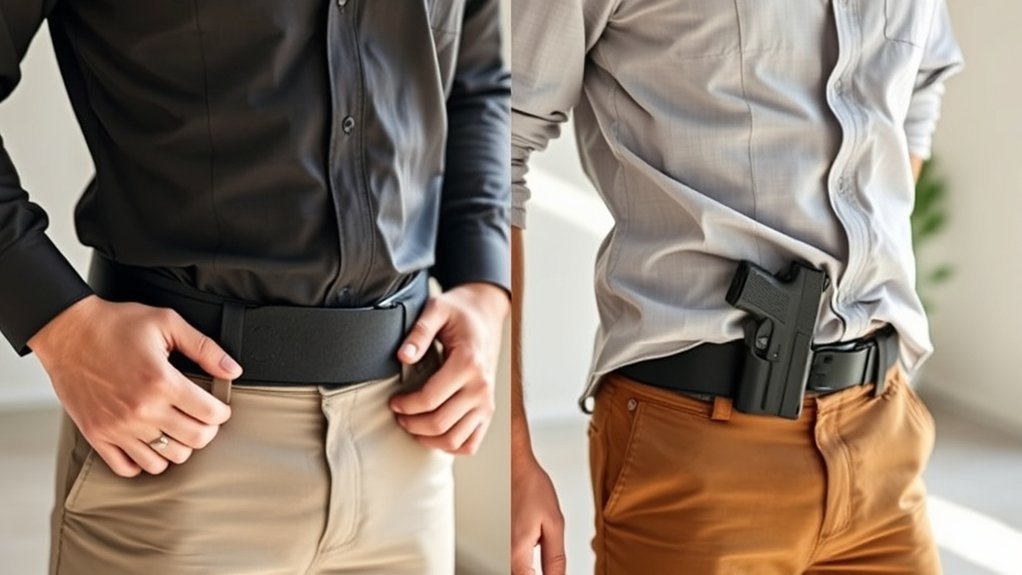
You’ll need to decide if you want to wear your belly band holster under or over your clothing. Wearing it under your clothes offers better concealment and quick access.
Wearing it over outerwear can be more comfortable and easier to adjust. Consider your daily activities and comfort when making this choice.
Benefits Of Underwear Wear
Wearing a belly band holster underneath your clothing offers several notable benefits that enhance comfort and concealment. When you choose to wear it under your clothes, you can maintain a low profile, reducing the chance of printing or drawing unwanted attention. This method keeps your firearm secure and close to your body, which improves retention and comfort during movement.
Additionally, it allows for discreet access without compromising your outfit.
Some key benefits include:
- Enhanced concealment for everyday wear
- Improved firearm retention against your body
- Reduced discomfort from external holster bulk
- Versatility with different clothing styles and layers
Advantages Of Outerwear Use
While wearing a belly band holster under your clothes offers excellent concealment and comfort, there are times when placing it over your outerwear makes more sense. Wearing it outside allows quicker access, especially when you’re in a hurry or wearing bulky layers that might slow you down. It also prevents printing, as the holster doesn’t press against your skin or tight clothing.
Over-outerwear carry works well during workouts or outdoor activities where you want both security and easy reach. Plus, it reduces sweat buildup around the holster, keeping you more comfortable during extended wear.
If you want to showcase your gear or find underclothes restrictive, wearing the holster over your jacket or shirt is a smart, practical choice that balances accessibility with comfort.
Insert Your Firearm Safely Into the Belly Band Holster
Before inserting your firearm, make sure the belly band holster is securely fastened around your waist. This prevents shifting and guarantees stability as you place your weapon inside.
When inserting your firearm, follow these key steps:
- Keep your finger off the trigger at all times to avoid accidental discharge.
- Hold the firearm firmly by the grip, aligning it with the holster opening.
- Insert the firearm slowly and smoothly to prevent snagging or damage.
- Confirm the firearm is fully seated and secure within the holster pocket.
Taking these precautions helps maintain safety and preserves the integrity of both your firearm and holster.
Always prioritize control and careful handling while inserting your weapon to ensure safe, reliable carry throughout the day.
Adjust the Holster for Easy Access and Quick Draw
Now that your firearm is securely in place, you’ll want to adjust the holster for easy access and a quick draw. Focus on positioning it within your natural reach.
Fine-tuning retention settings is important to keep the gun secure yet ready for quick access. Make sure the fit is comfortable for all-day wear.
These adjustments ensure you’re prepared without sacrificing comfort.
Positioning for Optimal Reach
Where you position your belly band holster can make all the difference in how quickly and smoothly you can draw your firearm. You want a spot that feels natural and allows your hand to move without obstruction. Try positioning it slightly off-center or at your appendix area, depending on your hand dominance and body shape.
Keep these points in mind:
- Place the holster where your hand naturally rests to minimize reach time
- Avoid areas that cause discomfort when sitting or bending
- Confirm the firearm doesn’t press uncomfortably against your body
- Test different spots to find the quickest, smoothest draw for you
Experiment until you find a balance between comfort and access, making your draw instinctive and efficient.
Adjusting Retention Settings
How tightly should your belly band holster hold your firearm? It needs to be snug enough to prevent movement but loose enough for a smooth, quick draw.
Start by adjusting any retention screws or straps your holster has. Tighten them gradually and test your draw each time. If you feel resistance or fumbling, loosen them slightly.
Your goal is a balance—secure enough to keep the gun from shifting as you move, yet accessible under stress. Remember, retention isn’t just about tightness; it’s about how your hand interacts with the holster’s design.
Practice drawing repeatedly after each adjustment to find the sweet spot. Don’t rush—fine-tuning retention settings takes patience but improves both safety and performance.
Ensuring Comfortable Fit
Although adjusting retention is crucial, ensuring your belly band holster fits comfortably against your body is just as important for quick and reliable access. A snug fit prevents shifting and allows you to draw smoothly when needed.
To achieve this, focus on these key adjustments:
- Adjust the band’s tightness so it’s secure but not restrictive, allowing full movement.
- Position the holster where your natural hand rests for faster draws.
- Check that the material lies flat against your skin to avoid irritation.
- Wear the holster during daily activities to fine-tune comfort and accessibility.
Monitor Comfort and Concealment While Wearing Your Holster
Since you’ll be wearing your belly band holster for extended periods, you need to regularly check that it stays comfortable and well-concealed. Pay attention to any signs of irritation or pressure points on your skin, and adjust the band as needed to avoid discomfort.
Make sure it doesn’t shift or bunch up during movement, which can affect concealment. Periodically glance in a mirror or use your phone camera to confirm your firearm remains hidden under your clothing.
If you notice any printing or outlines, try repositioning the holster or changing your outfit to maintain discretion. Remember, comfort and concealment go hand in hand; if you feel uneasy or visible, you won’t wear it confidently, defeating the purpose of your belly band holster.
Stay Safe When Wearing Your Belly Band Holster
Whenever you carry a belly band holster, prioritizing safety is essential to prevent accidents and guarantee responsible firearm handling. You need to stay alert and mindful every time you wear it, ensuring your firearm is secure and accessible only to you.
Here are some key safety tips:
- Always engage the holster’s retention features to keep your gun firmly in place.
- Practice drawing and re-holstering in a controlled environment to build muscle memory.
- Avoid adjusting the holster in public or while distracted to prevent accidental discharge.
- Regularly check that your firearm’s safety mechanisms are engaged before wearing the holster.
Clean and Care for Your Belly Band Holster Regularly
To keep your belly band holster in good condition and guarantee reliable performance, you should clean and care for it regularly. Start by removing your firearm and any accessories.
Hand wash the holster with mild soap and warm water, avoiding harsh chemicals that could damage the fabric or elasticity. Gently scrub any stubborn spots with a soft brush.
Rinse thoroughly and let it air dry completely before use to prevent moisture buildup and odors.
Check for signs of wear, such as stretched elastic or frayed stitching, and replace the holster if necessary to maintain safety.
Regular care not only extends the life of your belly band holster but also ensures it stays comfortable and secure during daily wear.
Make cleaning part of your routine for best results.
Frequently Asked Questions
Can I Wear a Belly Band Holster While Exercising?
Yes, you can wear a belly band holster while exercising, but make sure it fits snugly and stays secure. Choose breathable material to avoid discomfort, and avoid intense activities that might cause it to shift or irritate your skin.
Are Belly Band Holsters Legal in All States?
No, belly band holsters aren’t legal in all states. You’ll need to check your local laws because concealed carry rules vary widely. Always research and follow your state’s specific regulations to stay compliant and carry safely.
How Do I Prevent Sweating Under the Belly Band?
You can prevent sweating under the belly band by wearing moisture-wicking, breathable fabrics underneath, adjusting the band for a snug but not tight fit, and using antiperspirant or powder on your skin to keep it dry and comfortable.
Can I Carry Other Items Like Magazines in a Belly Band?
Think of your belly band as a versatile treasure chest; yes, you can carry magazines and small essentials securely. Just make sure everything fits snugly to avoid shifting, keeping your gear ready and comfortable throughout the day.
What Types of Firearms Fit Best in Belly Band Holsters?
You’ll find compact and subcompact pistols fit best in belly band holsters because they’re slim and lightweight. These holsters work great with guns like Glock 43, Smith & Wesson Shield, or SIG Sauer P365 for comfort and concealment.
Conclusion
Wearing a belly band holster is like weaving a secret shield around your waist—comfort and readiness entwined. By choosing the right fit, adjusting it just so, and staying mindful of safety, you carry confidence beneath your clothes like a hidden flame. Keep it clean and tuned, and your holster will be your silent partner in every step. Embrace this discreet armor, and you’ll move through your day with both ease and peace of mind.