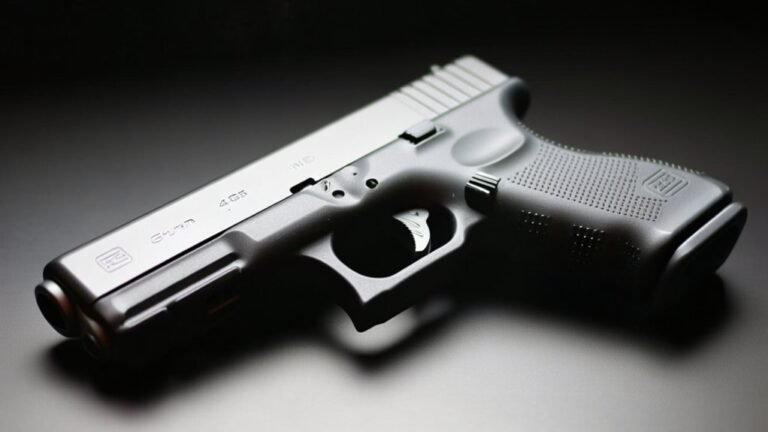

Is Glock Good for Concealed Carry?
You can trust a Glock for concealed carry because it’s reliable, easy to maintain, and built to perform under pressure. Its variety of sizes—from compact to subcompact—lets you balance comfort and concealment to fit your carry style. With thoughtful safety features and lightweight materials, Glocks stay comfortable throughout your day. Plus, with the right accessories and strategies, you can customize yours for better concealment and handling. There’s more to explore about choosing the perfect Glock setup.
Is Glock the Best Choice for Concealed Carry?
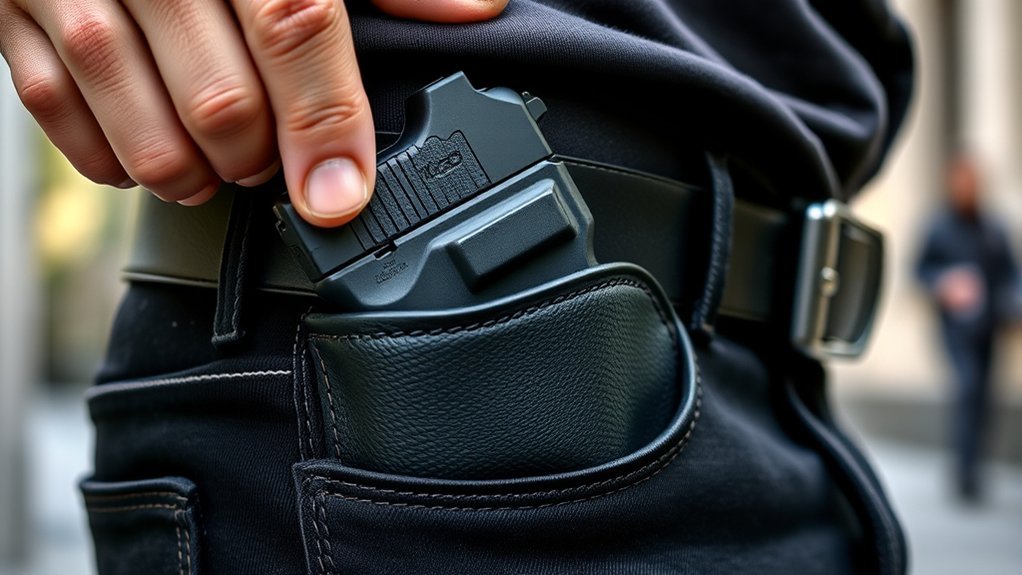
Why do so many people choose Glock for concealed carry? You’ll find that Glock offers reliability and simplicity, which are essential when your safety depends on your firearm.
You won’t have to worry about malfunctions because Glocks are known for their consistent performance, even under tough conditions. Plus, their lightweight polymer frame makes carrying more comfortable throughout the day.
You’ll appreciate the straightforward design, which means fewer parts that could fail or confuse you in a high-stress moment. While you might find other brands appealing, Glock balances durability, ease of use, and maintenance, making it a practical choice for many.
If you want a dependable option that won’t let you down, Glock is definitely worth considering for concealed carry.
Which Glock Models Work Best for Concealed Carry?
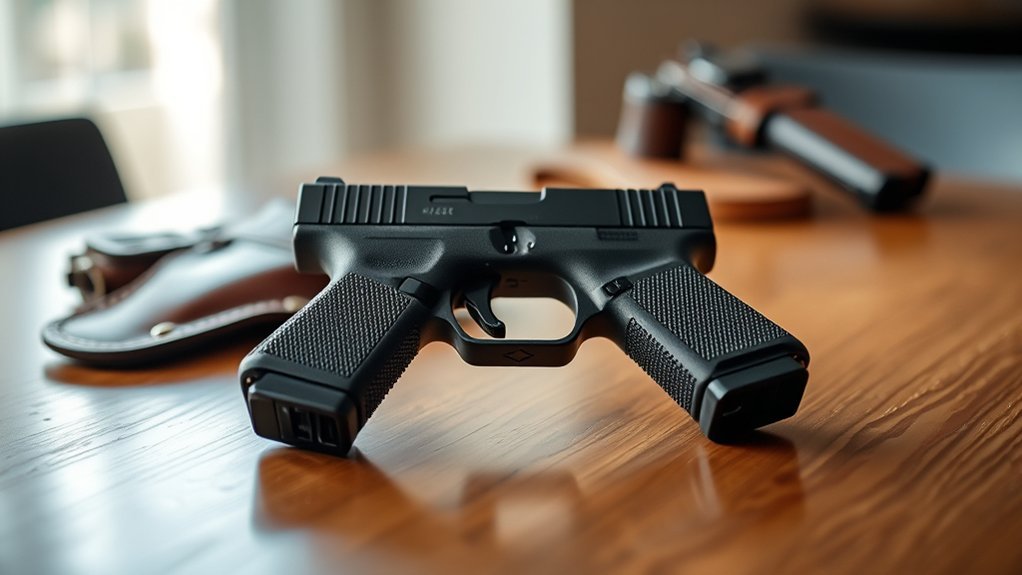
When choosing a Glock for concealed carry, you’ll want to focus on compact models that balance size and weight for comfort.
Consider how the gun’s dimensions affect your carry method and daily movement.
Don’t forget to weigh magazine capacity options to find the right fit for your needs.
Compact Glock Models
Which Glock models fit best for concealed carry depends on your specific needs and preferences. Compact Glock models like the Glock 19 and Glock 26 strike a great balance between size and capacity.
The Glock 19 offers a full-size grip with a slightly shortened barrel, giving you easier concealment without sacrificing handling. The Glock 26, often called the “baby Glock,” is smaller and easier to conceal, making it ideal if you prioritize discreet carry.
Both models maintain Glock’s reliability and ease of use, so you won’t compromise performance. If you want a compact option that’s lightweight but still packs enough rounds for self-defense, these models are solid picks.
Your choice boils down to how you’ll carry and what feels most comfortable in your hand.
Weight and Size Considerations
Although many factors influence your choice, weight and size play essential roles in selecting the best Glock for concealed carry. You want a pistol that’s easy to conceal without printing, so opting for lighter, slimmer models is key.
Glocks like the 43X and 48 offer a slim profile and reduced weight, making them comfortable for all-day carry.
The compact models, such as the Glock 19, strike a balance between manageable size and shootability, but they’re slightly larger and heavier than subcompact options.
If you prioritize minimal bulk, the subcompact Glock 26 is even smaller and lighter, fitting easily in various holsters.
Ultimately, choosing a Glock that feels natural and doesn’t weigh you down will bolster your confidence and ensure you carry consistently.
Magazine Capacity Options
Balancing size and weight is important, but you’ll also want to think about magazine capacity to find the right Glock for concealed carry.
Smaller models like the Glock 43 offer a slim profile and usually hold 6-7 rounds, making them easy to conceal but with limited capacity.
On the other hand, the Glock 19 strikes a great balance, typically holding 15 rounds in a compact frame, giving you more firepower without sacrificing discretion.
If capacity is your top priority and size is less of a concern, the Glock 17 with a 17-round magazine might suit you better.
Ultimately, consider how many rounds you’re comfortable carrying and how that aligns with your concealment needs to choose the best Glock model for you.
How Glock Sizes Affect Comfort and Concealment
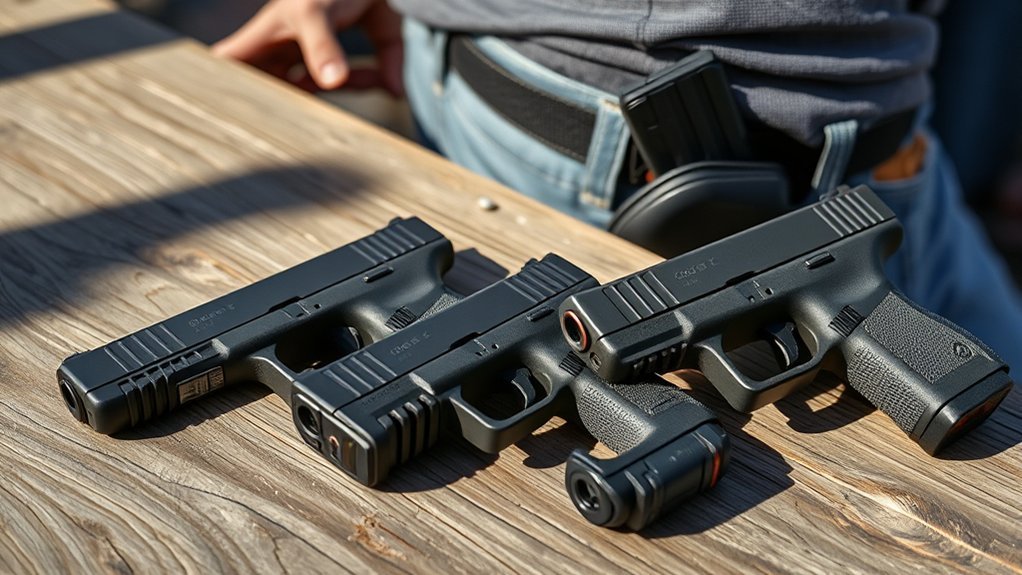
When choosing a Glock for concealed carry, the size you pick directly impacts both your comfort and how easily you can hide the firearm. Smaller Glocks like the Glock 43 offer better concealment and comfort for all-day carry, but usually at the expense of magazine capacity. Larger models, such as the Glock 19, provide a balance but may feel bulkier against your body. Your choice depends on your daily activities and preferred carry method.
| Size | Concealment Feeling |
|---|---|
| Subcompact | Feels light, easy to hide |
| Compact | Balanced comfort, moderate concealment |
| Full-size | More noticeable, less comfortable |
Pick a size that fits your lifestyle and keeps you confident.
Why Glock’s Weight Matters When You Carry Every Day
You’ll notice that Glock’s weight plays a big role in your daily comfort when carrying. Balancing weight with firepower is key to making sure your Glock feels right all day long.
Let’s explore how this balance affects your everyday carry experience.
Impact On Daily Comfort
Although a Glock’s reputation for durability is well-known, its weight plays a crucial role in your daily comfort while carrying. When you carry a Glock, even a slight extra weight can affect how it feels against your body throughout the day.
Too heavy, and you might notice discomfort, especially if you carry for long hours. A Glock’s relatively lightweight design helps minimize pressure points and reduces fatigue, making it easier to carry discreetly under various clothing.
You’ll find that a lighter gun allows more natural movement, so you’re less likely to adjust your holster constantly or feel weighed down.
Ultimately, the Glock’s balance between sturdiness and manageable weight supports comfort, helping you carry confidently without distraction or irritation.
Weight Versus Firepower
Balancing weight and firepower plays a crucial role in choosing a Glock for everyday carry. You want a firearm light enough to remain comfortable all day but powerful enough to provide reliable defense. Glock models offer various calibers and sizes, letting you prioritize what matters most.
Consider these factors when weighing your options:
- Caliber: Larger calibers pack more stopping power but add weight.
- Frame Material: Polymer frames reduce overall weight without sacrificing durability.
- Magazine Capacity: More rounds mean extra firepower but increase bulk.
- Carry Method: How you carry impacts comfort and concealment with heavier guns.
Concealing a Glock Under Different Clothing: What to Expect
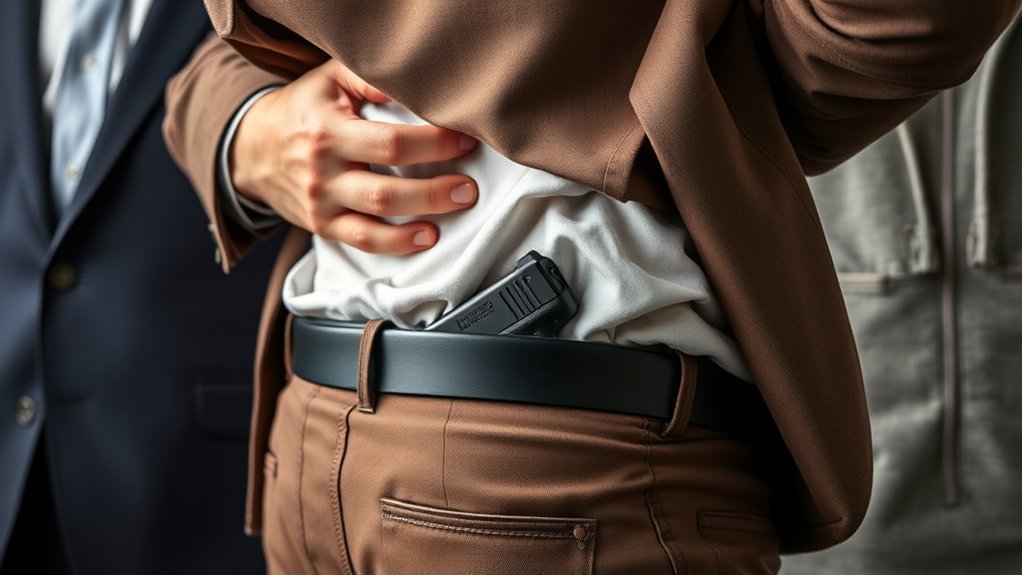
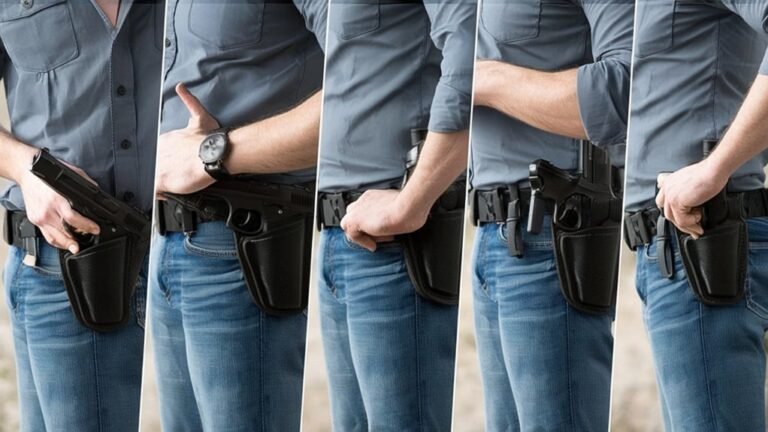
When carrying a Glock concealed, your choice of clothing considerably impacts how easily you can hide the firearm. Slim-fitting clothes make it trickier to conceal, especially if you’re carrying larger Glock models.
Looser shirts, hoodies, or jackets provide better coverage and reduce printing—the outline of the gun showing through fabric.
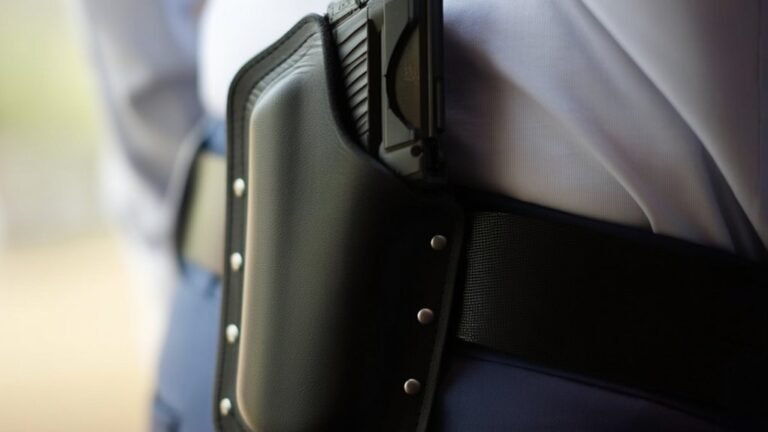
High-waisted pants or belts designed for concealed carry help keep the Glock stable and close to your body, making it less noticeable.
You’ll also want to think about the type of holster and its placement, as that affects how the gun sits and prints under clothing.
Ultimately, you’ll need to experiment with different outfits to find the right balance between comfort, accessibility, and effective concealment.
How Glock Magazine Capacity Impacts Everyday Carry
When choosing a Glock for everyday carry, you’ll want to take into account the magazine size and how it affects both capacity and concealability.
Larger magazines hold more rounds but can be harder to hide and slower to reload.
Balancing these factors helps you stay prepared without sacrificing comfort or speed.
Magazine Sizes Available
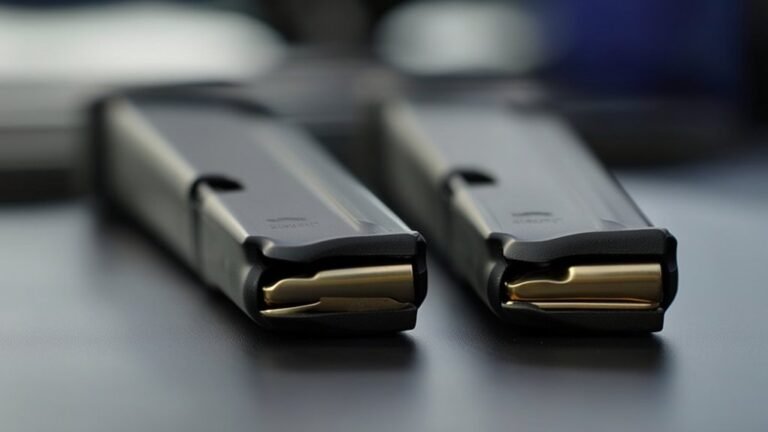
Although magazine size might seem like a minor detail, it directly affects how you carry and use a Glock every day. Glock offers a variety of magazine sizes to suit your needs, from compact to extended options. Choosing the right size helps balance capacity, comfort, and reliability.
Here are common Glock magazine sizes you’ll encounter:
- Standard magazines: Usually 15 rounds, offering a solid balance for full-size models.
- Compact magazines: Typically 10 to 13 rounds, perfect for easier concealment.
- Extended magazines: Holding 17+ rounds, great for range practice or extra firepower.
- Subcompact magazines: Often 6 to 10 rounds, designed for small-frame pistols and ultra-concealment.
Knowing your options helps you customize your carry experience efficiently.
Capacity Versus Concealability
Balancing magazine capacity with concealability is essential for everyday carry, as carrying a larger magazine often means sacrificing comfort and stealth. When you choose a Glock with a high-capacity magazine, it can add bulk, making it harder to conceal under light clothing.
On the other hand, smaller magazines fit more comfortably and discreetly but hold fewer rounds. You’ll need to assess your daily needs—whether you prioritize having extra rounds or ease of carry.
For many, a Glock model with a mid-sized magazine strikes the right balance, offering enough firepower without printing or discomfort.
Ultimately, your choice impacts how confidently and comfortably you carry every day, so consider how the magazine size fits your lifestyle and clothing choices before deciding.
Reload Speed Considerations
Since every second counts in a self-defense situation, your Glock’s magazine capacity directly affects your reload speed and overall readiness. A higher capacity means fewer reloads, but it can also make your handgun bulkier.
Conversely, smaller magazines are easier to conceal but force more frequent reloads, which might slow you down under stress.
Consider these points to balance reload speed and carry convenience:
- Larger capacity magazines reduce reload frequency, improving sustained defense.
- Smaller magazines enhance concealability, making daily carry more comfortable.
- Training impacts how quickly you can reload, regardless of magazine size.
- Extra magazines carried on your person allow for quick swaps, offsetting smaller capacity.
Ultimately, you’ll want to find a Glock setup that matches your comfort with reload speed and concealability.
Glock’s Trigger and Safety Features Explained
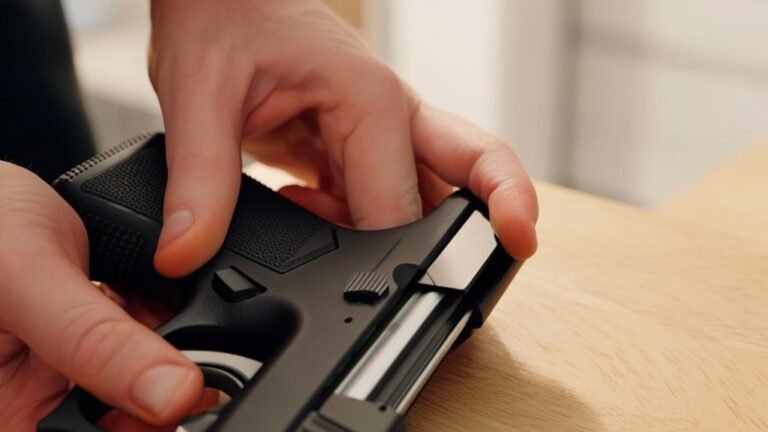
When you handle a Glock, you’ll notice its trigger and safety features work together seamlessly to prevent accidental discharges while keeping the gun ready to fire quickly. The Glock’s trigger safety is a small lever within the trigger itself, which must be fully depressed for the gun to fire. This design avoids the need for external safeties, simplifying operation under stress.
Here’s a quick breakdown:
| Feature | Purpose |
|---|---|
| Trigger Safety | Prevents trigger movement unless pressed correctly |
| Firing Pin Safety | Blocks firing pin until trigger pull |
| Drop Safety | Prevents discharge if dropped |
This trio guarantees your Glock stays safe in your hand and holster, perfect for concealed carry.
Why Glock’s Durability and Reliability Matter for Concealed Carry
Although many pistols boast advanced features, Glock’s durability and reliability truly stand out, especially for concealed carry. When you rely on a firearm daily, it must perform flawlessly under stress and various conditions.
Glock’s design minimizes malfunctions, giving you confidence in critical moments. Its robust polymer frame resists corrosion and wear, making it ideal for everyday carry.
Here’s why Glock’s durability and reliability matter for you:
- Proven track record in extreme environments and heavy use
- Simple design reduces mechanical failures
- High-quality materials extend firearm lifespan
- Consistent performance with minimal maintenance
Choosing Glock means you’re carrying a pistol built to last and function when you need it most, ensuring your safety and peace of mind every day.
Comparing Glock to Other Top Concealed Carry Pistols
How does Glock stack up against other top concealed carry pistols? When you compare it to options like the Smith & Wesson M&P Shield, Sig Sauer P365, or Springfield Hellcat, Glock stands out for its simplicity and ruggedness.
While the Shield and Hellcat offer slimmer profiles and slightly lighter frames, Glocks deliver consistent trigger pulls and a larger aftermarket for customization. The Sig P365 boasts higher capacity in a compact size, but you might find Glock’s grip texture and ergonomics better suited for your hand.
Ultimately, Glock’s proven track record for reliability and ease of maintenance makes it a strong contender. Your choice depends on what fits your carry style, hand size, and preference for features like capacity, concealability, and trigger feel.
Pros of Carrying a Glock Every Day
Choosing Glock for concealed carry means you’ll benefit from more than just reliability and customization options. You’ll enjoy a practical balance of size, weight, and functionality that suits everyday use. The simplicity of its design makes it easy to maintain and operate, giving you confidence in high-pressure situations.
Plus, the widespread availability of parts and accessories means you can tailor your Glock to fit your exact needs without hassle.
Here are some key pros of carrying a Glock every day:
- Lightweight and compact models fit comfortably for all-day wear
- Consistent trigger and ergonomics improve shooting accuracy
- Durable polymer frame resists corrosion and reduces weight
- High magazine capacity offers ample rounds without bulk
With these advantages, your Glock becomes a dependable partner for daily concealed carry.
Cons of Using a Glock for Concealed Carry
What challenges might you face when carrying a Glock concealed every day? First, its size and bulk can make it harder to conceal comfortably, especially if you prefer smaller firearms. Even compact models might print under lighter clothing, drawing unwanted attention. You might also find the grip length uncomfortable for extended carry or printing.
Additionally, Glocks typically have a higher capacity, which adds weight and can cause discomfort during long wear. Another issue is the lack of external safety; while this suits some, it can make you uneasy if you’re used to additional manual safeties.
Finally, the polymer frame may not appeal to everyone’s tactile preferences, and the trigger pull might require extra training to master safely. These factors could influence your daily carry experience.
Picking the Right Glock for Your Carry Style
Where you plan to carry your Glock and how you intend to use it will shape which model fits you best.
If you want a discreet everyday carry, a compact or subcompact model like the Glock 19 or Glock 43 might suit you.
For home defense or open carry, a full-size Glock such as the Glock 17 could be ideal.
Consider these factors when choosing:
- Size and weight: Smaller models are easier to conceal but may have less capacity.
- Caliber: Decide between 9mm, .40 S&W, or others based on recoil comfort and stopping power.
- Ergonomics: Grip texture and size should feel natural in your hand.
- Capacity: Higher rounds mean less frequent reloading but larger size.
Match your Glock to your lifestyle for effective concealed carry.
Best Accessories to Enhance Your Glock Concealed Carry Experience
Once you’ve settled on the right Glock for your carry style, enhancing its performance and comfort can make a big difference in your daily experience. Start with a quality holster that offers secure retention and quick access, like a Kydex or leather option tailored to your Glock model.
Adding night sights helps you aim confidently in low light, while a grip sleeve or stippling improves control and reduces recoil. Consider upgrading to a custom trigger for a smoother, lighter pull, boosting accuracy.
Don’t overlook a weapon light or laser attachment for better target identification and faster aiming. Finally, carrying extra magazines in a comfortable mag pouch ensures you’re prepared.
These accessories collectively bolster your Glock’s reliability, comfort, and effectiveness for concealed carry.
Frequently Asked Questions
How Often Should I Clean My Glock for Optimal Performance?
You should clean your Glock after every 300-500 rounds or whenever it gets dirty. Regular cleaning keeps it reliable, prevents malfunctions, and guarantees peak performance. Don’t skip maintenance, especially if you carry it daily.
Can a Glock Be Safely Carried in a Purse or Bag?
Yes, you can safely carry a Glock in a purse or bag, but you should use a secure holster to prevent accidental discharge and keep it easily accessible. Always follow proper safety practices to avoid mishaps.
What Training Is Recommended for New Glock Concealed Carriers?
To hit the ground running, you’ll want basic firearms safety, Glock-specific handling, and concealed carry techniques training. Don’t forget situational awareness and regular practice at the range to keep your skills sharp and ready.
Are There Legal Restrictions Specific to Glock Pistols?
You won’t find legal restrictions specific to Glock pistols, but you must follow general firearm laws in your area. Always check local regulations on concealed carry permits, magazine capacity, and prohibited locations to stay compliant.
How Does Weather Affect Glock Performance During Concealed Carry?
You won’t find weather putting your Glock through a rough patch; it handles moisture and cold like a champ. Just keep it clean and dry after exposure, and it’ll keep performing reliably when you need it most.
Conclusion
Picture slipping a Glock snugly beneath your jacket, its slim frame blending seamlessly with your outfit. You feel the reassuring weight at your side, ready yet unobtrusive. While no gun is perfect, a Glock’s reliability and variety of sizes make it a strong contender for concealed carry. By choosing the right model and accessories, you’ll carry confidence as naturally as your own shadow—secure, comfortable, and prepared for whatever comes your way.