How to Adjust Glock Sights in 3 Steps
To adjust your Glock sights, first gather the right tools like a sight adjustment tool or brass punch, verify the gun is unloaded, and work on a stable surface with safety gear. Next, use the tool to drift the rear sight opposite your shot deviation—left, right, high, or low—making small, careful moves for better accuracy. Finally, test your shots at the range, fine-tune as needed, and keep consistent until your grouping improves. There’s more to mastering precise sight adjustments ahead.
Gather Tools and Prepare Your Glock Sights for Adjustment
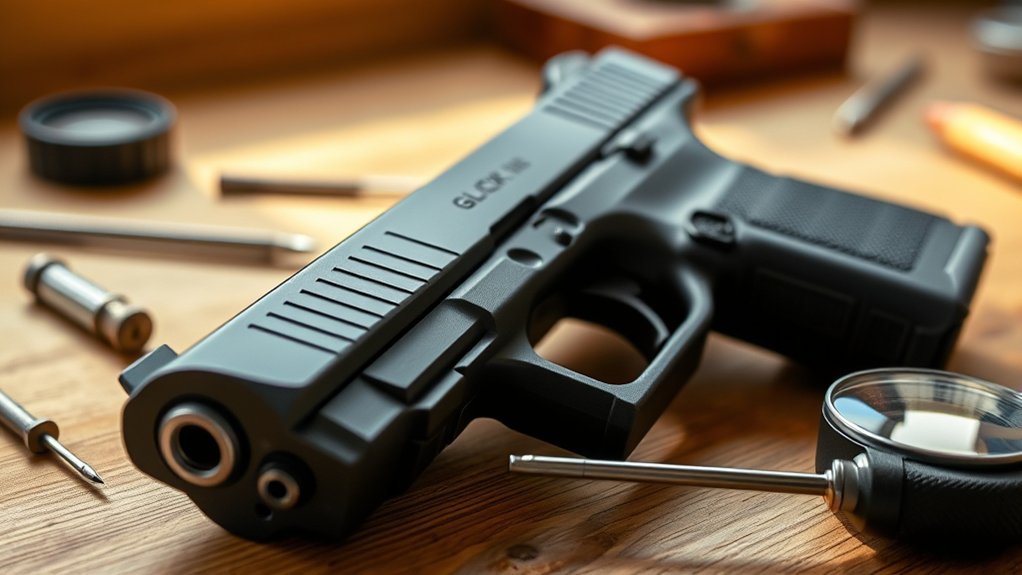
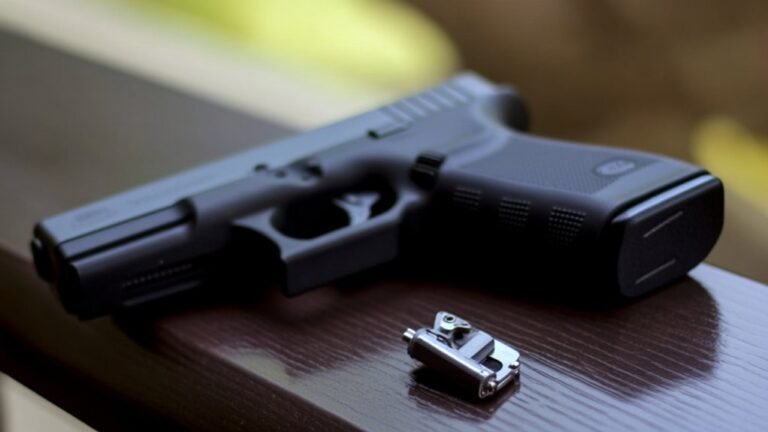
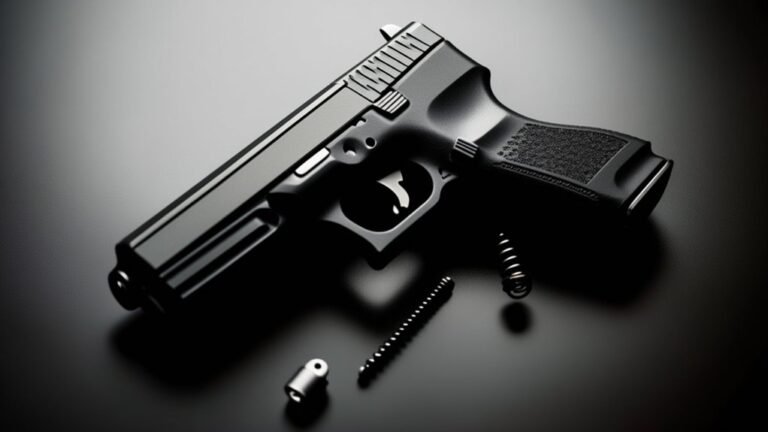
Before you begin adjusting your Glock sights, make sure you have the right tools on hand. You’ll need a sight adjustment tool or a brass punch to avoid damaging the sights during the process.
A small hammer can help tap the sights if necessary, but be gentle to prevent any dents.
Additionally, gather safety equipment like eye protection and confirm your gun is unloaded before starting.
Clear your workspace and have a stable surface to work on, so you don’t risk dropping or damaging any parts.
Once you have everything ready, clean the sights with a cloth to remove dirt or residue that might affect your adjustments.
Proper preparation ensures a smooth, safe, and effective sight adjustment experience.
Adjust Your Glock’s Rear Sight to Correct Your Point of Impact
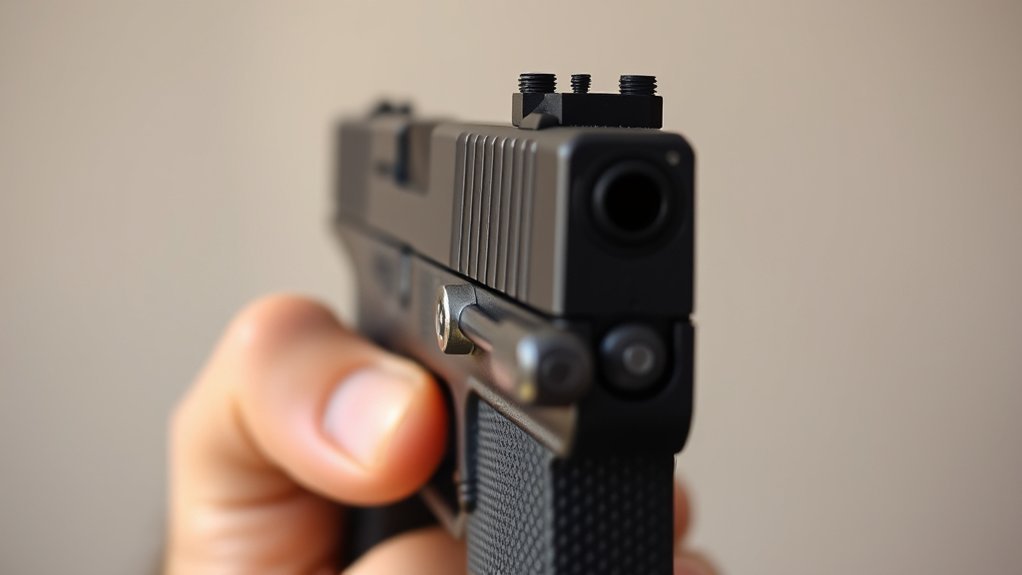
With your tools ready and your Glock sights clean, you can now focus on adjusting the rear sight to correct your point of impact.
First, determine whether your shots are hitting left, right, high, or low compared to your target.
Use a sight adjustment tool or a brass punch to carefully drift the rear sight in the opposite direction of your group’s deviation.
For example, if your shots land left, move the rear sight slightly to the right.
Adjustments are small; a few clicks or gentle taps make a big difference.
Always ensure the sight stays aligned and doesn’t tilt.
Avoid forcing it, as damage can affect accuracy.
Once adjusted, your Glock’s rear sight will better align your point of impact with your point of aim.
Test and Fine-Tune Your Glock Sights at the Range for Best Accuracy
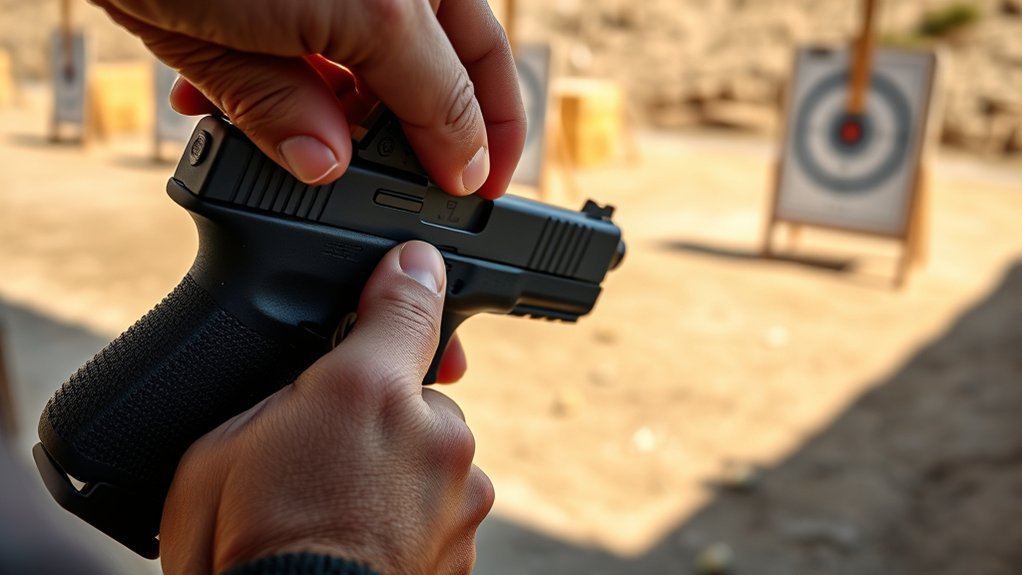
Once you’ve made initial adjustments to your Glock sights, head to the range to test their accuracy. Start by firing a group of shots at a target from your usual shooting distance. Observe where the bullets hit relative to your intended point of impact. This will show whether you need to make further sight tweaks.
Fine-tune your sights by adjusting the rear sight in small increments, then shoot another group to confirm improvement. Repeat this process until your shots consistently hit the desired spot.
Here’s a quick checklist to guide you:
- Use consistent shooting stance and grip
- Fire at least 3-5 shots per group
- Adjust sights only after evaluating each group
- Keep notes of adjustments and results for reference
This method guarantees your Glock sights are dialed in perfectly.
Frequently Asked Questions
Can I Adjust Glock Sights Without Removing the Slide?
You can’t properly adjust Glock sights without removing the slide. The rear sight needs to be moved carefully, which requires slide removal to avoid damage and guarantee accurate alignment. Don’t force adjustments while it’s on.
Are Aftermarket Glock Sights Easier to Adjust Than Factory Ones?
Aftermarket Glock sights feel like tuning a fine instrument, smoother and more precise than factory ones. You’ll find adjusting them easier, as they often offer enhanced features and clearer markings that guide your aim with confidence.
How Often Should I Check My Glock Sights for Accuracy?
You should check your Glock sights for accuracy before every shooting session and after any significant impact or drop. Regular checks guarantee your shots stay precise and help you catch any misalignment early.
Can Weather Conditions Affect Glock Sight Adjustments?
Yes, weather’s like a shifting tide—it can blur your Glock’s aim or shift your sight’s harmony. You’ll need to adjust when rain, wind, or temperature play tricks, keeping your shots true despite nature’s dance.
Is Professional Help Recommended for Sight Adjustments?
Yes, you should consider professional help for sight adjustments if you’re unsure or lack proper tools. Experts guarantee precise alignment, saving you time and frustration while keeping your Glock accurate and safe to use.
Conclusion
Congrats, you’re now armed with the sacred knowledge of Glock sight adjustment—because clearly, your Glock just *loves* being ignored until you’re missing every shot. Remember, those tiny screws wield more power than your last relationship, so handle with care. Adjusting your sights isn’t rocket science, but it might feel like it when your shots start landing where you actually aim. Now go impress everyone, or at least stop blaming the gun!