What Is a Glock Switch and How Does It Work?
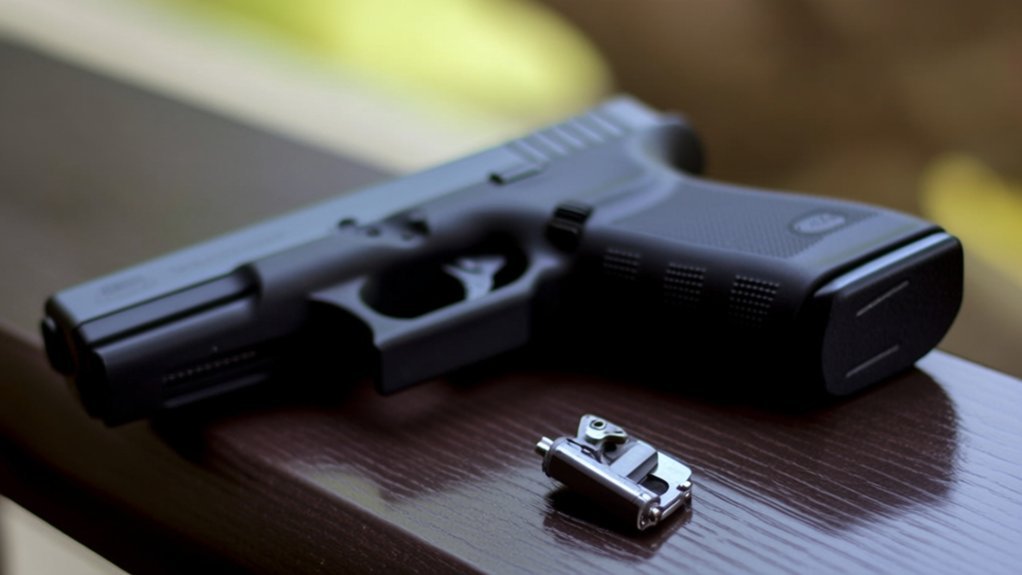
A Glock switch is a small device that lets you convert a semi-automatic Glock pistol into a fully automatic firearm by changing how the trigger interacts with the internal parts. It fundamentally bypasses the normal single-shot firing, allowing continuous fire while the trigger is held. You’ll find it attached near the slide’s rear, and it’s heavily regulated and often illegal. If you want to understand how it works and the risks involved, there’s more to uncover.
What Is a Glock Switch and Why Does It Matter?
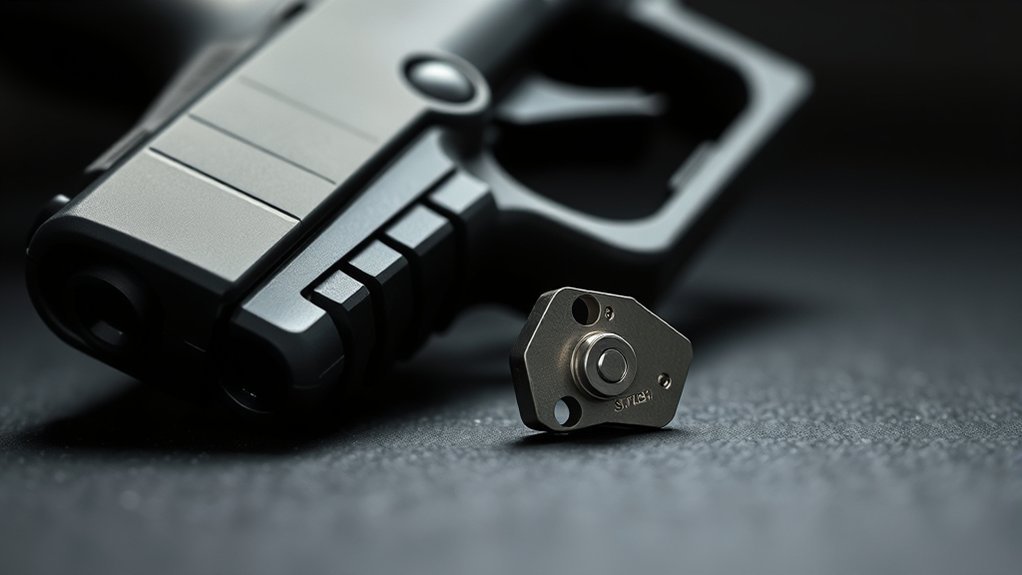
What exactly is a Glock switch, and why should you care? A Glock switch is a small device that alters a semi-automatic Glock pistol, enabling it to fire fully automatically. This means the gun will continue shooting as long as you hold down the trigger, rather than firing one bullet per trigger pull.
You should care because this modification drastically changes how the firearm operates, impacting safety, legality, and control. Glock switches are highly regulated and often illegal without proper licenses.
Understanding what a Glock switch does is vital if you’re involved in firearms, law enforcement, or simply want to stay informed about gun modifications. Knowing its function helps you grasp the potential risks and legal consequences tied to possessing or using one.
The Basic Components of a Glock Switch
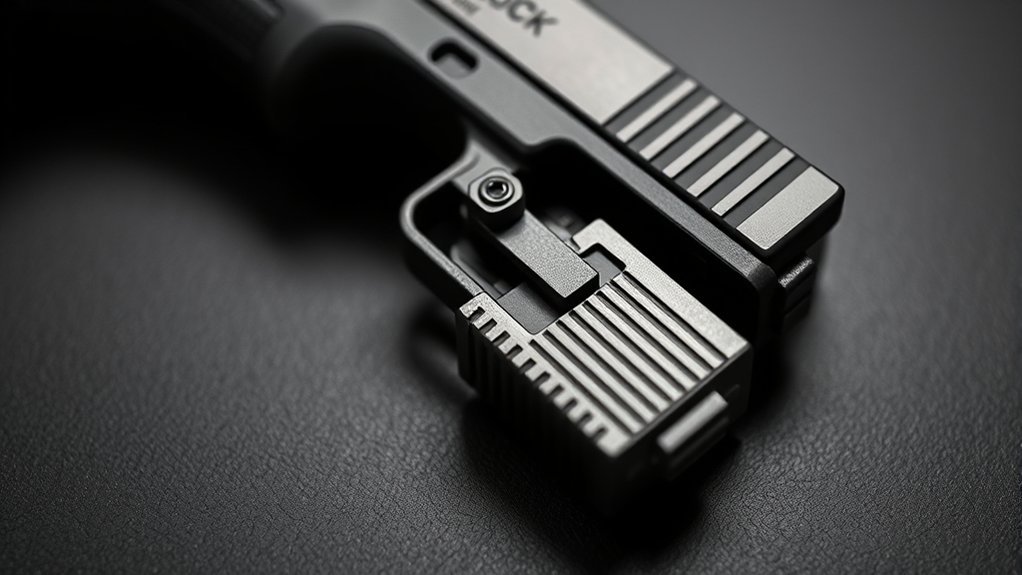
Although a Glock switch may seem like a simple device, it consists of several key components that work together to convert a semi-automatic pistol into a fully automatic one. First, there’s the selector lever, which lets you toggle between firing modes.
Then, you’ll find the housing or body, usually a small metal or polymer piece that fits snugly on the slide’s rear. Inside, springs and pins hold everything in place and guarantee smooth movement.
The switch also interacts with the trigger bar, altering its function to enable continuous firing. Each component must be precisely engineered and aligned for the switch to work safely and reliably.
Understanding these parts helps you see how this compact device can drastically change a Glock’s operation.
How Glock Switches Change the Firing Mechanism
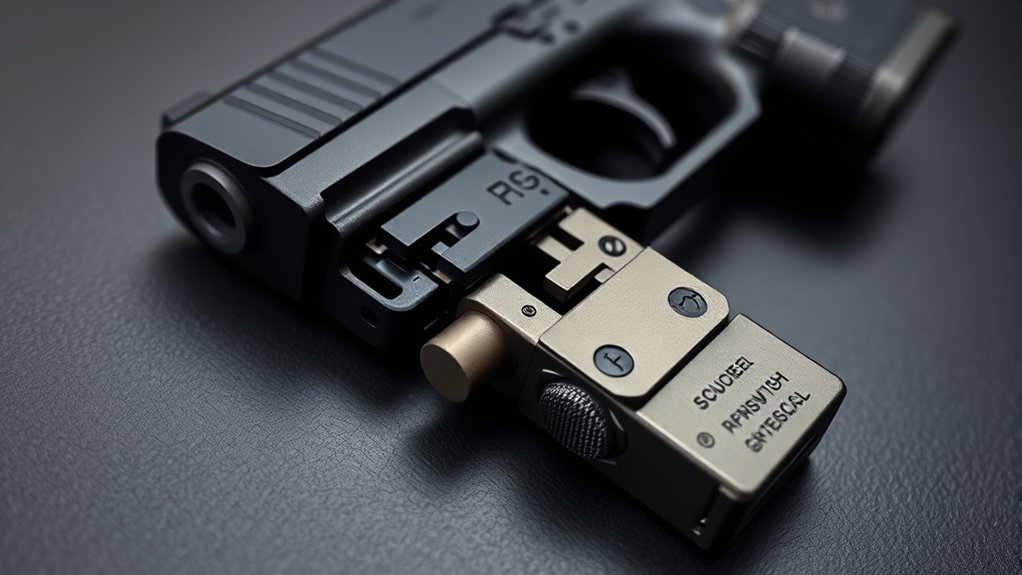
The components inside a Glock switch work together to alter how the pistol fires. When you attach a Glock switch, it modifies the trigger mechanism, enabling the pistol to fire continuously with a single pull instead of one shot per trigger pull.
This happens because the switch changes the interaction between the trigger bar and the sear, bypassing the normal reset process. As a result, once you pull the trigger, the firing pin keeps striking the primer rapidly until you release the trigger or the magazine empties.
This conversion effectively turns your Glock from a semi-automatic to a fully automatic firearm. Understanding this mechanism highlights why Glock switches are regulated and why installing one drastically changes how the pistol operates.
Identifying a Glock Switch on a Pistol
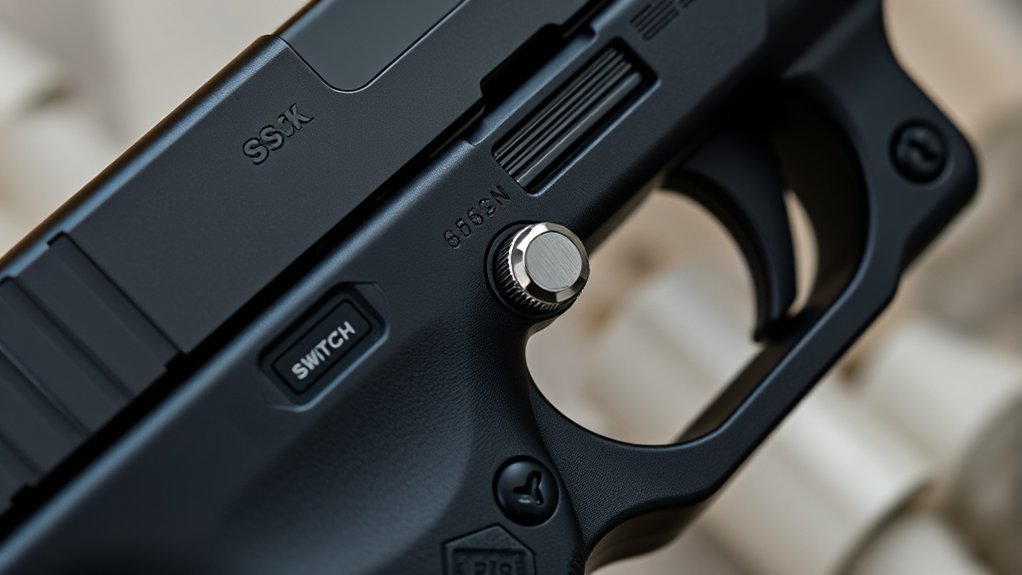
When you look for a Glock switch on a pistol, focus on small, often black metal attachments near the trigger area.
These switches usually clip onto the rear of the slide or near the rear sight.
Knowing where to check helps you spot them quickly and accurately.
Visual Characteristics
How can you tell if a Glock pistol has a switch installed? Look closely at the back of the slide or near the rear of the pistol where the firing mechanism is exposed.
A Glock switch is a small, often black or dark-colored device that alters the trigger mechanism to enable fully automatic fire. You’ll notice a distinct lever or button that isn’t part of the original Glock design.
This switch may slightly protrude, making it stand out against the smooth contours of the pistol’s slide. Also, the switch often has visible mechanical components or screws securing it in place.
If you spot anything that looks like an aftermarket add-on altering the trigger or firing controls, that’s a strong indicator a Glock switch is installed.
Common Attachment Locations
Where exactly do you find a Glock switch once it’s installed? Typically, you’ll spot it near the rear of the slide, just above the grip. The switch usually attaches around the slide’s back plate, blending with the pistol’s frame but standing out as a small, protruding lever or button.
Since it modifies firing modes, it’s positioned for easy thumb access when holding the pistol. Sometimes, it may be on the slide’s side, but this is less common. You’ll want to check closely around these areas for anything that looks out of place or added after purchase.
Identifying a Glock switch quickly helps you understand the pistol’s capabilities and whether it’s been illegally modified.
The Technical Difference Between Semi-Automatic and Fully Automatic Fire With Glock Switches
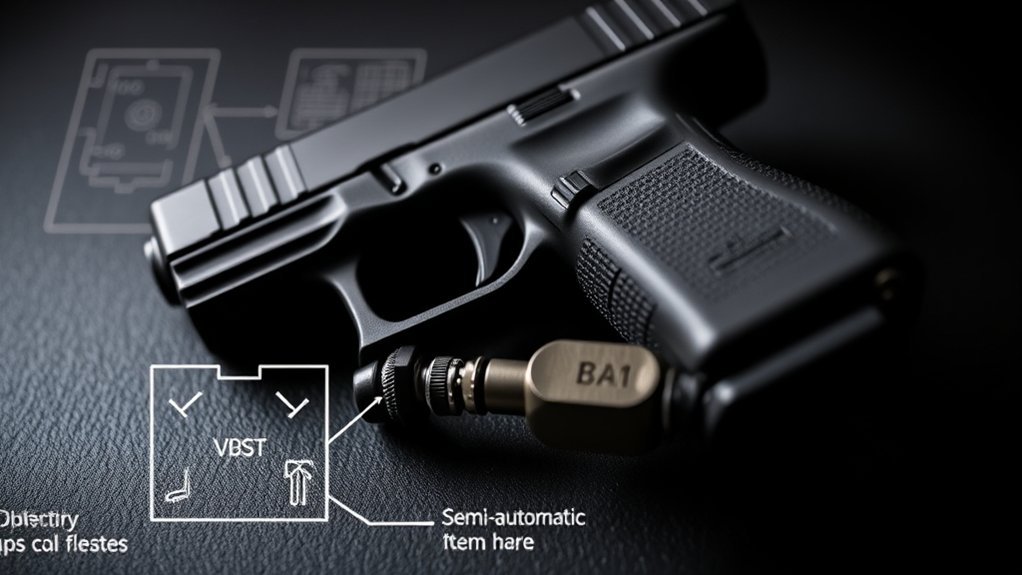
You’ll notice that semi-automatic fire lets you control each shot by pulling the trigger once per round.
With a Glock switch, fully automatic fire changes the dynamics, allowing continuous firing as long as you hold the trigger.
Understanding these mechanical differences is key to grasping how Glock switches alter firing behavior.
Semi-Automatic Fire Mechanics
Why does a Glock switch change the firing mode so drastically? It alters how the trigger interacts with the internal mechanism.
In semi-automatic mode, every pull of the trigger fires a single round, cycling the slide to chamber the next round without additional shots until you pull again. This contrasts with fully automatic fire, where holding the trigger continuously fires rounds.
Here’s what happens during semi-automatic fire mechanics:
- Trigger pull releases the striker to hit the primer.
- Fired round ejects the spent casing.
- Slide moves back, compressing the recoil spring.
- Slide returns forward, chambering the next round.
- Trigger resets, requiring a new pull for the next shot.
Understanding this process helps you see why a Glock switch modifies firing behavior so profoundly.
Fully Automatic Fire Dynamics
Although a Glock switch might seem like a simple attachment, it fundamentally changes how the trigger controls the firing mechanism, allowing the firearm to continuously cycle rounds as long as you hold the trigger. In semi-automatic mode, each trigger pull fires one round, resetting after every shot. With the switch installed, the gun cycles automatically, firing repeatedly without needing to release the trigger. This alters recoil management and rate of fire dramatically.
| Feature | Semi-Automatic |
|---|---|
| Trigger Pull | One shot per pull |
| Firing Mode | Single shot |
| Rate of Fire | Slower |
| Recoil Control | Easier |
Fully automatic fire continuously cycles rounds, increasing rate and recoil, demanding different handling skills.
Legal Reasons Glock Switches Are Illegal
Because Glock switches convert a semi-automatic pistol into a fully automatic weapon, they fall under strict federal regulations. You need to understand that owning or manufacturing one without proper authorization violates the National Firearms Act (NFA).
The law classifies these devices as machine guns, which are heavily restricted. If you possess a Glock switch illegally, you face severe penalties, including fines and imprisonment.
Here are key reasons Glock switches are illegal:
- They bypass standard firearm safety controls.
- They increase the risk of unintentional harm.
- They’re considered unregistered machine guns under federal law.
- They contribute to higher rates of gun violence.
- Their unauthorized use undermines public safety efforts.
The Legal Status of Glock Switches Around the World
You’ll find that laws about Glock switches vary widely depending on where you’re in the world. Some countries enforce strict penalties, while others have more lenient rules or unclear regulations.
Knowing these differences can help you understand the risks involved.
Global Regulatory Differences
When you look at Glock switches, their legal status varies widely across countries, reflecting different approaches to firearm regulation. Some nations outright ban these devices due to their ability to convert semi-automatic pistols into fully automatic weapons. Others may allow possession under strict conditions or require special licenses. You need to understand these differences to navigate the legal landscape effectively.
- In the U.S., Glock switches are classified as machine guns under federal law, making them illegal without ATF approval.
- Canada prohibits them entirely under its firearms regulations.
- The U.K. enforces strict bans with severe restrictions on automatic weapons accessories.
- Australia treats them as prohibited devices, with harsh penalties.
- Germany regulates them under stringent firearm laws, requiring explicit licensing.
Knowing these distinctions helps you stay compliant internationally.
Enforcement and Penalties
How do authorities handle violations involving Glock switches? In many countries, possessing, manufacturing, or selling these devices is illegal and treated as a serious offense.
If you’re caught with a Glock switch, law enforcement typically enforces strict penalties, including hefty fines, confiscation, and imprisonment.
In the United States, for example, the Bureau of Alcohol, Tobacco, Firearms and Explosives (ATF) classifies Glock switches as machine guns under federal law, leading to severe legal consequences.
Other nations may impose similar or even harsher punishments depending on their firearm regulations.
If you’re found guilty of involvement with Glock switches, you could face criminal charges that profoundly impact your freedom and future.
Understanding these enforcement measures can help you avoid severe legal trouble.
Risks of Using or Possessing a Glock Switch
Although a Glock switch might seem like a small accessory, possessing or using one carries serious legal and safety risks. You could face severe criminal charges since these devices convert your Glock into an illegal machine gun.
Beyond legal trouble, the increased rate of fire makes controlling the weapon harder, raising the chance of accidental injury.
Here are key risks to consider:
- Federal offenses can lead to lengthy prison sentences.
- Enhanced recoil increases the likelihood of losing control.
- Unintended discharges may cause harm to yourself or others.
- Confiscation of your firearms and accessories is common.
- Insurance and civil liability issues can arise after incidents.
Understanding these dangers is essential before deciding to use or possess a Glock switch.
How Glock Switches Impact Gun Safety and Handling
Because Glock switches dramatically increase a firearm’s rate of fire, they considerably affect your ability to handle the weapon safely.
When you activate a switch, the gun fires multiple rounds rapidly, which makes controlling recoil much harder. You’ll find it challenging to keep your shots accurate and on target, especially if you’re untrained.
The increased rate of fire also means the gun heats up faster, raising the risk of malfunctions or accidental discharge. Your grip and stance need to be solid to manage this, but even then, the quick firing cycle demands heightened awareness and skill.
Common Legal and Safety Misconceptions About Glock Switches
Handling a Glock switch demands more skill and attention than a standard firearm, but there’s also a lot of confusion around its legal and safety status. You might hear myths that owning one is perfectly legal or that it’s just a harmless accessory. Neither is true. Many believe Glock switches don’t affect safety, but they drastically increase the risk of accidental injury. Understanding the realities helps you avoid serious legal trouble and stay safe.
Here are common misconceptions you should know:
- Glock switches are legal if you don’t use them.
- They’re just simple mechanical parts, not regulated devices.
- Using a Glock switch doesn’t increase firearm risks.
- Possession without registration is allowed in some states.
- Safety training isn’t necessary when using a switch.
Knowing the facts protects you and others.
How Law Enforcement Detects and Controls Glock Switches
When law enforcement officers suspect the presence of Glock switches, they rely on a combination of advanced technology, intelligence sharing, and field training to detect and control them effectively.
You’ll find that officers use tools like X-ray scanners and metal detectors during searches to identify hidden devices.
Intelligence sharing between agencies helps track distribution networks and pinpoint hotspots where switches are more common.
On the ground, officers receive specialized training to recognize signs of illegal modifications and respond safely during encounters.
When they seize Glock switches, they secure evidence carefully to support prosecution.
Legal Alternatives to Glock Switches for Fully Automatic Fire
If you’re interested in fully automatic fire but want to stay within the bounds of the law, there are several legal alternatives to Glock switches worth considering. These options allow you to experience rapid fire without risking legal trouble. Here are some alternatives you can explore:
- Purchasing a fully automatic firearm registered under the National Firearms Act (NFA)
- Using bump stocks or trigger cranks, where legal, to simulate rapid fire
- Trying semi-automatic pistols with high-capacity magazines for faster follow-up shots
- Renting fully automatic weapons at licensed shooting ranges
- Exploring airsoft or paintball guns designed to mimic automatic fire
Each option offers a way to enjoy rapid shooting while respecting legal restrictions and safety guidelines.
Staying Informed and Compliant With Glock Switch Regulations
Why should you stay updated on Glock switch regulations? Laws surrounding Glock switches can change quickly, and staying informed helps you avoid serious legal trouble.
These devices are heavily regulated, often classified as machine guns under federal law, making unauthorized possession illegal. You need to keep an eye on both federal and state laws since regulations vary widely.
Checking official sources like the Bureau of Alcohol, Tobacco, Firearms and Explosives (ATF) and local government websites ensures you get accurate, current information.
Also, if you’re involved in firearms sales or modifications, staying compliant protects your business and personal rights.
Frequently Asked Questions
How Do Glock Switches Affect Firearm Warranty Coverage?
You’ll void your firearm’s warranty if you install a Glock switch because manufacturers don’t cover unauthorized modifications. Using one also risks legal trouble, so it’s best to keep your Glock stock and warranty intact.
Can a Glock Switch Be Installed on Other Pistol Brands?
You can’t install a Glock switch on other pistol brands because it’s specifically designed for Glock models. Trying to adapt it risks damaging your firearm and is often illegal, so stick to compatible parts only.
What Tools Are Needed to Install a Glock Switch?
You’ll need a small punch set, a flathead screwdriver, and some patience—like assembling a 90s Walkman. Carefully remove the slide and pin, then fit the switch precisely. Don’t rush; precision is key.
Are There Historical Versions of Glock Switches?
Yes, there are historical versions of Glock switches, but they’ve evolved considerably. You’ll notice older models were less compact and reliable. Today’s versions are more advanced, making installation easier and improving performance notably.
How Do Glock Switches Impact Firearm Resale Value?
You’d think a Glock switch would skyrocket resale value, but it actually tanks it—illegal modifications scare buyers and lower prices. So, if you want cash, ditch the switch and keep it legal.
Conclusion
Imagine your Glock as a car designed for city streets, not a racetrack. A Glock switch is like adding a turbocharger that can push it beyond safe limits—exciting but risky and illegal. Understanding how these switches work helps you steer clear of trouble and keep control. Just as a skilled driver respects the road, staying informed about Glock switch regulations guarantees you handle your firearm responsibly and safely.