How to Loosen a Leather Holster in 7 Easy Steps
To loosen your leather holster, start by checking its fit and comfort, noting any tight spots. Soften the leather gently with warmth and a bit of moisture, then condition it using a quality leather conditioner to keep it flexible. Break it in by smoothly drawing your firearm multiple times, and shape the holster around the gun for a perfect fit. Store it properly to maintain softness. Keep following these tips, and you’ll master caring for your holster like a pro.
Check How Your Holster Fits and Feels
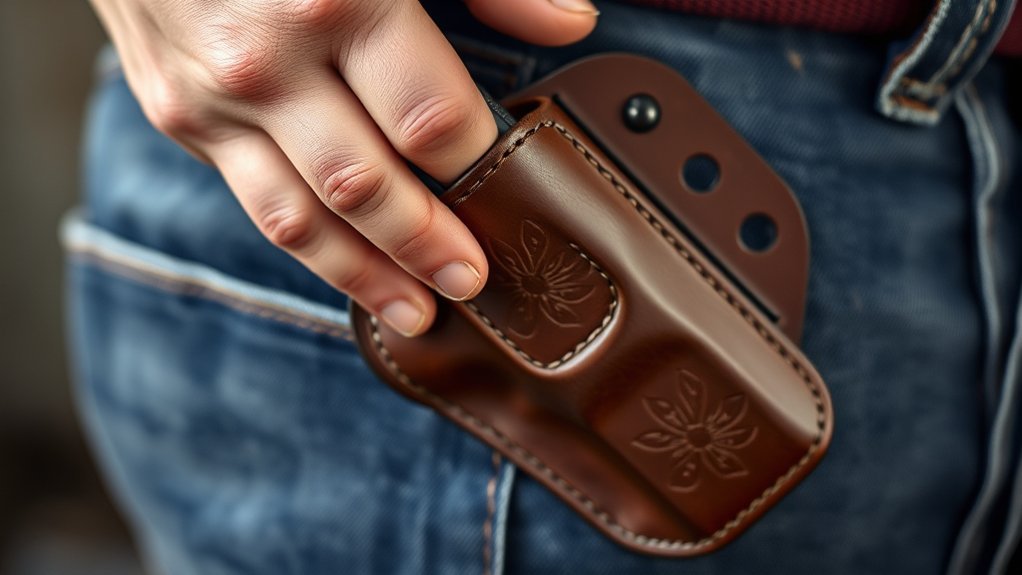
Before you try to loosen your leather holster, take a moment to assess how it fits and feels on your body. Slip it on as you normally would, paying close attention to any tight spots or pressure points.
Notice if it restricts your movement or causes discomfort when you sit, bend, or walk. Check how easily you can draw and re-holster your firearm—if it’s too tight, you’ll struggle, but too loose isn’t safe either.
Also, examine the leather itself for stiffness or areas that might be causing friction. Understanding where the holster feels too snug or rigid helps you identify exactly where you need to make adjustments.
This step guarantees you only loosen what’s necessary, maintaining both comfort and security.
Soften Your Leather Holster With Warmth and Moisture
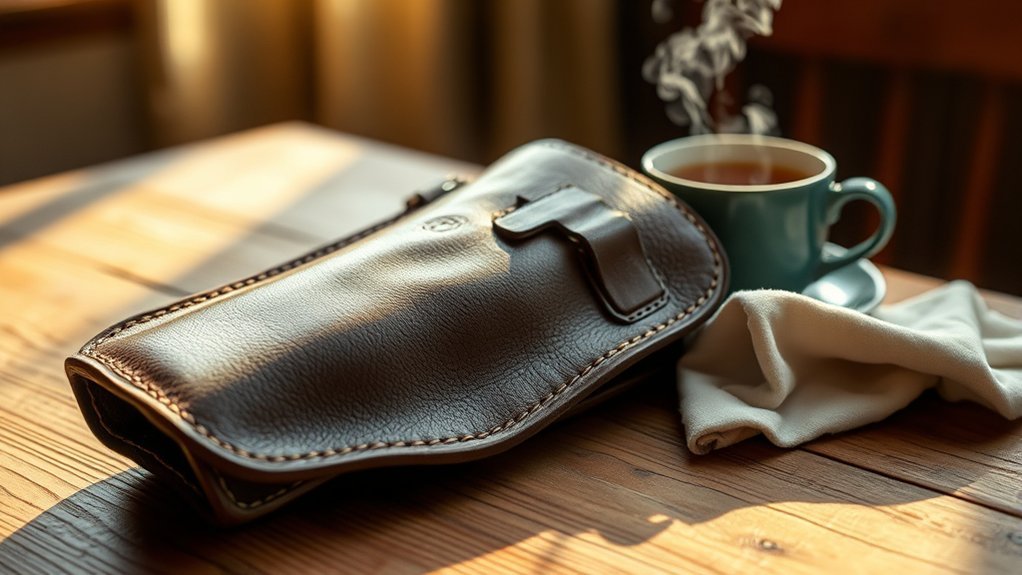
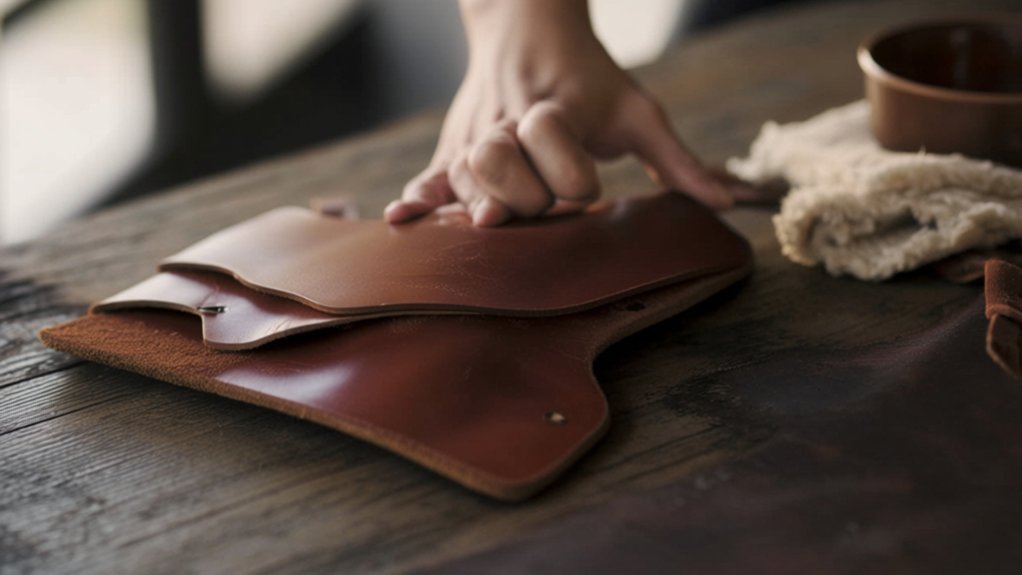
When you want to loosen your leather holster, applying gentle warmth and moisture can make the leather more pliable and easier to shape. Start by slightly dampening the leather with a damp cloth—avoid soaking it. Then, use a hairdryer on low heat or place the holster near a warm spot for a few minutes. This softens the leather fibers, allowing you to bend or mold the holster without cracking it.
| Step | Method | Tip |
|---|---|---|
| Apply Moisture | Use damp cloth | Don’t oversaturate leather |
| Add Warmth | Hairdryer (low heat) | Keep moving to avoid damage |
| Shape Leather | Gently bend holster | Work in small sections |
This combination eases the leather, prepping it for a more customized fit.
Condition Your Holster to Keep It Flexible
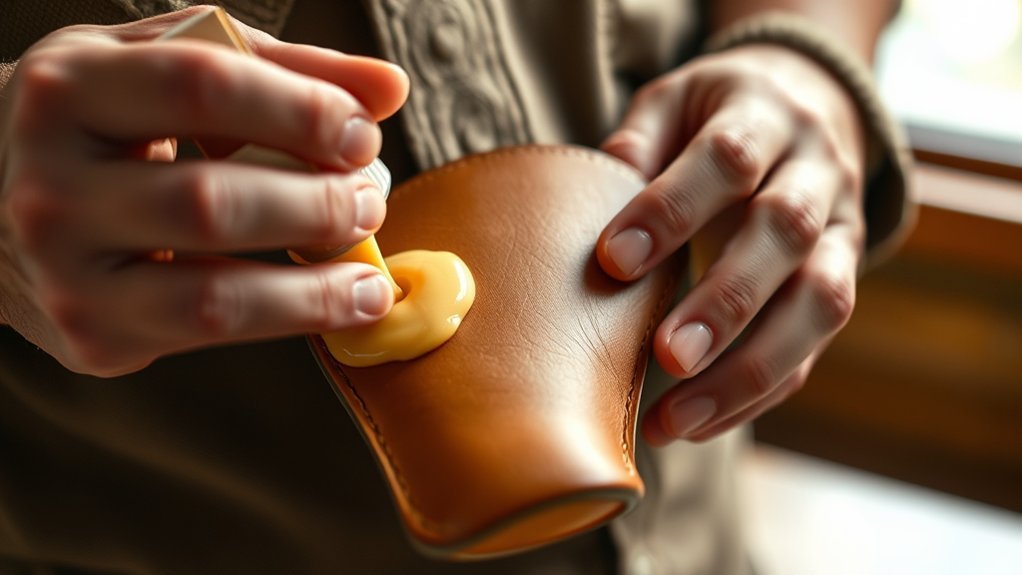
To keep your leather holster flexible, you need to choose the right conditioner that won’t damage the material.
Apply the conditioner evenly to guarantee every part of the leather gets treated.
Then, let it absorb fully before using your holster again.
Choose The Right Conditioner
Although leather naturally stiffens over time, choosing the right conditioner can restore its flexibility and extend your holster’s life. You want a conditioner specifically designed for leather, avoiding harsh chemicals or petroleum-based products that can damage the material.
Look for natural oils like neatsfoot or mink oil; they penetrate deeply and soften the leather without causing buildup. Some conditioners also include beeswax or lanolin, which offer added protection and moisture retention.
Avoid heavy creams or waterproofing agents unless you need extra water resistance, as these can *harden* the leather. Always pick a product that matches your holster’s finish—smooth or suede—to maintain its appearance.
Selecting the right conditioner ensures your holster stays supple and comfortable, making it easier to use and longer-lasting.
Apply Conditioner Evenly
Because uneven application can cause stiffness or discoloration, you need to apply conditioner evenly across your leather holster.
Start by using a clean, soft cloth or sponge to scoop up a small amount of conditioner. Dab it gently, then spread it in thin, uniform layers over the entire surface.
Focus on all areas, especially folds and edges, to maintain consistent flexibility. Avoid over-saturating one spot, as that can lead to uneven texture or dark patches.
Work methodically, moving in circular motions to help the conditioner penetrate deeply and smoothly.
This even coverage ensures your holster softens uniformly, preventing weak spots or cracks.
Taking your time with this step sets the foundation for a well-conditioned holster that stays comfortable and durable during use.
Allow Leather To Absorb
Once you’ve applied the conditioner evenly, let your leather holster sit undisturbed to absorb it fully. This step is essential because the leather needs time to soak in the oils and moisture, which restores its flexibility and prevents cracking.
Avoid using or handling the holster during this period to guarantee the conditioner penetrates deeply. Depending on the product and leather thickness, absorption can take anywhere from a few hours to overnight.
If your holster still feels stiff afterward, repeat the conditioning process. Regularly allowing your holster to absorb conditioner keeps it supple, extends its lifespan, and makes it easier to loosen.
Break In Your Leather Holster by Drawing Your Firearm
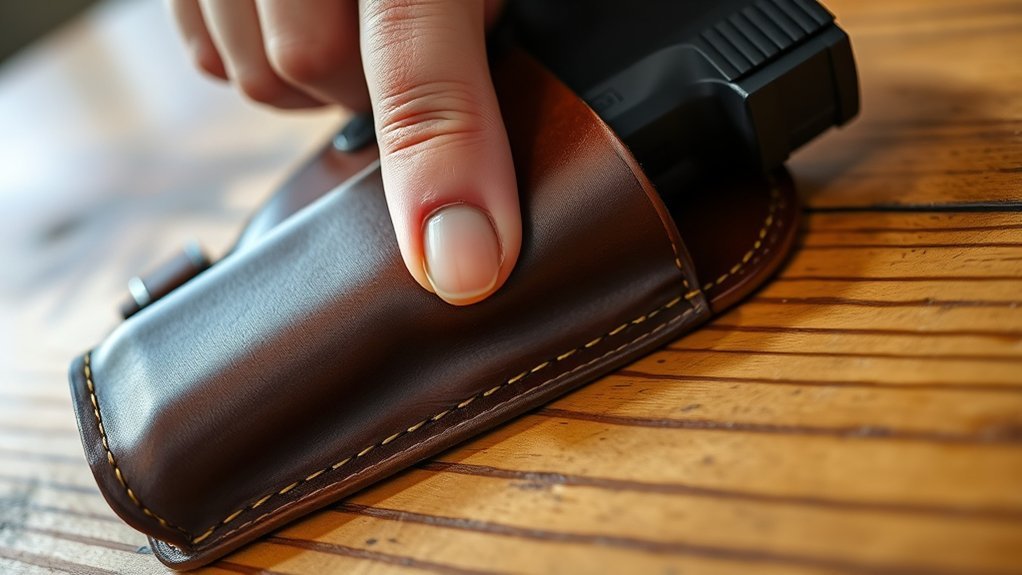
To effectively break in your leather holster, you’ll need to repeatedly draw and re-holster your firearm. This process softens the leather and loosens its grip, making it easier to draw quickly when needed.
Start by inserting your firearm slowly, then draw it smoothly, paying attention to any tight spots. Repeat this action 20 to 30 times in a controlled manner, guaranteeing the leather flexes naturally without forcing it.
Avoid swinging or jerking the firearm, as this can damage the holster. Over time, the leather will mold to the motion of drawing, providing a comfortable fit and reliable retention.
This simple routine helps prevent stiffness and assures your holster functions properly during everyday use.
Shape Your Leather Holster to Fit Your Firearm
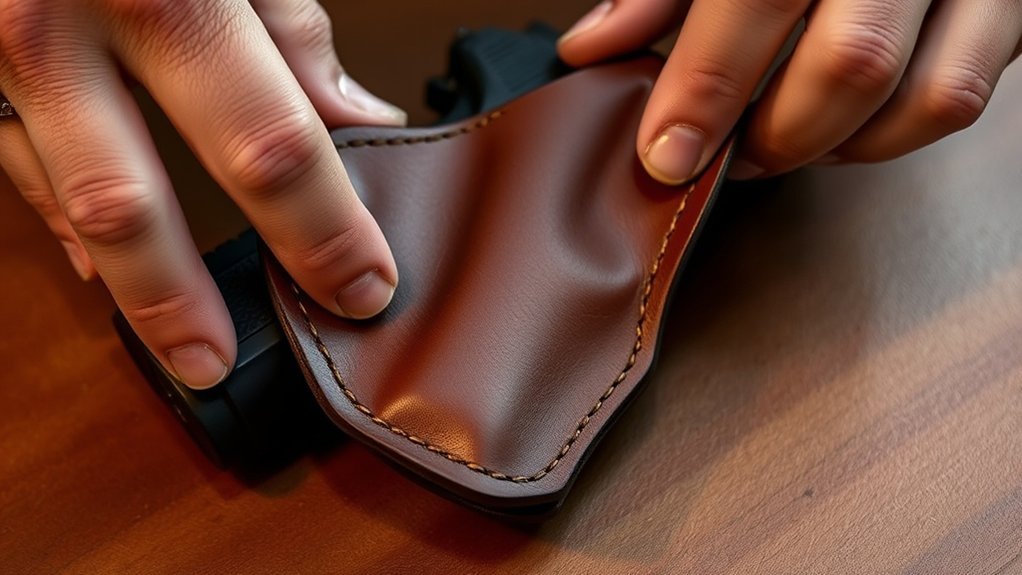
Start by verifying how your firearm fits in the holster—too tight or too loose can affect comfort and safety.
Then, gently mold the leather around your gun to create a custom fit that holds securely without resistance.
This shaping process ensures your holster works smoothly every time you draw or reholster.
Assess Holster Fit
How well does your leather holster fit your firearm? A proper fit guarantees safety, comfort, and quick access. To evaluate the fit, start by inserting your firearm into the holster. It should slide in smoothly but hold securely without wobbling.
Check the retention by gently shaking the holster or turning it upside down—your gun shouldn’t fall out. Also, pay attention to any pressure points or tight spots that might make drawing difficult. Finally, ensure the trigger guard is fully covered to prevent accidental discharge.
Consider these key points when gauging fit:
- Firearm inserts smoothly but snugly
- Retention keeps gun secure during movement
- No uncomfortable pressure points or tightness
- Trigger guard fully enclosed for safety
If your holster doesn’t meet these, it’s time to adjust.
Mold Leather Properly
Although leather holsters come pre-formed, you’ll often need to mold them to your firearm for the perfect fit. Start by slightly dampening the leather with a sponge or cloth—don’t soak it, just enough to make it pliable.
Next, insert your firearm carefully into the holster, applying firm but gentle pressure to shape the leather around its contours. Hold it in place for a few minutes, then remove the firearm and let the holster dry naturally.
This process helps the leather adapt precisely to your gun’s dimensions, improving retention and comfort. Repeat as needed, but avoid over-wetting or forcing the leather to prevent damage.
Properly formed leather ensures your holster will hold your firearm securely without being overly tight or too loose.
Avoid Common Mistakes That Damage Leather Holsters
If you want your leather holster to last, you’ll need to steer clear of common mistakes that cause damage. Leather is sensitive and easy to harm if you’re not careful. Avoid these pitfalls to keep your holster in good shape:
- Don’t expose it to excessive moisture or water, which can weaken and warp the leather.
- Avoid direct sunlight for long periods, as UV rays dry out and fade the material.
- Never use harsh chemicals or cleaners on your holster; they strip away natural oils.
- Don’t force your firearm into a stiff holster without proper molding; it can crack or deform the leather.
Maintain Your Holster’s Softness and Flexibility Over Time
To keep your leather holster soft and flexible, you’ll need to regularly care for it using the right products and techniques. Start by applying a quality leather conditioner every few months to prevent drying and cracking. Avoid over-saturating; a thin, even layer is enough.
When cleaning, use a damp cloth instead of harsh chemicals that can strip natural oils.
Store your holster in a cool, dry place away from direct sunlight or heat sources, which can cause stiffness. If it feels stiff, gently massage the leather with your hands to restore suppleness.
By maintaining this routine, you’ll extend your holster’s life and ensure it stays comfortable and functional.
Consistency is key—neglecting care may lead to brittleness and reduced effectiveness over time.
Frequently Asked Questions
Can I Use Oil Instead of Leather Conditioner on My Holster?
You shouldn’t use oil instead of leather conditioner on your holster because oil can damage or darken the leather. Stick to a quality leather conditioner to keep it supple and prevent cracking without harming the material.
How Long Does It Take for a Leather Holster to Fully Break In?
You know, “Rome wasn’t built in a day.” It usually takes you about 2 to 4 weeks of regular use for a leather holster to fully break in, molding perfectly to your gear and comfort.
Is It Safe to Use a Hairdryer to Warm My Leather Holster?
Yes, you can use a hairdryer to warm your leather holster, but don’t overheat it. Keep the dryer moving and at a low setting to avoid drying out or damaging the leather while making it more flexible.
Can Water Damage a Leather Holster Permanently?
Yes, water can permanently damage your leather holster by causing it to stiffen, discolor, or crack. You should avoid soaking it and always dry it gently to preserve its shape and durability over time.
How Do I Store My Leather Holster to Prevent Cracking?
You don’t want your holster cracking like the Sahara Desert! Store it in a cool, dry place away from sunlight. Use leather conditioner regularly and avoid extreme humidity to keep it supple and long-lasting.
Conclusion
By following these steps, you’ll make your leather holster comfortable and reliable. Imagine Jake, a new gun owner, who softened and shaped his holster before his first range day. He avoided painful draws and kept his holster looking great. With regular care and patience, you’ll enjoy the same smooth fit and flexibility. Remember, a well-maintained holster not only protects your firearm but also makes every draw effortless and safe.