How Do You Wear a Concealed Carry Holster in 5 Essential Steps?
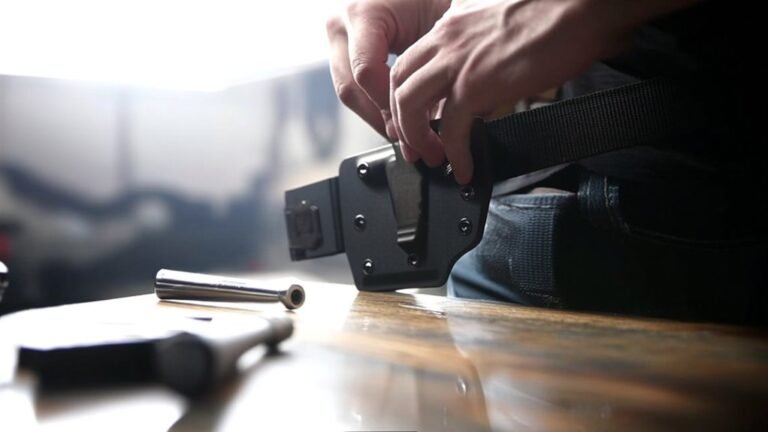
To wear a concealed carry holster effectively, first choose one that suits your comfort and offers solid retention, like IWB for concealment or OWB for comfort. Next, pick a body position such as strong side hip or appendix carry to balance access and concealment. Then, adjust your holster’s angle and height for a smooth draw. Wear loose, dark clothing that hides the holster well. Finally, practice safe drawing techniques regularly to build confidence and speed. Keep exploring to master each step fully.
Choose the Best Holster Type for Comfort and Security
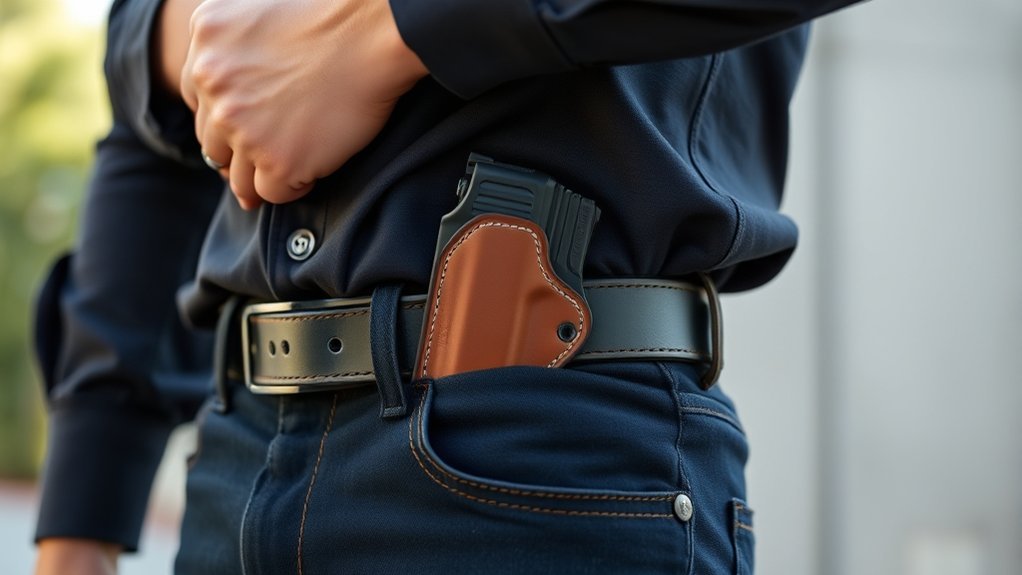
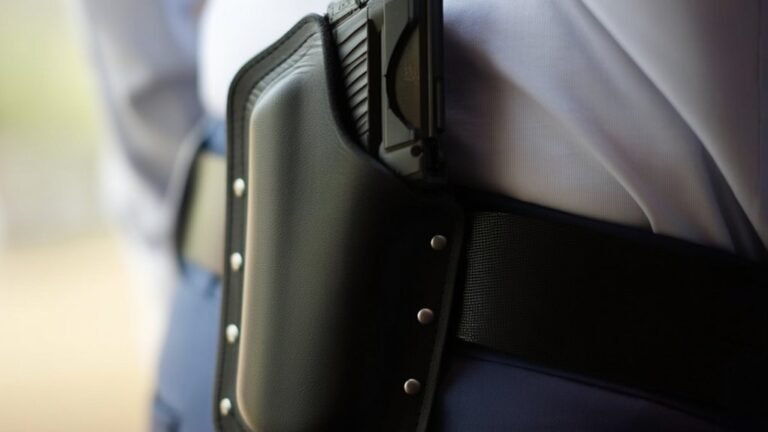
When choosing a concealed carry holster, you want one that balances comfort with security. You’ll find several types—inside-the-waistband (IWB), outside-the-waistband (OWB), shoulder, ankle, and pocket holsters.
IWB holsters are popular because they keep your firearm close and hidden, offering excellent concealment without sacrificing accessibility.
OWB holsters tend to be more comfortable but may require additional clothing to stay concealed.
Shoulder holsters distribute weight evenly, useful if you carry for long periods.
Pocket and ankle holsters work well for smaller firearms and specific carry needs.
Focus on a holster made with quality materials and solid retention, so your gun stays put during movement.
Ultimately, pick one that feels secure and comfortable during your daily activities to make certain you’ll wear it consistently.
Select the Ideal Body Position for Concealed Carry Comfort and Access
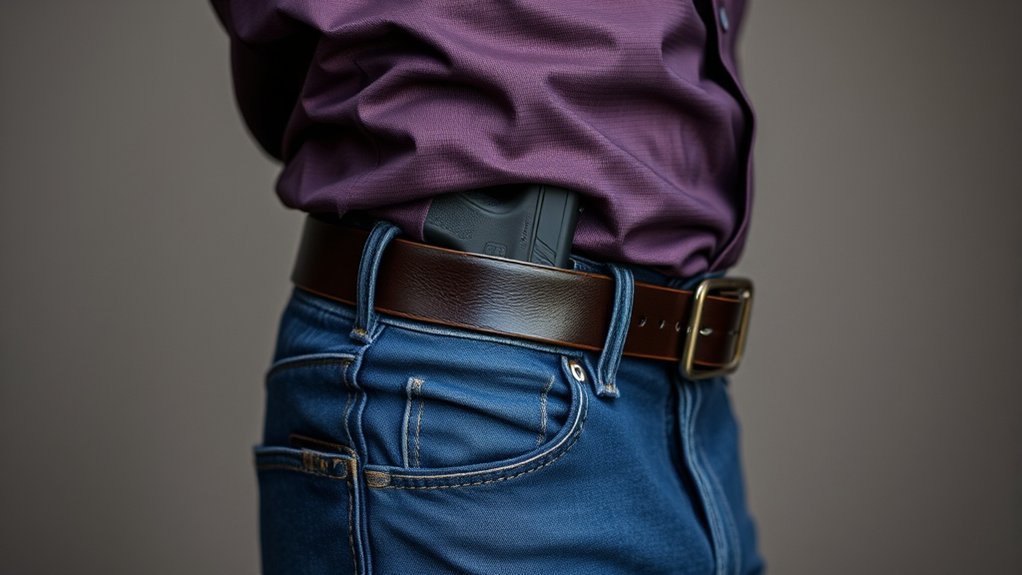
Although comfort is crucial, you also need quick access to your firearm, so selecting the right body position for concealed carry is essential. You’ll want to find a spot where you can comfortably reach your holster without strain.
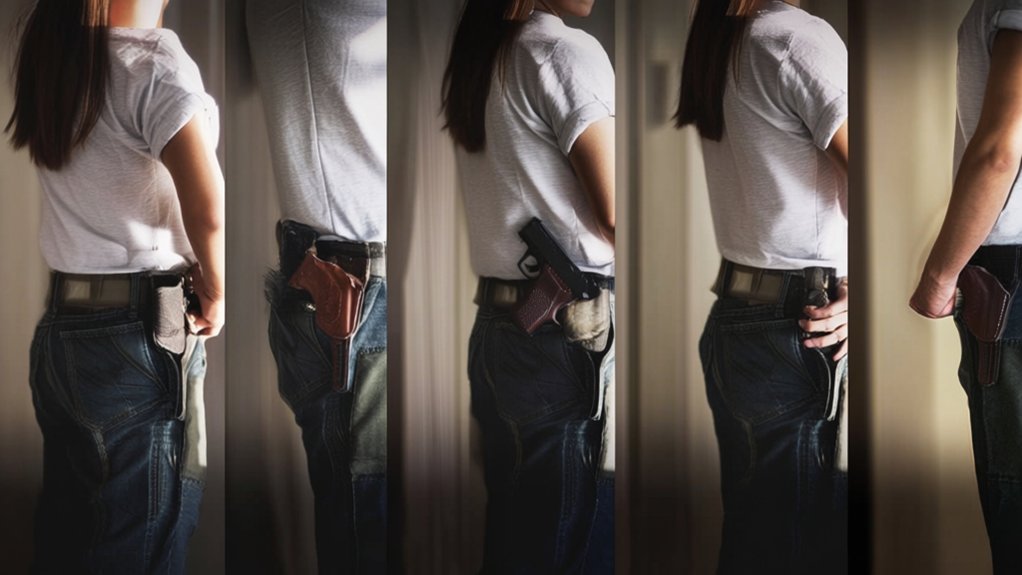
Common positions include the strong side hip, appendix carry, and behind the hip. Each offers different benefits: strong side hip is familiar and natural for many; appendix carry allows faster draw but may require adjustment for comfort; behind the hip is more discreet but slower to access.
Consider your daily activities and clothing style to guarantee your holster stays concealed and accessible throughout the day.
Experiment with positions to discover which feels most natural, balancing comfort with readiness effectively.
Adjust Your Holster for Quick Drawing and Effective Concealment
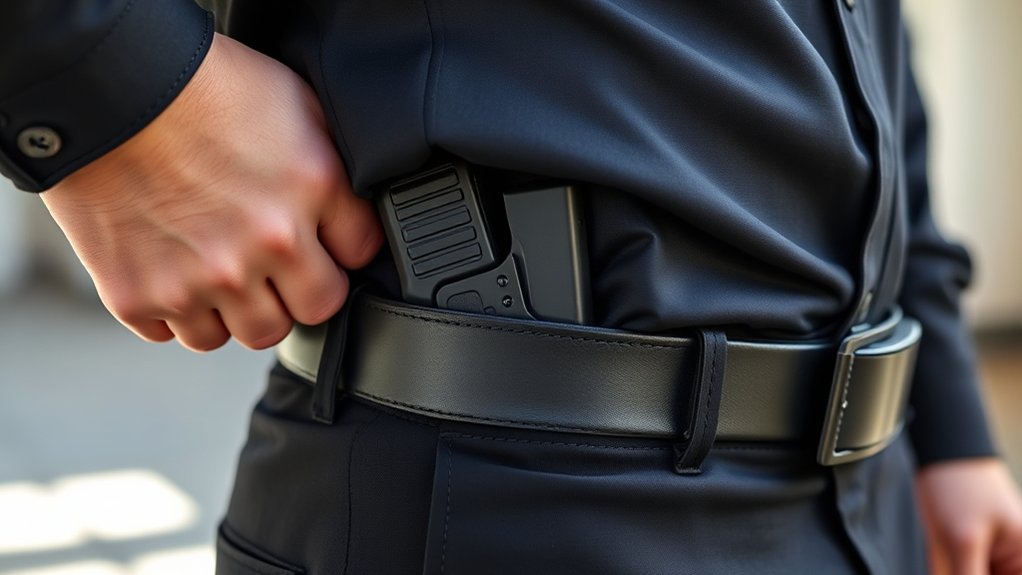
Since your holster’s fit directly impacts both how quickly you can draw and how well your firearm stays hidden, you need to fine-tune its position and retention. Start by adjusting the cant angle so your hand naturally reaches the grip.
Next, verify the holster sits at a height that doesn’t print through your clothes but still allows a smooth draw. Don’t forget to tweak retention screws to hold your gun securely without making the draw difficult.
Finally, test your setup by practicing draws in front of a mirror to spot any printing or awkward movements.
- Set the cant for natural hand movement
- Position height to balance concealment and access
- Adjust retention for secure yet easy draw
- Practice draws to confirm efficiency and concealment
This guarantees you’re ready and discreet.
Pick Clothes That Keep Your Concealed Carry Holster Hidden
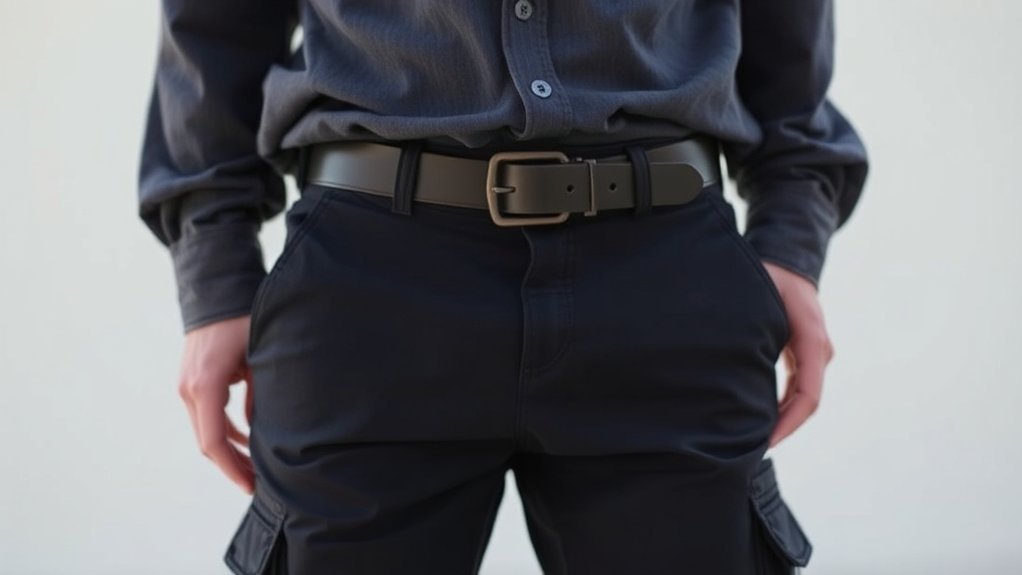
To keep your concealed carry holster truly hidden, you need to choose clothes that work with your setup instead of against it. Opt for shirts or jackets with enough length and looseness to cover the holster without clinging to your body.
Patterns and darker colors help break up outlines, making it less likely for the holster to be noticed. Avoid tight or thin fabrics that reveal bulges or shapes.
Layering can also provide extra concealment, especially when you wear an open button-up shirt or a lightweight jacket over your carry shirt.
Pants or skirts with sturdy waistbands can support holsters worn on the hip or appendix positions.
Ultimately, your clothing choices should complement your holster placement to maintain both comfort and effective concealment throughout the day.
Practice Safe Drawing Techniques to Build Confidence and Speed
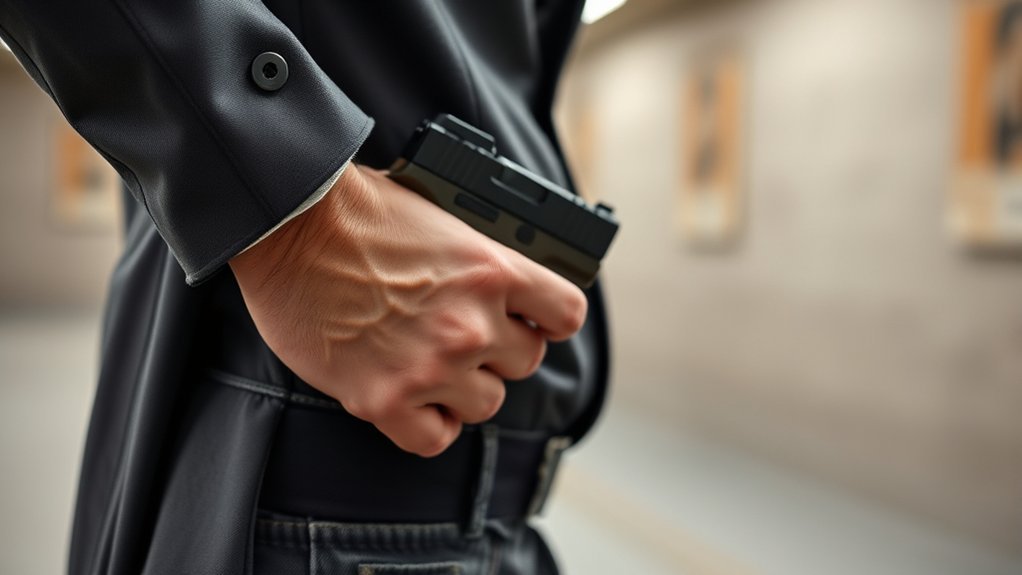
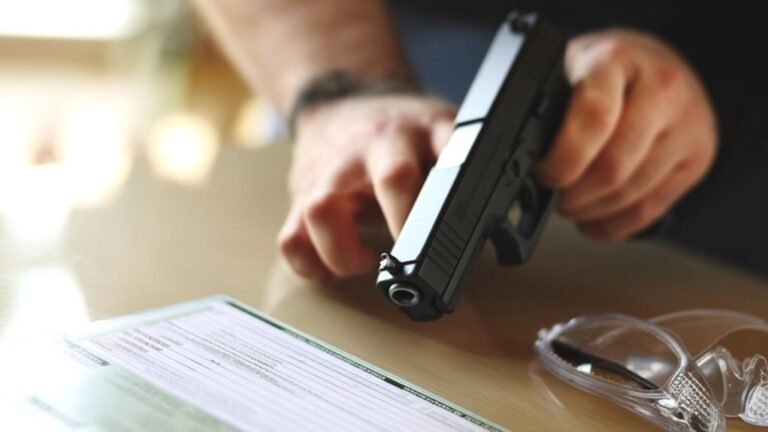
When you practice drawing your concealed carry holster regularly, you develop the muscle memory and confidence needed for quick, safe access. Start slow to focus on technique, then gradually increase speed without sacrificing control.
Always keep your finger off the trigger until you’re ready to shoot to prevent accidents. Use dry-fire drills to simulate real scenarios safely and improve your reaction time.
Remember to practice in the clothing and holster setup you use daily to build realistic familiarity.
Focus on these key points:
- Maintain a consistent grip from the start
- Keep your finger indexed outside the trigger guard
- Draw straight up to avoid snagging clothes
- Practice reholstering safely and deliberately
Frequently Asked Questions
What Legal Requirements Exist for Concealed Carry in Different States?
You need to check each state’s laws because they vary widely. Some require permits, background checks, or training, while others have constitutional carry. Always research local regulations to stay compliant and avoid legal trouble when carrying concealed.
How Do I Clean and Maintain My Concealed Carry Holster?
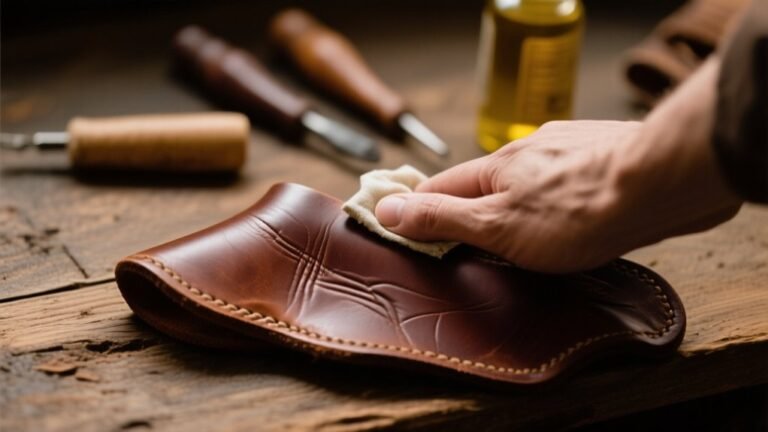
Don’t worry about damaging your holster when cleaning. You should wipe it with a damp cloth, use mild soap if needed, and let it air dry. Regularly check for wear to keep it reliable and safe.
Can I Carry a Concealed Weapon While Traveling by Air?
You can’t carry a concealed weapon on your person while traveling by air. Instead, you must declare it, unload the firearm, and securely pack it in checked baggage following TSA and airline regulations to avoid legal issues.
What Are Common Mistakes New Concealed Carriers Make?
Mistakes often sneak up like shadows—carrying without training, neglecting situational awareness, or choosing uncomfortable holsters. You’ll want to practice regularly, know your laws, and pick gear that fits your body and daily routine perfectly.
How Do I Choose the Right Firearm for Concealed Carry?
You choose the right firearm by considering comfort, size, and reliability. Pick one you can handle confidently, fits your body type, and suits your daily activities. Don’t forget to test it thoroughly before carrying.
Conclusion
Wearing a concealed carry holster properly boosts both your comfort and safety. Remember, 85% of concealed carriers say choosing the right holster and body position makes all the difference in quick access and effective concealment. By adjusting your holster, picking suitable clothes, and practicing safe draws, you’ll build confidence and readiness. Follow these steps, and you’ll carry discreetly and securely every day, prepared for any situation that comes your way.