How Does a Retention Holster Work?
A retention holster works by securely locking your firearm in place using straps, locks, or molded fittings, preventing unauthorized access while letting you draw quickly when needed. You’ll use deliberate actions, like pressing a thumb break or releasing a hood lock, to draw safely and smoothly. These holsters balance security and accessibility, protecting your gun during movement. Keep exploring, and you’ll discover how different retention levels and features can enhance your firearm safety and control.
What Is a Retention Holster and Why Use One
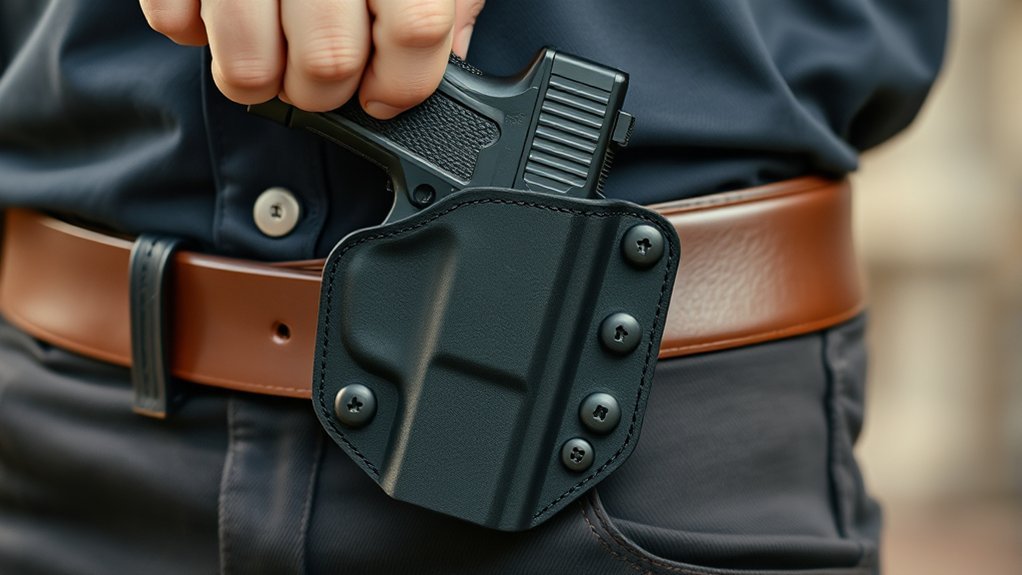
What makes a retention holster different from a regular one? You’ll notice it’s designed to hold your firearm securely while still allowing quick access.
Unlike standard holsters, retention holsters feature additional mechanisms that prevent your gun from falling out or being grabbed by someone else. You might use one because it gives you extra confidence knowing your weapon stays put during movement or in high-stress situations.
Whether you’re law enforcement, military, or a responsible civilian, this added security reduces the risk of accidental loss or theft. Retention holsters come in various styles, each with unique retention levels tailored to your needs.
Choosing one means you prioritize safety without sacrificing accessibility. It’s a practical solution designed specifically for those who want more control over their firearm’s security.
How Retention Holsters Keep Your Gun Secure
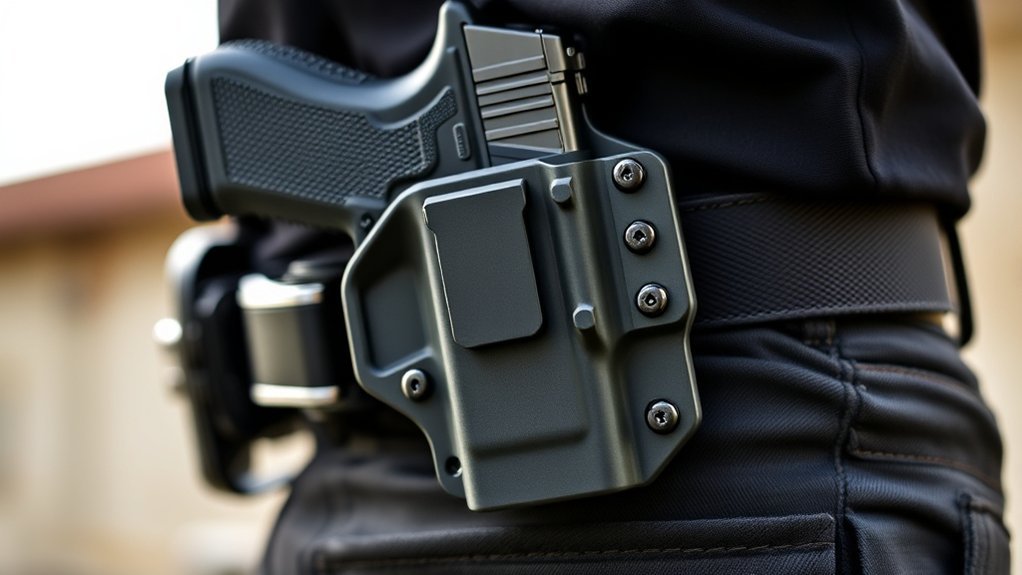
You’ll find retention holsters use different mechanisms like straps, locks, or tension devices to keep your gun firmly in place. These features give you confidence knowing your firearm won’t slip or be grabbed by someone else.
Let’s explore how these systems work and the key benefits they offer for secure holstering.
Types Of Retention Mechanisms
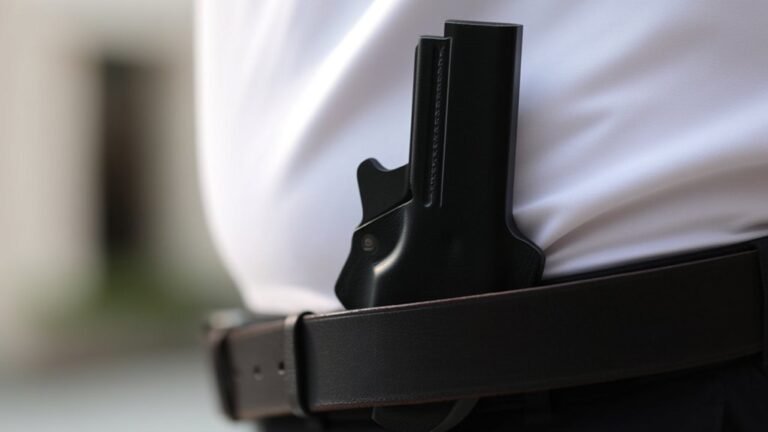
How does a retention holster actually keep your gun secure? It uses specific mechanisms to prevent accidental or unauthorized removal. One common type is the thumb break, a strap that you release with your thumb before drawing.
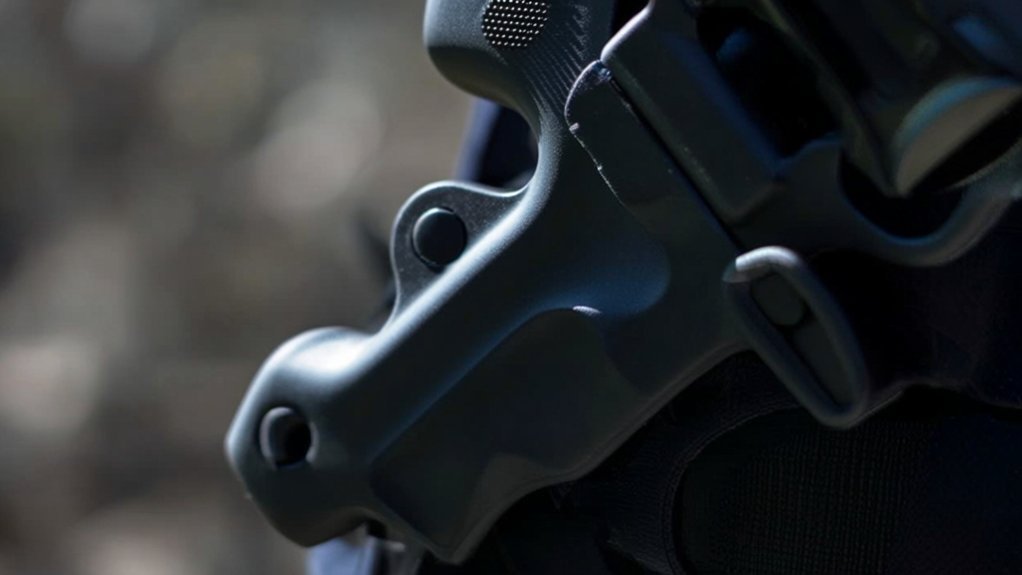
Another is the hood or hooded retention, which covers the gun’s slide and requires you to push or pull a lever to free the weapon. Some holsters feature internal retention, where molded plastic or adjustable screws hold the gun snugly in place, letting you draw smoothly but keeping it secure otherwise.
You’ll also find retention holsters with automatic locking systems that snap into place as you holster your firearm. Each mechanism balances quick access with security, helping you keep control over your gun.
Benefits Of Secure Holstering
Retention holsters use their mechanisms to keep your gun firmly in place, but the benefits go beyond just preventing loss or theft. They provide peace of mind, knowing your firearm won’t accidentally fall out or be grabbed by someone else.
With secure holstering, you maintain control and readiness in any situation. Here’s how retention holsters help you:
- Prevent unauthorized access by adding layers of security
- Reduce accidental discharges by keeping the trigger covered
- Enhance comfort by securely holding your gun close to your body
- Improve draw speed by ensuring the gun stays aligned for smooth access
- Protect your firearm from damage caused by impact or environmental factors
Types of Retention Mechanisms and How They Work
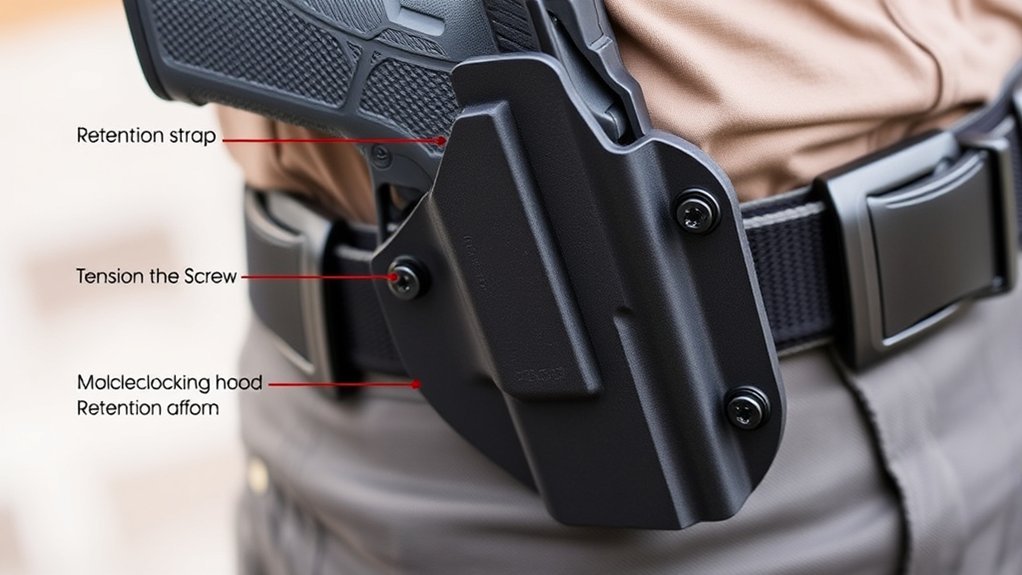
What keeps your firearm securely in place while allowing quick access? Retention holsters use various mechanisms designed to hold your weapon firmly yet let you draw smoothly when needed.
One common type is the thumb break, a strap that snaps over the firearm; you release it with your thumb during a draw.
Another is the hood or lever lock, which covers part of the gun and must be pressed or flipped aside.
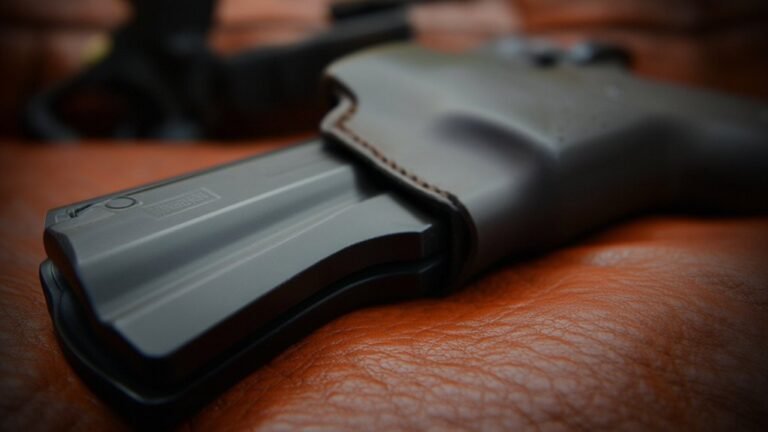
Some holsters use friction retention, relying on tight molding around the gun’s shape to keep it secure.
Advanced holsters combine multiple retention levels for extra security.
Knowing how each mechanism works helps you choose the right holster to balance safety with quick accessibility.
Safe Drawing Techniques for Retention Holsters
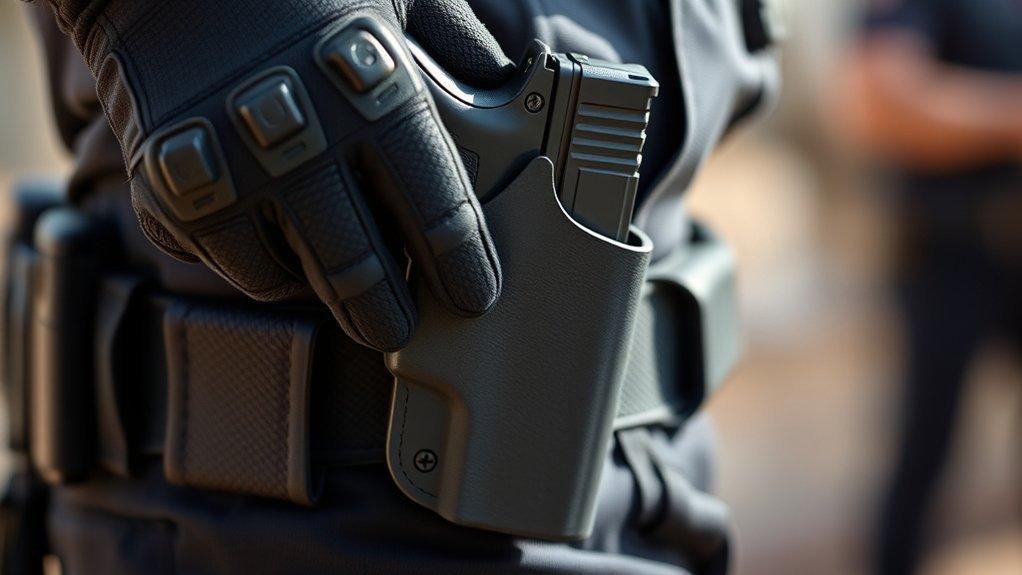
Although drawing from a retention holster requires extra steps, practicing safe techniques guarantees you access your firearm quickly and securely. You need to stay calm, focused, and deliberate to avoid fumbling or accidental discharge.
Here’s how to draw safely:
- Keep your finger off the trigger until the firearm is fully drawn.
- Use your strong hand to release retention devices smoothly.
- Maintain a firm grip and pull the firearm straight up without twisting.
- Keep your support hand ready to assist or defend.
- Practice your draw regularly to build muscle memory and speed.
Differences Between Level 1, 2, and 3 Retention Holsters
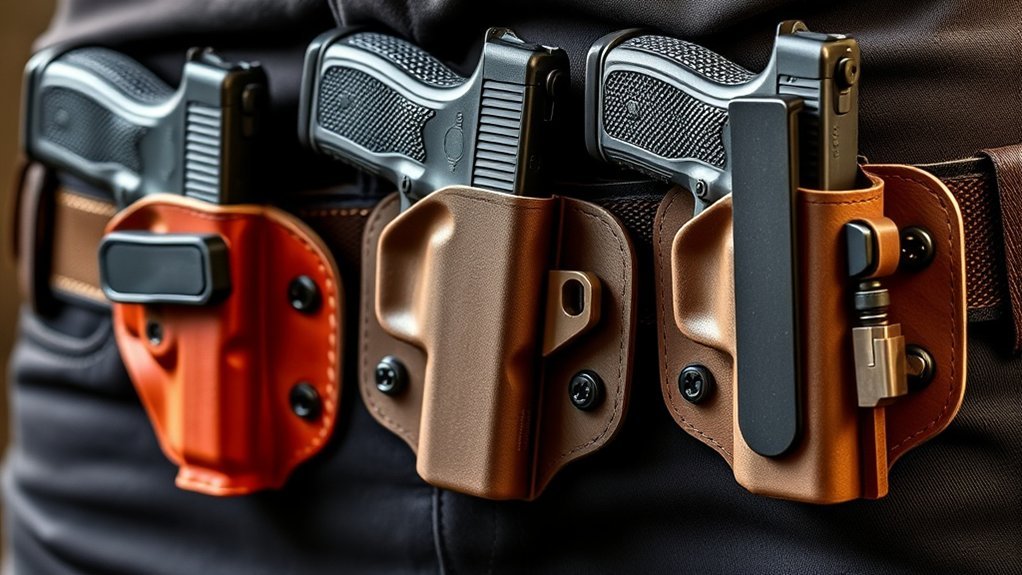
When you choose a holster, understanding the differences between Level 1, 2, and 3 retention is essential for matching your needs with the right security features.
Level 1 retention holsters usually have a simple friction lock or a thumb break strap, providing basic security while allowing a quick draw.
Level 2 adds an extra retention mechanism, often involving a secondary release button or lever, requiring two actions to draw the firearm.
Level 3 holsters feature three independent retention systems, such as a thumb break, a hood, and a trigger guard lock, making them the most secure.
The higher the level, the more secure your firearm remains against unauthorized access, but it also means your draw will be slower and more deliberate.
Choose based on your balance between security and speed.
Benefits of Retention Holsters for Law Enforcement
Choosing a retention holster with the right security level directly impacts how effectively law enforcement officers can protect their firearms in the field. When you use a retention holster, you reduce the risk of weapon loss or theft, ensuring your sidearm stays secure during physical confrontations or high-stress situations.
These holsters also promote quicker, more controlled access when you need to draw your weapon. Plus, they help maintain uniformity and professionalism in your gear setup.
Here’s how a retention holster benefits you as a law enforcement officer:
- Prevents unauthorized access to your firearm
- Minimizes accidental drops or loss during pursuits
- Enhances weapon retention during physical altercations
- Allows for efficient, deliberate draws
- Supports confidence and readiness on duty
How Retention Holsters Improve Concealed Carry Safety
When you use a retention holster, your weapon stays secure, reducing the risk of accidental loss.
You can access your firearm quickly thanks to smart release mechanisms designed for speed and safety.
Plus, these holsters help prevent unauthorized draws, keeping you and those around you safer.
Enhanced Weapon Security
Though carrying a concealed weapon offers personal protection, it also requires ensuring that your firearm stays secure at all times. Retention holsters provide enhanced weapon security by preventing unauthorized access and accidental drops.
When you use one, you can trust your firearm is firmly held, even during rigorous movement.
Retention holsters improve security by:
- Locking the weapon in place until you actively release it
- Reducing the risk of someone grabbing your gun in a struggle
- Minimizing accidental discharges caused by loose holsters
- Offering multiple retention layers like straps or hoods
- Maintaining a tight fit that adapts to your firearm’s shape
With these features, retention holsters help you carry confidently, knowing your weapon won’t slip or get taken easily.
Quick Access Mechanisms
How quickly can you access your firearm in a critical moment? Retention holsters are designed to balance security with speed, so you don’t have to sacrifice one for the other.
Quick access mechanisms like thumb breaks, push buttons, or rotating hoods let you draw your weapon smoothly and efficiently. These features require deliberate actions that you can perform instinctively with practice, ensuring your firearm stays secure but remains ready when you need it most.
Preventing Unauthorized Draws
Mastering quick access mechanisms not only speeds up your draw but also plays a key role in preventing unauthorized individuals from grabbing your firearm. Retention holsters are designed to secure your weapon firmly, making it difficult for others to snatch it away. They use multiple retention features that require deliberate actions to release, ensuring only you can draw efficiently.
Here’s how retention holsters prevent unauthorized draws:
- Multiple locking points secure the firearm in place
- Pressure-sensitive triggers require precise hand placement
- Thumb breaks or straps add an extra layer of security
- Specialized retention hoods cover the trigger guard
- Materials and design resist forced removal attempts
How to Choose the Right Retention Holster for You
When selecting a retention holster, you need to take into account your daily activities and the level of security required. Consider how often you’ll draw your firearm and in what environments—urban settings may demand higher retention levels than controlled areas.
Choose a holster that balances accessibility with secure retention, ensuring it fits your firearm model perfectly. Comfort matters too; test different materials and designs to find one that won’t hinder your movement.
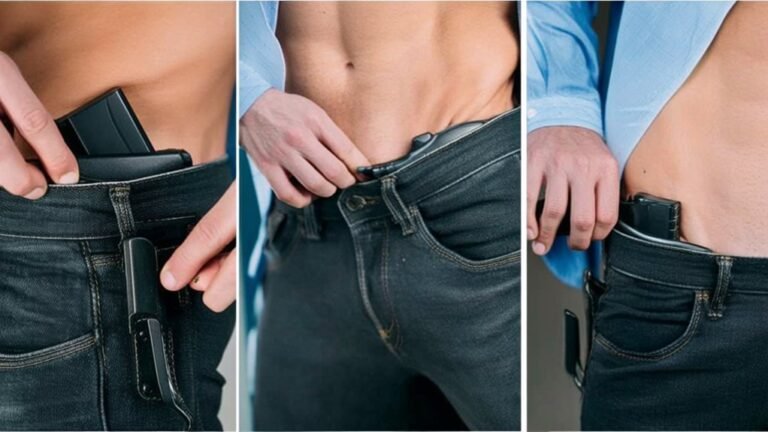
Also, think about how you carry—inside the waistband, outside, or on duty gear—and pick a style that matches your preference.
Finally, make sure the retention mechanisms are easy for you to operate quickly but challenging for others. This way, you’ll get reliable protection without sacrificing usability.
Avoid These Common Retention Holster Mistakes
Although retention holsters offer essential security, many users make avoidable mistakes that compromise safety and convenience. You need to be mindful to avoid these common pitfalls:
- Failing to regularly practice drawing and re-holstering, which slows your response time.
- Choosing a holster that doesn’t fit your firearm snugly, risking accidental release.
- Neglecting to adjust retention tension, leading to either overly tight or loose grips.
- Using a worn or damaged holster that can fail under stress.
- Ignoring clothing and positioning factors that obstruct quick access or cause discomfort.
How to Care for Your Retention Holster
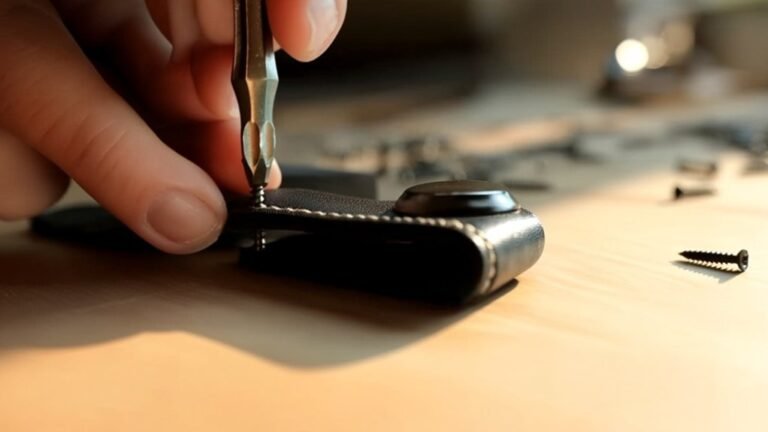
Since your retention holster plays a critical role in securing your firearm, you need to maintain it properly to guarantee reliability and longevity. Start by regularly inspecting your holster for wear, cracks, or loose screws.
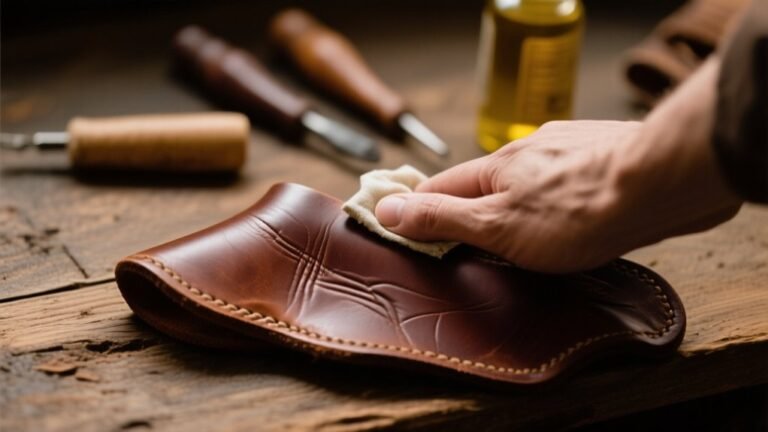
Clean it with a damp cloth and mild soap, avoiding harsh chemicals that could damage the material. If your holster is leather, apply a leather conditioner occasionally to keep it supple and prevent cracking.
For kydex or synthetic holsters, confirm the retention mechanisms move smoothly by applying a small amount of lubricant if needed.
Store your holster in a cool, dry place away from direct sunlight to prevent material degradation.
Taking these simple steps will keep your retention holster functioning efficiently and guarantee your firearm stays secure.
Frequently Asked Questions
Can Retention Holsters Be Used for Non-Firearm Tools?
Yes, you can use retention holsters for non-firearm tools like knives or multitools. They keep your gear secure and accessible, preventing accidental loss while you move or work, offering convenience and safety.
Are Retention Holsters Compatible With All Gun Models?
Think of a puzzle piece—it fits only certain shapes. Retention holsters aren’t one-size-fits-all; you’ll find some designed for specific gun models, so you’ll want to match yours for secure, reliable carry every time.
How Do Weather Conditions Affect Retention Holster Performance?
You’ll find that extreme weather, like rain or snow, can affect your retention holster’s materials, causing stiffness or slipperiness. Regular maintenance and choosing weather-resistant holsters help keep your gear reliable in harsh conditions.
Can Retention Holsters Be Customized or Modified?
Yes, you can customize retention holsters by adjusting retention screws, adding straps, or swapping materials for comfort and security. Just make sure any modification maintains safety and doesn’t interfere with quick, reliable access to your firearm.
What Materials Are Retention Holsters Typically Made From?
Retention holsters are typically made from durable materials like leather, Kydex, and nylon. You’ll find these materials offer strength and flexibility, ensuring your firearm stays secure while allowing quick access when you need it most.
Conclusion
Now that you know how retention holsters work, you’re armed with more than just a holster—you’ve got peace of mind. Like a trusty guard dog, a good retention holster keeps your firearm secure while letting you draw smoothly when it counts. Choose wisely, practice safe draws, and avoid common pitfalls to guarantee your holster works for you, not against you. Remember, your safety and confidence start with the right retention holster.