How to Make a Gun Holster in 7 Easy Steps
To make a gun holster in 7 easy steps, start by measuring and tracing your firearm carefully for a perfect fit. Choose durable leather or fabric, then cut and prepare your holster pieces with precision. Shape the material to mold around your gun, secure everything with stitching or rivets, and focus on comfort and durability. Finally, test and adjust for reliable retention and ease of use. If you want to create a holster that fits like a glove, keep exploring these tips.
Measure and Trace Your Gun for a Perfect Holster Fit
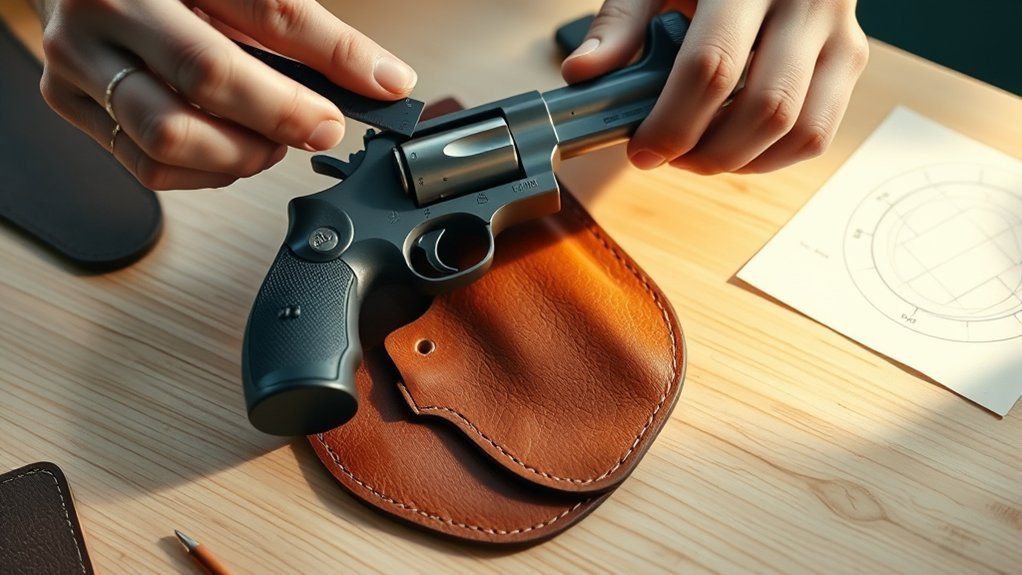
Before you begin crafting your holster, carefully measure and trace your gun to guarantee a snug, precise fit.
Start by cleaning your gun so it’s free of dust or oils that might interfere with tracing. Place your firearm on a sturdy piece of paper or cardstock, holding it steady. Use a fine-tip pencil or pen to trace around the outline, ensuring you capture every curve and detail, especially near the trigger guard and barrel.
Measure key dimensions like length, width, and height with a caliper or ruler to double-check your tracing accuracy. Mark any additional features your holster must accommodate, like sights or safety switches.
Taking the time to measure and trace correctly now will save you from fit issues later and assure your holster holds your gun securely.
Choose the Best Leather or Fabric for Your Holster
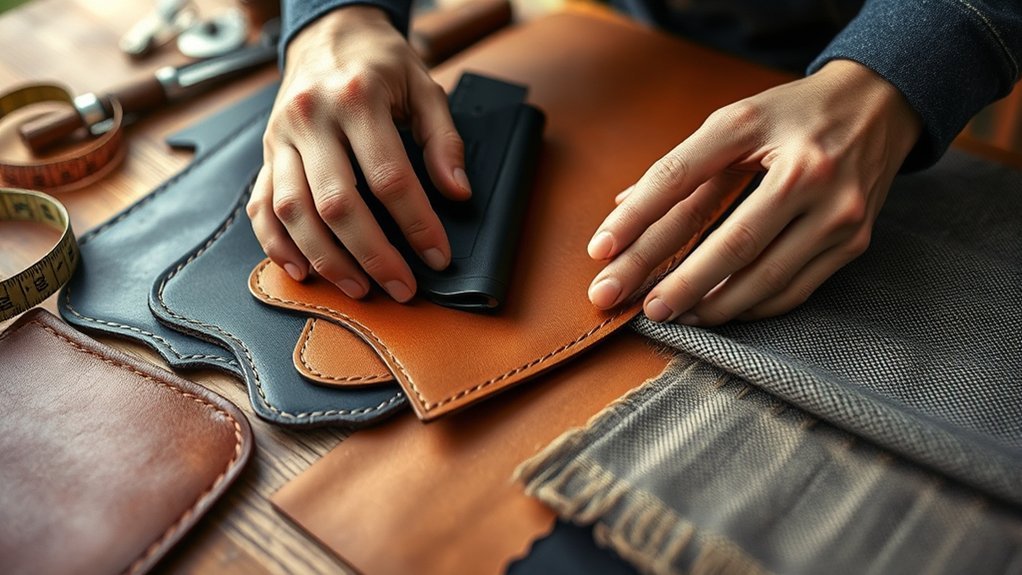
You’ll want to pick the right material to balance durability and comfort for your holster. Leather offers classic strength and molding, while fabric options can provide lightweight flexibility.
Let’s compare their benefits so you can choose what fits your needs best.
Types Of Holster Materials
When choosing the right material for your gun holster, you’ll want to balance durability, comfort, and retention. Different materials offer unique benefits depending on your needs and preferences. Here’s a quick overview of common holster materials to help you decide:
| Material | Key Features |
|---|---|
| Leather | Durable, molds to gun, classic look |
| Kydex | Rigid, excellent retention, waterproof |
| Nylon | Lightweight, flexible, budget-friendly |
| Hybrid | Combines leather and synthetic for comfort and strength |
Each material suits different carry styles and environments. Consider how you’ll use your holster and what feels best for you. This will guide you in picking the perfect material before moving on to the next step.
Leather Versus Fabric Benefits
Although both leather and fabric holsters serve the same basic purpose, choosing between them depends on how you prioritize comfort, durability, and style.
Leather offers a classic, polished look that ages beautifully, molding to your firearm over time for a custom fit. It’s often favored for its professional appearance and natural feel.
Fabric holsters, like those made from nylon or Kydex blends, provide lightweight flexibility and often feature breathable materials, making them ideal for active use or warmer climates. They’re usually easier to clean and resist water better than leather.
When selecting your holster, think about your lifestyle and the environment where you’ll carry. Leather suits formal or everyday carry with style, while fabric excels in practicality and versatility.
Choose the one that matches your needs best.
Durability And Comfort Factors
Since selecting the right material directly impacts how your holster performs daily, you need to weigh durability and comfort carefully.
Leather offers excellent durability, molding perfectly to your firearm over time while providing a classic look. It’s sturdy enough to handle wear and tear but might feel stiff initially.
Fabric holsters, like those made from nylon or Kydex blends, often prioritize comfort and lightweight design, making them ideal for extended wear. However, they may sacrifice some longevity compared to leather.
Consider how often you’ll carry your holster and in what conditions. If you want something tough and form-fitting, leather’s your best bet.
If comfort and flexibility matter more, a high-quality fabric holster could suit you better.
Choose a material that balances both to fit your lifestyle.
Cut and Prepare Your Holster Pieces Carefully
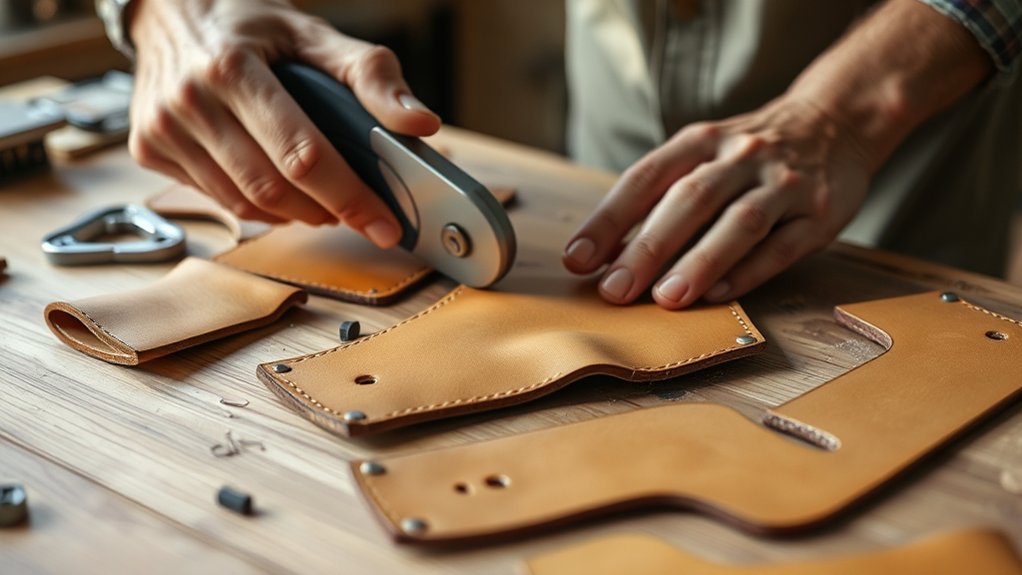
Now that you’ve chosen quality materials, it’s essential to cut your holster pieces with precision.
Take accurate measurements to guarantee each piece fits perfectly.
Careful preparation will make your holster both functional and durable.
Selecting Quality Materials
When you choose materials for your gun holster, you want to guarantee they offer durability and protection without sacrificing comfort. Selecting the right materials is key to ensuring your holster lasts and safely holds your firearm.
Consider these factors when picking your materials:
- Leather Quality: Opt for full-grain or top-grain leather for strength and flexibility. These types mold well and resist wear.
- Thickness: Aim for 8-10 oz leather or comparable synthetic materials to balance sturdiness and comfort.
- Backing Materials: Use felt or suede lining to protect your gun’s finish and add comfort against your body.
Precise Measurement Techniques
Although selecting quality materials is essential, you’ll need to measure and cut your holster pieces with exactness to guarantee a perfect fit.
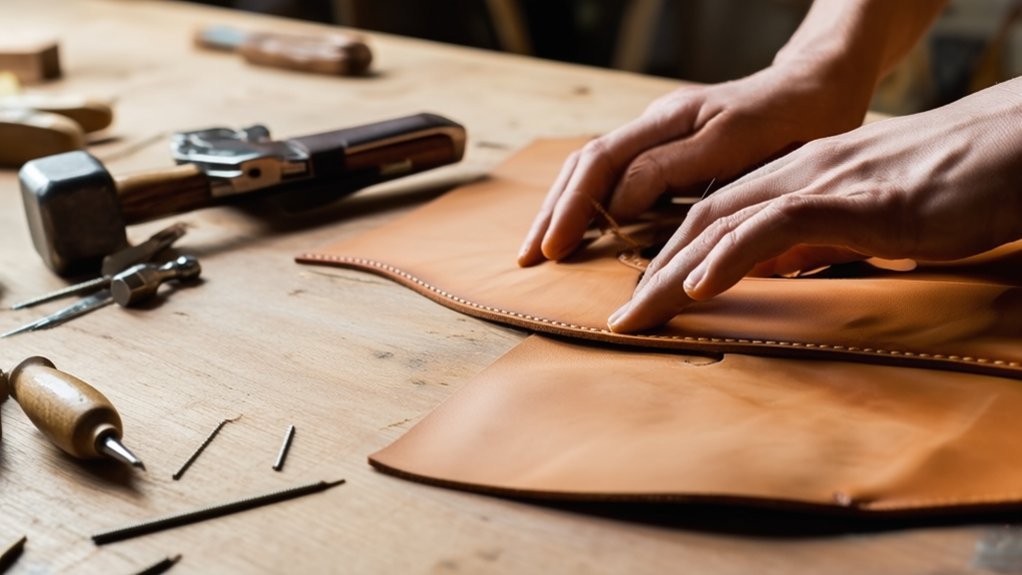
Start by using a ruler or caliper to get precise dimensions of your firearm, focusing on length, width, and thickness. Mark your material carefully, using a fine-tip pen or pencil, and double-check measurements before cutting.
When cutting, use sharp scissors or a utility knife to ensure clean edges that will align perfectly during assembly. Remember, even slight inaccuracies can lead to a loose or overly tight holster, compromising function and safety.
Take your time preparing each piece, and consider making a paper template first to visualize the fit. Precision here makes the difference between a professional-looking holster and a poorly fitting one.
Shape Your Gun Holster to Mold Around Your Firearm
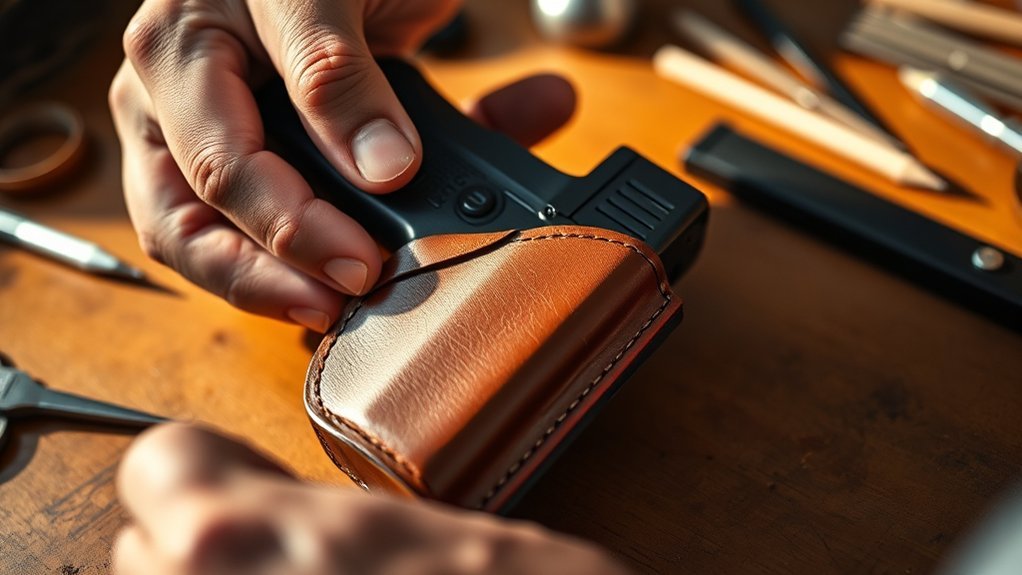
Since your holster needs to fit your firearm perfectly, you’ll want to carefully shape the material around its contours. This guarantees a snug, secure fit that keeps your gun accessible yet firmly held. Here’s how to do it:
- Heat the Material: Use a heat gun or warm water to soften the holster material, making it pliable. Be cautious not to overheat.
- Press the Firearm: Insert your firearm and press it firmly into the softened material. Apply even pressure to mold the shape accurately.
- Hold and Cool: Keep the firearm in place while the material cools and hardens, locking the shape around your gun’s curves.
Secure Your Holster With Stitching or Rivets
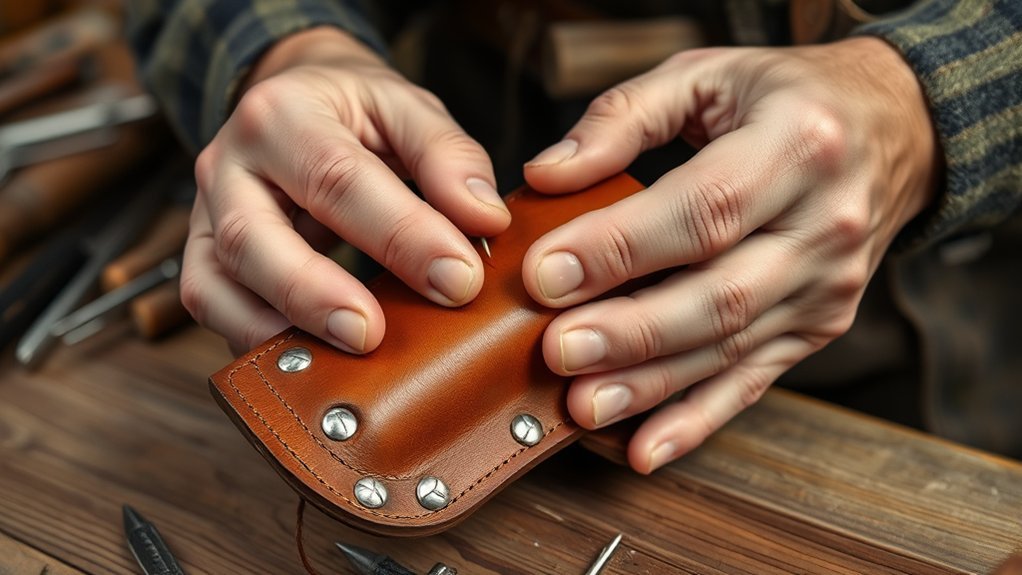
To guarantee your holster stays durable and reliable, you’ll need to secure it with stitching or rivets. Begin by aligning the holster’s edges carefully, making sure the shape fits your firearm snugly.
If you’re stitching, use strong, waxed thread and a heavy-duty needle, sewing evenly along the edges with tight, consistent stitches to prevent any gaps or weakness.
For rivets, mark the spots evenly where stress points occur, then punch holes and insert the rivets securely using a rivet setter.
Rivets add extra reinforcement, especially around high-stress areas like the trigger guard or belt loops.
Whichever method you choose, take your time to confirm all fastenings are tight and secure—this step is essential for your holster’s longevity and safety.
Make Your Holster Comfortable and Long-Lasting
Even after securing your holster, you’ll want to focus on making it comfortable to wear and durable enough to last through regular use. Comfort and longevity are key to ensuring your holster serves you well over time. Here’s how you can achieve that:
- Use Quality Materials – Choose thick, flexible leather or durable synthetic fabrics that mold to your body and resist wear.
- Add Padding – Incorporate soft lining or foam padding in contact areas to prevent chafing and improve comfort.
- Finish Edges Smoothly – Sand and burnish edges to avoid rough spots that irritate your skin and cause premature material breakdown.
Test and Adjust Your Holster for Reliable Use
How do you know if your holster will perform when you need it most? Testing is essential. Start by inserting and drawing your gun several times to guarantee a smooth, secure fit.
Pay attention to retention—your firearm should stay put during movement but release easily when you draw. Adjust tension screws or add retention devices if necessary.
Next, wear the holster throughout your daily activities to check comfort and positioning. Notice if the holster shifts or causes discomfort, then tweak the belt loops or backing for better stability.
Don’t forget to test with your actual gear and clothing to simulate real conditions.
Frequently Asked Questions
What Tools Are Essential for Holster Making?
You’ll need a sharp utility knife, leather punch, stitching needles, strong thread, a mallet, and edge beveler. These tools help you cut, shape, and sew the leather efficiently, making your holster sturdy and reliable.
How Do I Safely Break in a New Leather Holster?
You’ll gently insert your gun daily, letting the leather warm and mold to its shape. As it softens, it coincides with your grip, creating a perfect fit. Don’t rush—patience guarantees safety and comfort.
Can I Customize Holster Colors or Designs?
Yes, you can customize holster colors and designs to match your style. You’ll find options for dyeing, painting, or adding patches and embossing. Just make sure to use materials and methods that won’t damage the holster.
How Do I Maintain and Clean My Holster?
Treat your holster like a trusty steed—wipe it down with a damp cloth, use leather conditioner if it’s leather, and avoid soaking it. Keep it dry and clean, so it stays ready for the ride every time.
Are There Legal Restrictions on Carrying a Holstered Gun?
Yes, you do have legal restrictions on carrying a holstered gun. Laws vary by state and country, so you’ll need to check local regulations about permits, where you can carry, and how the gun must be secured.
Conclusion
Congrats, you’re now the proud creator of a custom gun holster! Who knew measuring, cutting, and stitching could be so thrilling? Forget buying one—your DIY masterpiece screams “professional” (or at least “enthusiast”). Just remember, if your holster looks like a potato sack, it’s “rustic charm.” Keep tweaking, and soon your holster will hold your gun securely, or at least keep it from wandering off. Hunting for perfection? Nah, you’ve nailed “good enough.”