
Can You Legally Own a Glock Switch?
You can’t legally own a Glock switch without strict federal registration and approval because it converts a pistol into a fully automatic machine gun, making it illegal for most people. The National Firearms Act requires you to file paperwork, pay taxes, and pass background checks to possess one legally. Many misunderstandings exist about its legality, but unregistered ownership can lead to serious penalties. Keep exploring to understand the laws, risks, and safer alternatives.
What Is a Glock Switch and How Does It Work?
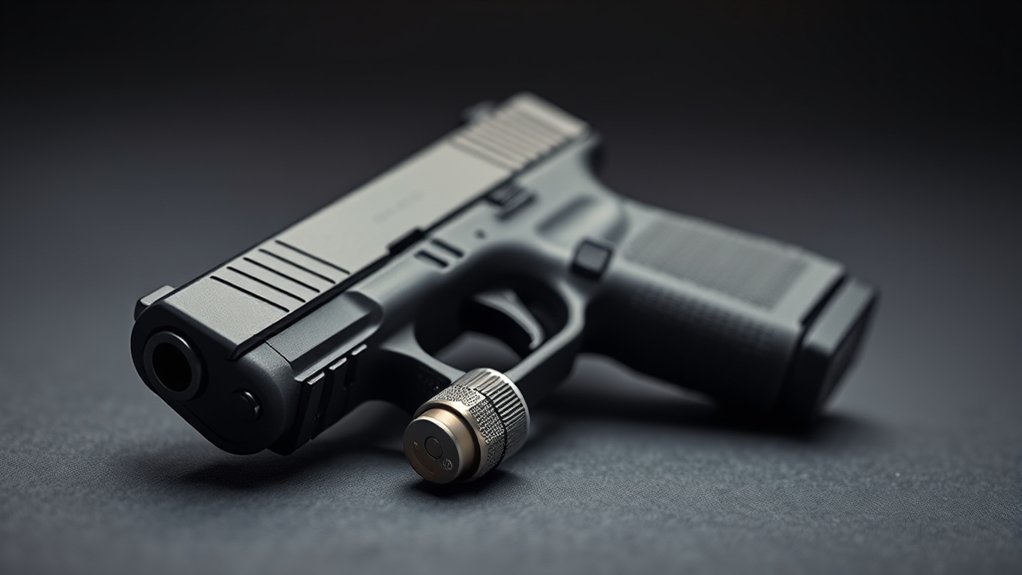
What exactly is a Glock switch, and how does it alter your firearm? A Glock switch, also known as a selector switch, is a small device that you attach to a Glock pistol’s trigger mechanism. When installed, it changes your handgun’s firing mode from semi-automatic to fully automatic, allowing you to fire multiple rounds with a single pull of the trigger.
This drastically increases the rate of fire and alters how you handle the weapon. The switch fundamentally overrides the standard trigger system, enabling continuous firing as long as you hold the trigger down.
Because it modifies the firearm’s basic function, it transforms a standard handgun into what’s legally classified as a machine gun in many jurisdictions.
Can You Legally Own a Glock Switch?
How legal is it to own a Glock switch? The short answer is: it’s generally illegal for most people in the United States. Here’s why you should be cautious:
- Federal Law: Glock switches are classified as machine gun conversion devices under the National Firearms Act (NFA). Owning one without proper registration violates federal law.
- Registration Requirement: To legally possess a Glock switch, you must register it with the Bureau of Alcohol, Tobacco, Firearms and Explosives (ATF) and pay a tax stamp.
- Severe Penalties: Unregistered possession can lead to heavy fines and felony charges, including imprisonment.
If you’re considering owning a Glock switch, make sure you fully understand these legal requirements to avoid serious consequences.
Why Glock Switches Are Controversial: Safety and Legal Concerns
Because Glock switches convert semi-automatic pistols into fully automatic weapons, they raise serious safety and legal concerns that you can’t ignore. These devices increase the rate of fire dramatically, making control difficult and increasing the risk of accidents. Plus, their legal status is murky, which can lead to severe penalties if you’re caught possessing one.
| Concern Type | Description | Impact |
|---|---|---|
| Safety | Increased fire rate reduces control | Higher accidental discharge |
| Legal | Classified as machine guns by many states | Felony charges, heavy fines |
| Accessibility | Easy to obtain via illicit markets | Increased criminal use |
| Enforcement | Difficult to detect and regulate | Law enforcement challenges |
| Public Safety | Potential use in crimes escalates violence | Greater community risk |
You must weigh these risks carefully before considering ownership.
Federal Laws Regulating Glock Switches in the U.S
Understanding the risks behind Glock switches leads directly to the federal laws that govern them. You need to know these laws to avoid serious trouble. Here are three key federal regulations affecting Glock switches:
1. Illegal Modification: Glock switches convert pistols to fully automatic, which the law classifies as machine guns.
Owning or manufacturing these without approval is a federal offense.
2. Firearm Control Act: This act prohibits possession of unregistered machine guns.
Since Glock switches turn pistols into machine guns, owning one without registration is illegal.
3. Penalties: Violations can lead to hefty fines and prison time, reflecting the law’s seriousness about controlling automatic firearms.
Knowing these rules helps you stay compliant and avoid severe legal consequences.
National Firearms Act and Glock Switches
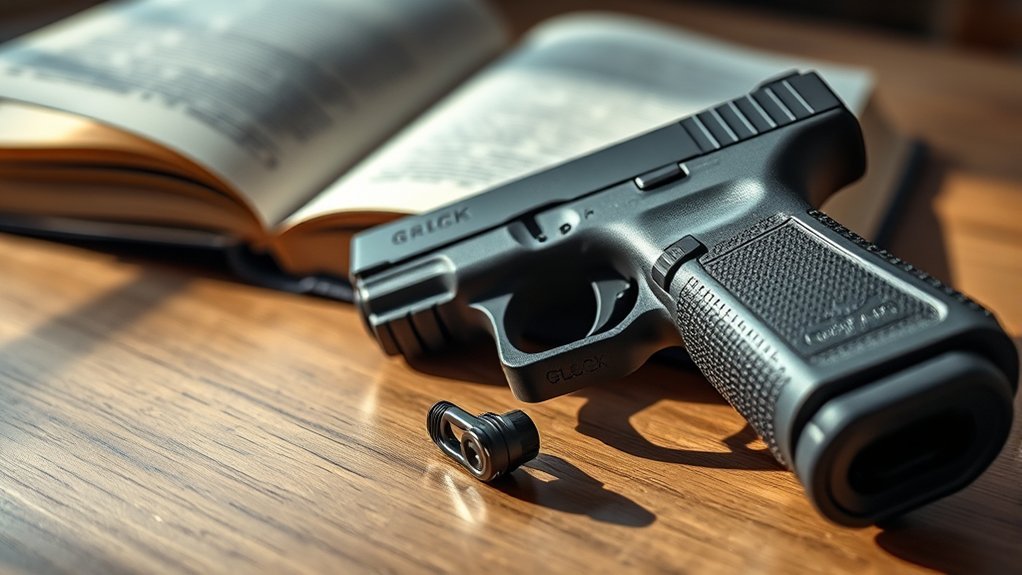
Although Glock switches might seem like simple attachments, the National Firearms Act (NFA) treats them very seriously.
Under the NFA, devices that convert a semi-automatic firearm into a fully automatic one are classified as machine guns. This means Glock switches fall under the same strict regulations.
You can’t legally possess, buy, or sell a Glock switch without proper registration and approval from the Bureau of Alcohol, Tobacco, Firearms and Explosives (ATF). Failure to comply can lead to severe penalties, including fines and imprisonment.
Even if you own a Glock switch, it must be registered under the NFA, and transferring one without following the legal process is illegal.
State-by-State Legal Variations for Glock Switch Ownership
Federal laws set the baseline for Glock switch ownership, but state regulations can vary widely and add layers of complexity. Before you consider owning one, you need to understand your state’s specific stance. Here’s what you should know:
- States with stricter laws: Some states outright ban Glock switches regardless of federal approval, so ownership is illegal.
- States following federal law closely: These states allow ownership if you comply with federal registration and tax stamp requirements.
- States with ambiguous or no clear laws: In these places, enforcement may vary, but risks remain high without proper federal compliance.
Always check local laws and consult legal experts to avoid surprises. Your responsibility is to guarantee compliance both federally and within your state.
Criminal Penalties for Illegal Glock Switches
If you possess a Glock switch without meeting legal requirements, you face serious criminal penalties that can include hefty fines and prison time. The Bureau of Alcohol, Tobacco, Firearms and Explosives (ATF) classifies these devices as machine guns under federal law, making unauthorized ownership a felony.
Convictions can lead to up to 10 years in federal prison and substantial financial penalties. States may impose additional charges or enhanced sentences.
Law enforcement agencies actively investigate and prosecute illegal possession, so don’t underestimate the risks. Even simple possession, without intent to distribute, can result in severe consequences.
You should understand that ignorance of the law won’t protect you. If caught, your rights, freedom, and future could be at stake, so it’s vital to comply fully with all legal requirements.
How to Identify Legal vs. Illegal Glock Switches
You’ll want to start by examining the physical features of the Glock switch, like its size and markings.
Understanding the legal classification criteria is key to knowing if the device is lawful to own.
Let’s break down what to look for to spot the difference.
Physical Features To Check
Although Glock switches might look similar at first glance, you need to know the key physical features that distinguish legal models from illegal ones. When checking a Glock switch, focus on these three items:
- Size and Weight: Legal switches are generally smaller and lighter, designed primarily as selector switches rather than full auto conversion devices.
- Markings and Serial Numbers: Legitimate models often have clear manufacturer markings and serial numbers. Illegal ones may lack these or have suspicious engravings.
- Material and Build Quality: Legal switches tend to be made from high-quality materials with precise machining. Illegal versions might feel cheaply made or unfinished.
Legal Classification Criteria
Because legal classification hinges on specific federal regulations, you need to understand how the Bureau of Alcohol, Tobacco, Firearms and Explosives (ATF) defines and regulates Glock switches.
The ATF classifies any device that converts a semi-automatic firearm into a fully automatic one as a machine gun under the National Firearms Act (NFA). Since Glock switches enable rapid-fire modes, they’re considered machine guns, making their possession illegal without proper licensing.
To identify legal versus illegal switches, check if the device has an ATF tax stamp and registration; without these, owning a switch is unlawful. Additionally, homemade or unregistered switches are illegal regardless of design.
Always verify your Glock switch’s documentation and comply with federal laws to avoid severe penalties.
The Process for Legally Registering a Glock Switch
When registering a Glock switch, you must navigate a strict legal process governed by the National Firearms Act (NFA). To legally own one, follow these essential steps:
- Submit an ATF Form 4 – Complete and file this application for transferring and registering the Glock switch with the Bureau of Alcohol, Tobacco, Firearms and Explosives (ATF).
- Pay the $200 Tax Stamp – This fee is mandatory for NFA items and must accompany your application.
- Wait for Approval – The ATF conducts a background check and reviews your paperwork. This process can take several months, so patience is key.
Skipping any step or owning an unregistered switch can lead to serious legal consequences. Always guarantee compliance before proceeding.
Buying Glock Switches Online: Legal Considerations?
Understanding the registration process is just one part of legally owning a Glock switch. When buying Glock switches online, you need to be extremely cautious. These devices are classified as machine guns under federal law, making unregistered possession illegal.
Before purchasing, confirm the seller’s legitimacy and whether they comply with the National Firearms Act (NFA) regulations. You must guarantee the switch is properly registered with the Bureau of Alcohol, Tobacco, Firearms and Explosives (ATF).
Avoid deals that seem too good to be true or sellers who don’t require background checks and paperwork. Remember, even receiving an unregistered Glock switch through the mail is a federal offense.
Always verify legal compliance to avoid serious consequences when buying online.
How Law Enforcement Views Glock Switch Legality
Although Glock switches might seem like just another firearm accessory, law enforcement treats them very seriously due to their ability to convert pistols into fully automatic weapons. If you’re wondering how officers view their legality, here’s what you need to know:
- Strict Enforcement: Police prioritize cracking down on Glock switches because they dramatically increase the firepower of standard handguns.
- Federal Classification: Law enforcement follows the National Firearms Act, which classifies these devices as machine guns, making possession without proper licensing a serious felony.
- Public Safety Concerns: Officers see Glock switches as a major threat since they can be used in crimes involving rapid, uncontrolled gunfire.
You should understand that law enforcement’s stance is firm—owning a Glock switch without authorization puts you at significant legal risk.
Common Misconceptions About the Legality of Glock Switches
You might think owning a Glock switch is straightforward, but its legal status is often misunderstood. Many believe it’s legal to possess or modify without restrictions, which isn’t true.
Let’s clear up these common ownership myths and what the law really says.
Misunderstood Legal Status
Why do so many people believe that owning a Glock switch is legal when it’s not? The misunderstood legal status comes from a few key factors that confuse many gun owners.
First, these devices look small and harmless, leading people to underestimate their legal classification.
Second, the rapid spread of misinformation online makes it easy to assume legality without checking laws carefully.
Third, some assume that because parts can be bought separately, owning a switch is allowed.
Here’s what you need to know:
- Glock switches are classified as machine gun conversion devices under federal law.
- Owning one without proper registration is illegal, regardless of intent.
- Ignorance of the law won’t protect you from severe penalties.
Stay informed and always verify before assuming legality.
Common Ownership Myths
How do so many people end up believing Glock switches are legal to own? A big reason is misinformation online. You might see videos or forums where individuals casually discuss owning or using these devices without mentioning the legal risks.
Another common myth is that because Glock switches can be easily attached or detached, they’re just accessories—not regulated firearms. You might also hear that owning one is fine if it’s not used or modified, but that’s not true.
The Bureau of Alcohol, Tobacco, Firearms and Explosives (ATF) classifies Glock switches as machine guns under federal law, making possession without proper authorization illegal. Don’t let these myths fool you—you need to understand the law clearly before considering ownership.
Legal Alternatives to Glock Switches
Although Glock switches are heavily regulated and often illegal to own, several legal alternatives can provide similar benefits for enthusiasts and professionals alike. If you’re looking to enhance your firearm experience without breaking the law, consider these options:
- Authorized Machine Guns – Owning fully automatic weapons is possible if you go through the proper legal channels, including obtaining a tax stamp and registration under the National Firearms Act (NFA).
- Specialized Training – Improving your shooting skills through professional classes can help you achieve better control and speed without modifications.
- Legal Semi-Automatic Accessories – Upgrading parts like triggers or slides can improve performance legally and safely.
Recent Court Cases Impacting Glock Switch Laws
You need to understand how recent court cases have shaped Glock switch laws.
Key legal precedents set by these rulings directly affect ownership and penalties.
Let’s look at some important decisions that impact what you can legally do.
Key Legal Precedents
Since Glock switches convert pistols into fully automatic weapons, recent court cases have profoundly shaped their legal status. If you’re following these cases, you’ll notice how courts clarify the interpretation of firearm regulations surrounding these devices.
Here are three key legal precedents you should know:
- United States v. Smith (2022) – The court ruled that possession of a Glock switch violates the National Firearms Act (NFA), classifying it as a machine gun part.
- Johnson v. Federal ATF (2023) – Affirmed that even possessing a Glock switch without installation is illegal under federal law.
- Doe v. United States (2023) – Emphasized strict liability, where intent doesn’t exempt you from prosecution for owning a switch.
Understanding these rulings helps you grasp why owning a Glock switch is heavily restricted.
Recent Rulings Overview
As courts continue to address the legal complexities surrounding Glock switches, recent rulings have further tightened restrictions on their ownership and possession.
You should know that several federal cases have reinforced the classification of Glock switches as machine guns under the National Firearms Act. Judges have consistently ruled against defendants attempting to argue that these devices fall outside the law’s scope.
Additionally, some rulings clarified that even possessing parts intended to convert a semi-automatic pistol into a fully automatic weapon can lead to serious charges.
If you’re considering owning a Glock switch, these decisions highlight the high legal risks involved. Staying informed about ongoing case law is *essential*, as courts show little leniency toward those found with these devices.
What to Do If You’re Caught With an Illegal Glock Switch
If authorities catch you with an illegal Glock switch, the consequences can be severe and immediate. You need to act carefully to protect your rights and minimize legal trouble.
- Stay Calm and Comply: Don’t resist or argue with officers. Being cooperative can prevent escalating the situation.
- Invoke Your Right to Remain Silent: Politely tell officers you won’t answer questions without a lawyer present. Anything you say could be used against you.
- Contact an Experienced Attorney Immediately: A qualified firearms lawyer can guide you through the legal process, help build your defense, and explain potential outcomes.
Frequently Asked Questions
How Do Glock Switches Affect Firearm Maintenance?
Glock switches don’t directly affect firearm maintenance, but they add complexity. You’ll need to clean and inspect more carefully to guarantee the switch and modified parts function safely and reliably, preventing malfunctions or damage during use.
Can Glock Switches Be Used With All Glock Models?
No, Glock switches aren’t compatible with all Glock models. You’ll find they only work with specific generations and calibers, so you need to check your exact model before considering if one will fit or function properly.
What Materials Are Glock Switches Typically Made From?
Glock switches are typically made from durable materials like aluminum or polymer. These materials keep them lightweight yet sturdy, ensuring they withstand regular use and stress while maintaining reliable performance with your Glock firearm.
Are There Specialized Tools Needed to Install a Glock Switch?
Yes, you’ll need specialized tools like a punch set, screwdriver, and possibly a milling machine for precise fitting. Installing a Glock switch requires skill and the right equipment to guarantee proper and safe assembly.
How Do Glock Switches Impact Firearm Resale Value?
Glock switches usually decrease your firearm’s resale value because they’re illegal and can cause legal trouble. Buyers often avoid modified guns, so you’ll struggle to sell or get fair market value for a Glock with one installed.
Conclusion
Owning a Glock switch isn’t just a gray area—it’s a legal landmine you don’t want to step on. Like a ticking clock, the risks of possession can explode into serious consequences. Understanding the laws and opting for legal alternatives keeps you safe and on the right side of the law. So, before you consider owning one, think twice—protect yourself from a storm you can easily avoid.