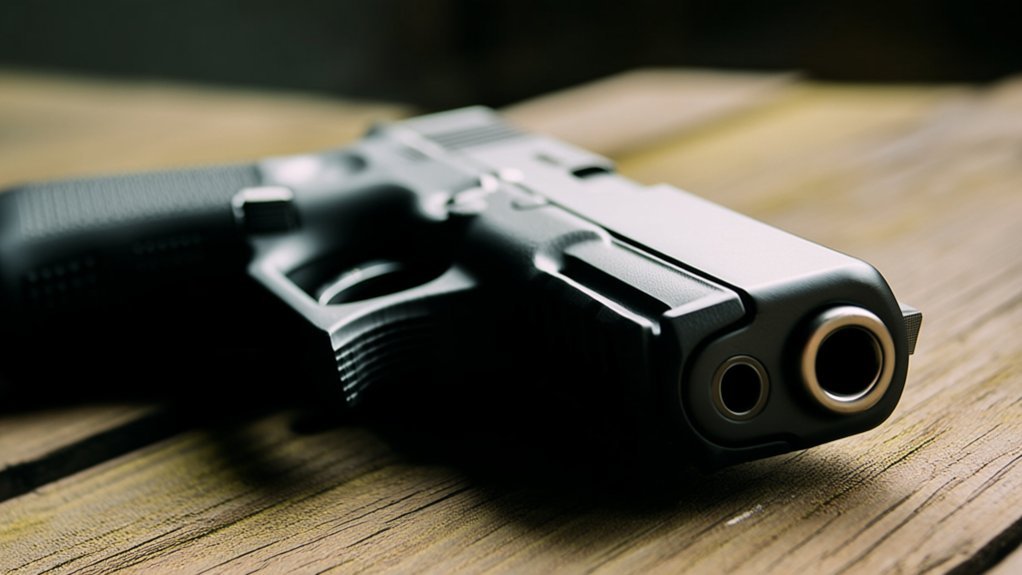
What Is a Glock and How Does It Work?
A Glock is a reliable, easy-to-use semi-automatic pistol with a lightweight polymer frame that makes it durable and comfortable to carry. When you pull the trigger, its Safe Action system releases the striker to ignite the cartridge, cycling the slide to chamber a new round quickly and smoothly. Law enforcement trusts Glocks for their durability and simplicity. If you’re interested, you’ll find how its unique design and safety features set it apart from other pistols.
What Is a Glock and Why Is It So Popular?
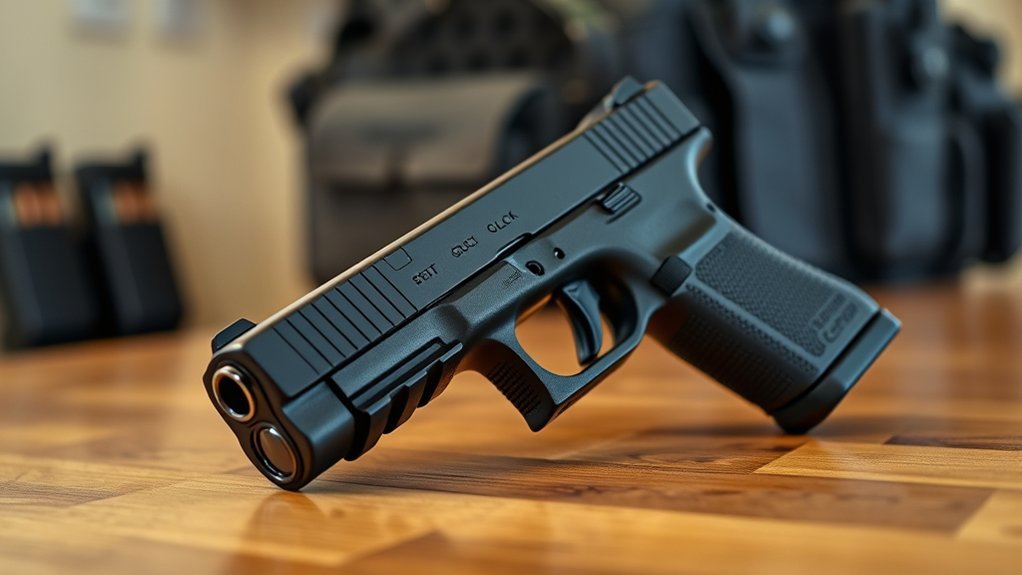
Although you might already recognize the name, a Glock is a semi-automatic pistol known for its reliability, simplicity, and ease of use. If you’re looking for a handgun that works well under pressure, a Glock often stands out.
Law enforcement and civilians alike trust it because it performs consistently without frequent jams or malfunctions. You’ll find it easy to handle, even if you’re new to firearms, thanks to its straightforward design.
Its lightweight polymer frame makes carrying it comfortable, while its durability means it holds up in tough conditions. Glock’s popularity also comes from its wide availability and the variety of models to fit different needs.
When you choose a Glock, you’re opting for a pistol with a proven track record.
Key Design Features That Make a Glock Unique
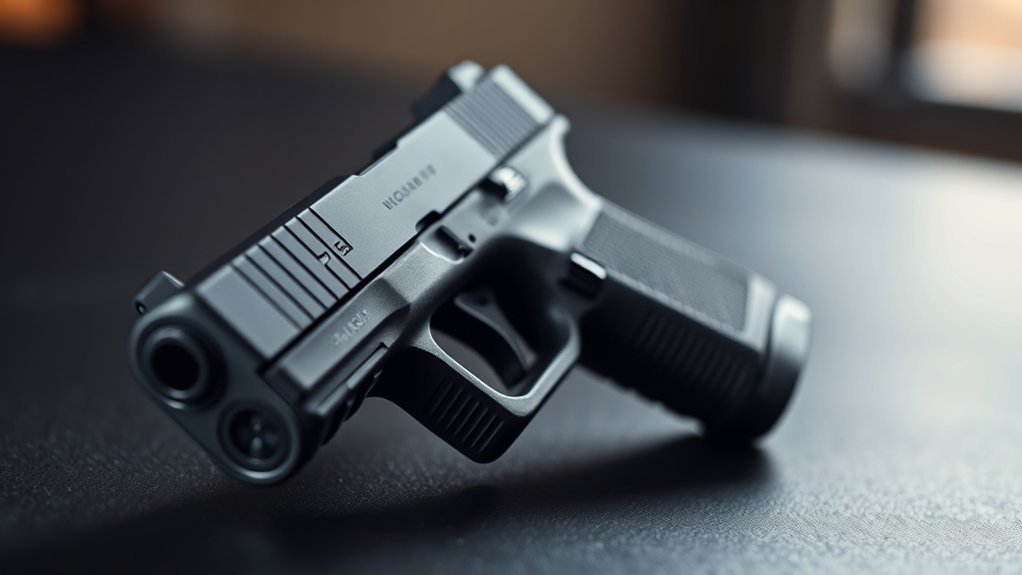
What sets a Glock apart goes beyond its reputation for reliability and ease of use. When you pick up a Glock, you notice its simple, no-nonsense design.
It features a “Safe Action” trigger system that combines three internal safeties, so it’s ready to fire only when you want it to—no manual safety needed.
The Glock’s barrel employs polygonal rifling, enhancing accuracy and barrel life.
Its modular design allows you to swap out parts quickly, making maintenance straightforward.
Plus, the grip angle feels natural, helping you aim instinctively.
These design choices focus on function and efficiency, giving you a pistol that performs consistently under stress.
Glock’s minimalistic approach guarantees fewer parts, reducing the chance of malfunctions and keeping your shooting experience smooth and dependable every time.
How the Glock Pistol’s Polymer Frame Improves Durability
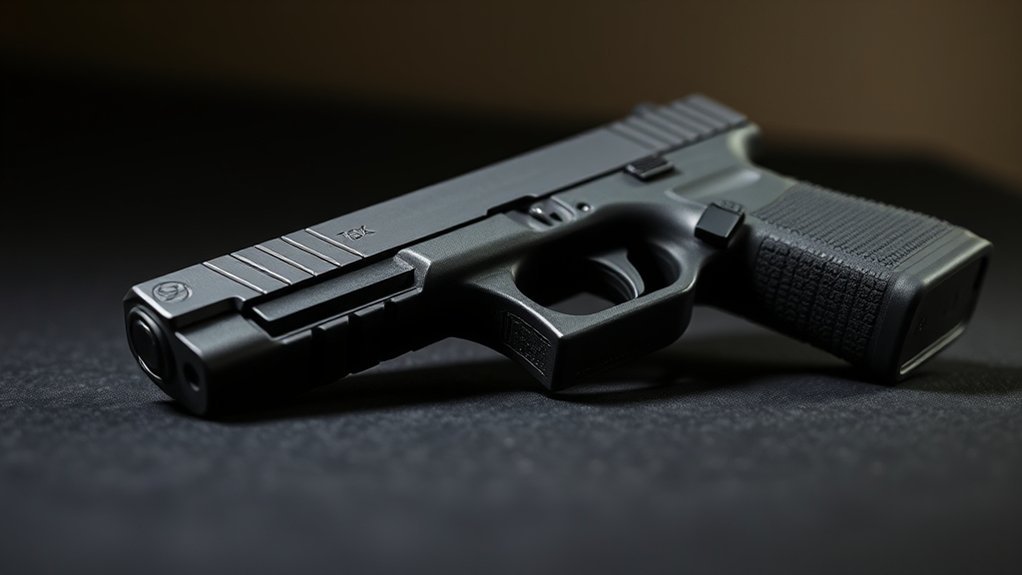
Because Glock uses a polymer frame instead of traditional metal, you get a pistol that’s lighter and more resistant to corrosion. This means you won’t have to worry about rust or degradation when exposed to moisture or harsh environments.
The polymer material also absorbs shocks better, reducing wear and tear during use. You’ll find the frame’s flexibility adds durability by preventing cracks or fractures that metal frames might suffer over time.
Plus, polymer doesn’t require frequent maintenance like metal does, saving you time and effort.
Mechanical Parts Inside a Glock
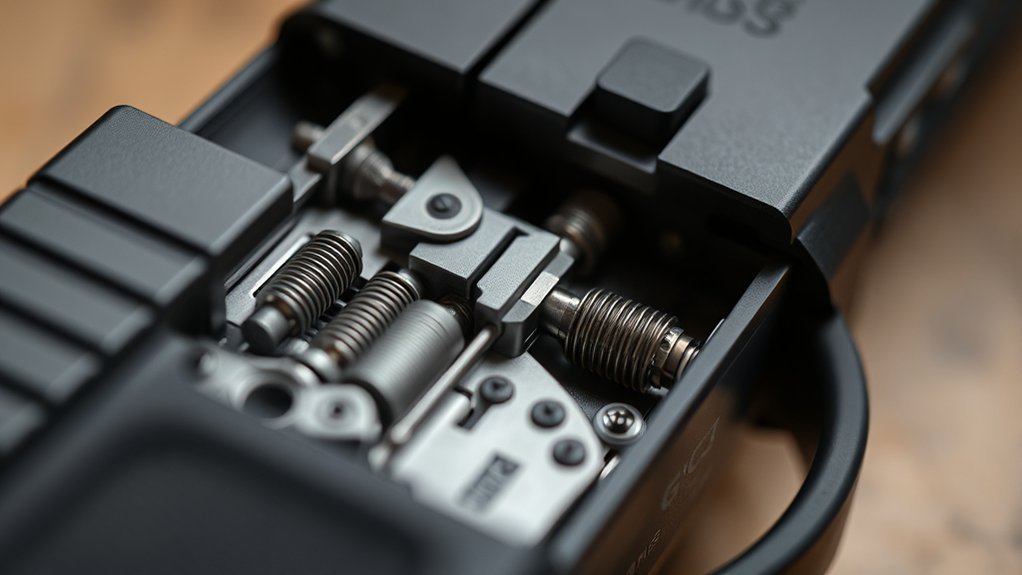
When you look inside a Glock, you’ll find a carefully engineered system of mechanical parts working together to guarantee reliable function. The core components include the slide, barrel, recoil spring assembly, trigger mechanism, and firing pin assembly.
The slide houses the barrel and firing pin, moving back and forth during use. The recoil spring assembly absorbs recoil energy, helping the slide return to its forward position.
Inside the frame, the trigger mechanism controls the firing pin’s release through a series of levers and springs. The firing pin assembly strikes the cartridge primer to ignite the round.
Each part is designed with precision to ensure durability and smooth operation, making the Glock a reliable firearm under various conditions without unnecessary complexity or excess components.
How the Glock Operates During Firing
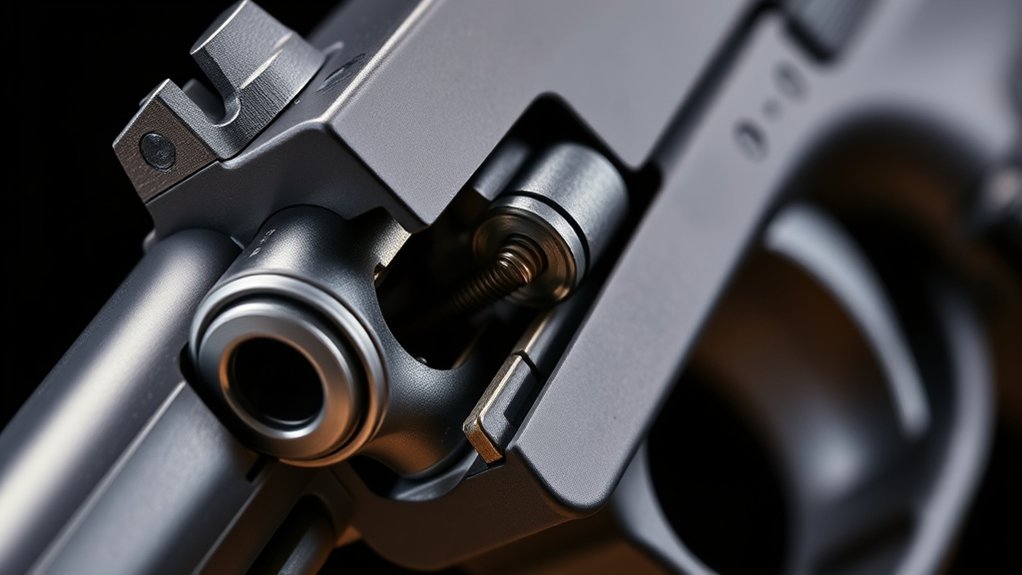
When you pull the trigger on a Glock, its mechanism engages the firing pin to ignite the cartridge.
You’ll notice how the recoil cycles the slide and prepares the pistol for the next shot.
Understanding this process helps you see why Glocks are reliable and quick to reset.
Trigger Mechanism Function
Although the Glock’s design might seem simple, its trigger mechanism plays an essential role in ensuring reliable and safe firing. When you pull the trigger, you’re actually engaging a series of internal components designed to work together smoothly.
The trigger bar moves rearward, releasing the striker that’s partially cocked. This action is controlled by the trigger safety, which prevents accidental discharge unless you deliberately pull the trigger.
You’ll notice that the trigger mechanism also resets quickly after firing, allowing for fast follow-up shots. This combination of safety features and efficient design means you can trust the Glock to fire only when you want it to, making it both user-friendly and dependable in various situations.
Firing Pin Activation
How does the Glock ignite the cartridge once you pull the trigger? When you squeeze the trigger, it releases the firing pin safety and lets the firing pin move forward.
This firing pin, held under spring tension, slams into the primer at the rear of the cartridge. The primer ignites the gunpowder inside the cartridge case, creating rapidly expanding gases. These gases propel the bullet down the barrel.
Importantly, the Glock’s firing pin is partially cocked by the slide’s rearward movement, so it requires less trigger force to complete the firing cycle.
This system ensures a consistent strike on the primer, boosting reliability and safety.
The firing pin activation happens quickly and precisely, making the Glock ready to fire with each trigger pull.
Recoil and Reset System
As you pull the trigger and the cartridge fires, the Glock’s recoil system immediately absorbs and manages the energy generated. The barrel and slide move backward together briefly, allowing the system to safely handle the force.
Then, the barrel disengages and tilts down, separating from the slide. This allows the spent casing to eject while the slide continues rearward, compressing the recoil spring.
The spring then pushes the slide forward, chambering a new round and securing the barrel back in place. Meanwhile, the trigger resets as the trigger bar reengages the firing pin safety, preparing the pistol for the next shot.
This smooth, reliable cycle lets you maintain control and shoot accurately without manual intervention between shots.
How the Glock’s Safe Action Trigger Keeps You Safe
When you pull the trigger on a Glock, its Safe Action system works silently behind the scenes to prevent accidental discharges. This system relies on three internal safeties: the trigger safety, firing pin safety, and drop safety.
The trigger safety is a small lever built into the trigger itself, ensuring the trigger won’t move unless you deliberately press it.
The firing pin safety blocks the firing pin from moving forward unless the trigger is pulled fully.
Finally, these safeties let you carry and handle your Glock confidently, knowing it won’t fire unless you intentionally pull the trigger, keeping you and those around you safe.
What Ammunition Does a Glock Pistol Use and Why?
You’ll find Glocks chambered in several common calibers like 9mm, .40 S&W, and .45 ACP, each offering different performance benefits.
Understanding how factors like bullet velocity and stopping power affect your choice is essential.
Let’s explore why these ammunition types matter for your Glock’s effectiveness.
Common Glock Calibers
Although Glock pistols come in various models, they primarily use a handful of common calibers that balance performance, recoil, and availability. When choosing a Glock, understanding these calibers helps you pick the right model for your needs.
- 9mm Luger – The most popular choice, offering manageable recoil, widespread ammo availability, and effective stopping power.
- .40 S&W – Favored for law enforcement, it delivers more punch than 9mm but with slightly increased recoil.
- .45 ACP – Known for its stopping power, this caliber suits those who prioritize impact over magazine capacity.
Knowing these common calibers allows you to match your Glock with ammo that fits your shooting style and purpose.
Ammunition Performance Factors
Why does ammunition performance matter so much for Glock pistols? Because the right ammo ensures reliability, accuracy, and safety every time you shoot.
Glocks are designed for various calibers, so you need to pick ammunition that matches your specific model. Using the correct bullet weight and type—like full metal jacket for practice or hollow points for self-defense—affects how the pistol cycles and hits the target.
You’ll also want ammo with consistent powder loads to maintain steady velocity, reducing malfunctions. Quality ammunition helps your Glock function smoothly, prevents jams, and maximizes stopping power.
In short, choosing the right ammo isn’t just about fitting the gun; it’s about optimizing performance and keeping you safe when it counts most.
Glock Models Compared: Key Differences
When comparing Glock models, you’ll notice distinct differences that affect performance, size, and intended use. Each model is designed with specific features to meet various needs, whether for concealed carry, duty use, or competition.
Here are key differences to keep in mind:
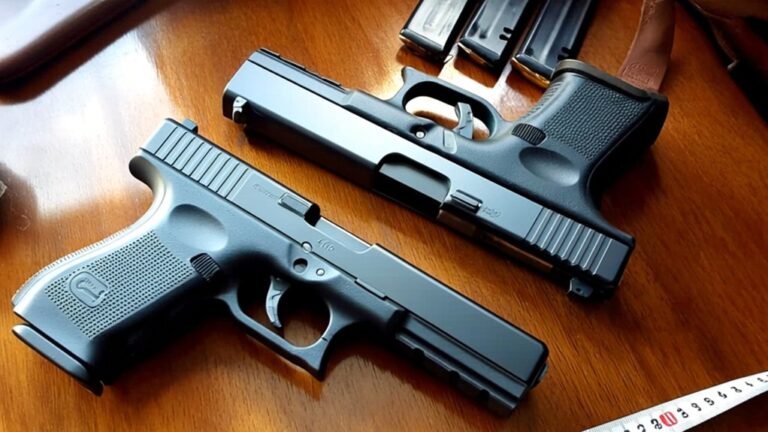
- Size and Capacity: Models like the Glock 19 offer a compact frame with 15-round magazines. Meanwhile, the Glock 17 provides a full-size grip with 17 rounds, balancing capacity and concealability.
- Caliber Options: Glocks come in various calibers, from 9mm to .45 ACP. This influences recoil and stopping power depending on your preference.
- Sights and Features: Some models include factory night sights or accessory rails. These features enhance usability based on your intended applications.
Understanding these differences helps you pick the right Glock for your needs.
How Gaston Glock Created the Glock Pistol
You’ll learn how Gaston Glock’s unique background set the stage for his groundbreaking design.
You’ll see the innovative process he used to create a pistol unlike any other.
Plus, you’ll understand the early challenges he faced while prototyping the Glock.
Gaston Glock’s Background
How did Gaston Glock transform from an engineer into the creator of one of the most iconic handguns in the world? You’ll find that his unique background set the stage perfectly.
Before designing pistols, he was an expert in synthetic polymers and mechanical engineering, which gave him a fresh perspective on firearm construction.
Here’s what shaped Gaston Glock’s journey:
- He studied mechanical engineering but never designed guns before, giving him a novel approach.
- His experience with lightweight, durable plastics helped him rethink traditional metal-heavy firearms.
- He’d no firearms manufacturing experience, so he relied on innovation instead of convention.
This background empowered Glock to think differently, leading to the breakthrough pistol you know today.
Design Innovation Process
Although Gaston Glock had no prior experience in firearms design, he approached the challenge with a fresh mindset that prioritized simplicity, durability, and ease of use. You’ll see how he combined polymer technology with innovative engineering to create a lightweight yet robust pistol. His design process focused on reducing parts, making maintenance straightforward, and ensuring reliability under tough conditions.
| Innovation Aspect | Key Benefit |
|---|---|
| Polymer Frame | Lightweight & corrosion-resistant |
| Fewer Parts | Easier maintenance |
| Safe Action Trigger | Enhanced safety |
| Modular Design | Customizable & adaptable |
| Durability Focus | Long-lasting performance |
Early Prototyping Challenges
Gaston Glock’s innovative design ideas didn’t come without hurdles. When you explore early prototyping, you’ll quickly see the challenges he faced. First, he’d to master working with polymer, a material unusual for firearms then. Second, creating a reliable, safe firing mechanism took countless tests and tweaks. Third, balancing durability with lightweight design pushed the limits of available technology. These obstacles required relentless problem-solving and creativity.
Here’s what stood out in Glock’s early development:
- Adapting polymer for a strong, lightweight frame.
- Designing a striker-fired system unlike traditional hammer-fired pistols.
- Ensuring consistent performance under harsh conditions.
You’ll find that overcoming these challenges set the stage for the Glock’s revolutionary success.
Why Law Enforcement Prefer Glock Pistols
When you look at the sidearms issued to law enforcement officers, you’ll notice Glock pistols stand out for their reliability and ease of use. You’ll appreciate their lightweight design, high magazine capacity, and simple maintenance, which make them ideal for demanding police work. Glocks perform consistently under tough conditions, and their “Safe Action” trigger system reduces accidental discharges, enhancing officer safety.
| Feature | Benefit |
|---|---|
| Lightweight Frame | Easy to carry all day |
| High Capacity | More rounds without reloading |
| Durable Build | Works in harsh environments |
| Simple Design | Quick disassembly and cleaning |
| Safe Action Trigger | Minimizes accidental firing |
These features explain why you’ll often see Glocks in law enforcement hands.
Common Applications of Glock Pistols
Because of their reliability and versatility, Glock pistols fit a wide range of uses beyond law enforcement. Whether you’re a seasoned shooter or new to firearms, Glock offers options that suit different needs and lifestyles. Here are three common applications:
- Personal Defense – Many people choose Glocks for home protection or concealed carry due to their lightweight design and ease of use under stress.
- Competitive Shooting – Glock models are popular in shooting sports because they’re accurate, durable, and customizable with aftermarket parts.
- Recreational Shooting – If you enjoy target practice or plinking, a Glock provides a dependable and affordable way to build your skills.
In short, Glock pistols adapt well to various roles, making them a versatile choice for many firearm enthusiasts.
How to Maintain and Care for Your Glock
To keep your Glock functioning reliably and safely, you need to perform regular maintenance and care. Start by cleaning your Glock after every use or at least once a month if you don’t shoot often.
Field-strip the pistol by removing the slide, barrel, and recoil spring. Use a quality solvent and brush to remove carbon buildup from the barrel and slide. Wipe all parts dry, then apply a light coat of lubricant to prevent rust and guarantee smooth operation.
Inspect the magazine for dirt or damage and clean it if necessary. Always reassemble your Glock carefully and perform a function check.
Consistent care prolongs your Glock’s lifespan and helps avoid malfunctions, keeping it ready whenever you need it.
Essential Safety Tips Every Glock Owner Should Know
Although owning a Glock comes with great responsibility, following essential safety tips guarantees you handle your firearm confidently and securely. Safety isn’t just about the gun itself; it’s about your mindset and habits.
Here are three critical tips every Glock owner should follow:
- Always Treat It as Loaded: Never assume your Glock is unloaded. Check the chamber and magazine before handling.
- Keep Your Finger Off the Trigger: Until you’re ready to shoot, keep your finger outside the trigger guard to prevent accidental discharge.
- Store Securely: Use a locked safe or secure storage to keep your Glock away from unauthorized users, especially children.
Frequently Asked Questions
Can a Glock Be Customized With Aftermarket Parts?
Yes, you can customize a Glock with aftermarket parts easily. You’ll find barrels, sights, triggers, and slides to upgrade. Just make sure the parts fit your model, and you’ll enhance performance and style quickly.
What Is the Typical Lifespan of a Glock Pistol?
You can expect a Glock pistol to last around 15,000 to 20,000 rounds with proper maintenance. Some users report even higher counts, thanks to its durable design and reliable components that handle extensive use.
How Does a Glock Compare to Other Handgun Brands in Price?
You’ll find Glock pistols generally cost more than budget brands but less than premium ones. They offer great reliability and value, so you’re paying for quality without overspending compared to many competitors.
Are Glocks Suitable for Left-Handed Shooters?
You know what they say, “Different strokes for different folks.” Glocks are suitable for left-handed shooters since many models have reversible magazine releases and ambidextrous slide stop levers, making them pretty user-friendly for both hands.
What Are the Legal Restrictions on Owning a Glock?
You’ll face varying legal restrictions depending on your location, including background checks, permits, and age limits. Some places ban certain Glock models or magazine capacities, so always check local, state, and federal laws before buying or carrying one.
Conclusion
So, now that you know a Glock is basically the superhero of pistols—tough, reliable, and always ready to save the day—you’re practically a firearms expert. Just remember, owning a Glock isn’t about channeling action movie vibes; it’s about responsibility, safety, and respect for the power you’re holding. Treat it well, and it’ll never ghost you. Ignore that, and well, even the best sidekick can turn into the villain. Stay sharp, stay safe!